★
Loading archive…
Loading archive…

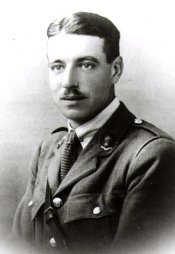
When the enemy advanced and every second counted, one young Royal Engineers officer chose duty over safety. With enemy troops already crossing the bridge and the demolition fuse having failed, Cecil Leonard Knox crawled beneath the structure under heavy fire and ignited the charges by hand. His fearless action halted the German advance and earned him the Victoria Cross.
Major Cecil Leonard Knox VC (30 August 1898 to 24 February 1943) was a British Army officer of the Royal Engineers who received the Victoria Cross, the highest award for gallantry in the face of the enemy that can be awarded to British and Commonwealth forces. His extraordinary courage during the German Spring Offensive on the Western Front in March 1918 stands as one of the finest examples of devotion to duty by a Royal Engineers officer during the First World War.
Born in Stoke Damerel, Devon, Knox was educated at Berkhamsted School before beginning a career in engineering. When the First World War engulfed Europe, he was commissioned into the Royal Engineers and was posted to the 150th Field Company, where his technical skill and leadership quickly earned the respect of those serving alongside him.
On 22 March 1918, during the opening stages of the German Spring Offensive near Tugny-et-Pont, France, Knox was ordered to destroy a series of bridges to delay the advancing enemy. Several bridges had already been successfully demolished when the fuse on a vital steel bridge failed to ignite. With German troops rapidly approaching and beginning to cross the bridge, Knox ignored the intense enemy fire, crawled beneath the structure and personally lit the instantaneous fuse. Moments later, the bridge was destroyed, preventing the enemy from using the crossing and allowing British forces valuable time to reorganize their defence.
For this extraordinary act of courage, Cecil Knox was awarded the Victoria Cross, with the award announced in the London Gazette on 31 May 1918. He later received the decoration from King George V during an investiture at Buckingham Palace, joining the distinguished ranks of Britain's highest decorated soldiers.
Following the war, Knox remained active in public service. He served with the Royal Auxiliary Air Force and later became closely involved with the Special Constabulary, for which he was awarded the Special Constabulary Long Service Medal in recognition of his dedicated service. In 1937, he also received the King George VI Coronation Medal, reflecting his continued public and national service during the Coronation celebrations.
During the Second World War, Knox again answered his country's call, serving with the Home Guard and attaining the rank of Major. Although his health prevented him from returning to front-line military service, he remained committed to Britain's defence until his death on 24 February 1943, aged just 44.
Major Cecil Leonard Knox left a lasting legacy of courage, leadership and selfless service. His Victoria Cross remains a powerful reminder of the bravery displayed by the Royal Engineers during the First World War, where technical expertise, calm determination and extraordinary heroism often proved decisive on the battlefield. Today, his name continues to be honoured among the distinguished recipients of the Victoria Cross, and his remarkable actions at Tugny-et-Pont remain an enduring example of gallantry under fire.
Become the named supporter for this profile and edit the tribute biography and portrait (Owner account required). Proceeds help keep the archive online.
$25 USD / year — annual sponsorship renewal. Keeps the page online and, where enabled, the family anniversary remembrance emails active.