★
Loading archive…
Loading archive…
He Captured an Enemy Battle Flag at Weldon Railroad
Charles E. Brown was a Union Army officer and Medal of Honor recipient whose courage during the American Civil War earned him one of the nation's highest military distinctions. Serving as a sergeant in Company C of the 50th Pennsylvania Volunteer Infantry, Brown captured the battle flag of the Confederate 47th Virginia Infantry during the fighting at Weldon Railroad, Virginia, on August 19, 1864. His actions during the Battle of Globe Tavern brought him the Medal of Honor later that same year.
Born on December 11, 1841, in Schuylkill County, Pennsylvania, Brown grew up in a region that would contribute volunteers to the Union cause during the Civil War. Surviving biographical accounts provide limited information about his childhood, education, and family background. His documented military career began on September 9, 1861, when he enlisted in the 50th Pennsylvania Infantry.
Brown joined Company C of the regiment as Union forces were mobilizing for a prolonged conflict. During his service, he advanced through the enlisted ranks and eventually became a sergeant. His military career continued through the major campaigns of the Civil War, and he later received commissions as an officer.
By August 1864, Brown was serving with the 50th Pennsylvania Infantry during Union operations against Confederate supply and transportation routes south of Petersburg, Virginia. The Weldon Railroad was an important Confederate transportation line, and Union forces sought to disrupt its use as part of the continuing Petersburg Campaign.
The Battle of Globe Tavern began on August 18, 1864, as Union troops advanced against positions associated with the Weldon Railroad. The fighting continued over several days, with Confederate forces attempting to resist the Union movement and regain control of the threatened railroad corridor.
On August 19, 1864, Brown participated in the engagement while serving as a sergeant in Company C. During the fighting, he performed the action that would distinguish his military service and earn him the Medal of Honor.
Brown captured the battle flag of the 47th Virginia Infantry, a Confederate regiment engaged against Union forces. The seizure of an enemy regimental flag was a significant battlefield achievement because such colors represented a regiment's identity and served as a visible rallying point for soldiers during combat.
The official Medal of Honor citation specifically recognizes Brown for capturing the flag of the 47th Virginia Infantry. Although the citation does not provide a detailed account of the precise circumstances surrounding the capture, it establishes the action and its location at Weldon Railroad on August 19, 1864.
Capturing an opposing regiment's colors required a soldier to take possession of one of the most recognizable symbols carried by an enemy unit. Brown's achievement was therefore formally recognized as an act of extraordinary battlefield bravery during the Union operations near Petersburg.
On December 1, 1864, Charles E. Brown received the Medal of Honor for his actions at Weldon Railroad. Unlike many Civil War recipients whose decorations were presented years after their military service, Brown received his award while the conflict was still underway.
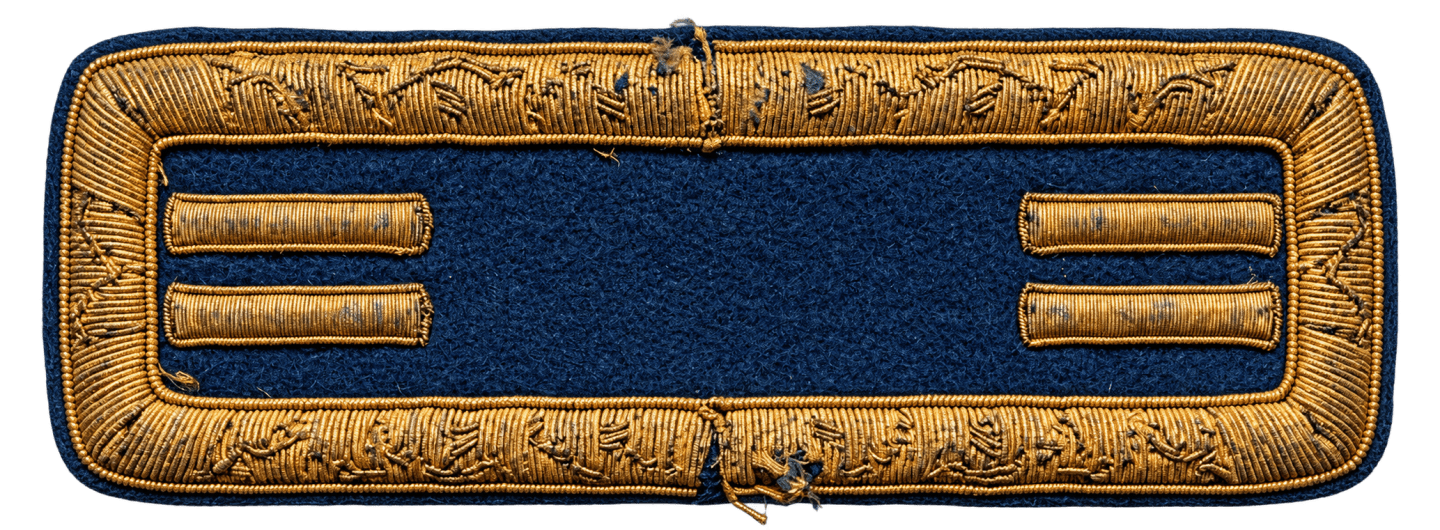
His military career continued after the engagement. Brown was subsequently promoted to first lieutenant and later attained the rank of captain, the highest rank recorded by the Congressional Medal of Honor Society. He eventually commanded his company, marking his advancement from an enlisted soldier to a commissioned officer.
Brown remained in military service until July 30, 1865, when he was mustered out following the end of the Civil War. His documented service extended from September 1861 through July 1865, encompassing nearly four years in the Union Army.
The Confederate battle flag captured by Brown has also been recorded in historical accounts as part of the collection associated with the former Museum of the Confederacy in Richmond, Virginia. The flag's capture remains the central event documented in his Medal of Honor citation.
Following his discharge, Brown returned to civilian life. Detailed information concerning his postwar occupation, family activities, and later professional career is limited in the available biographical sources.
Charles E. Brown died on February 20, 1919, in Schuylkill Haven, Pennsylvania, at the age of 77. He was buried in Union Cemetery in Schuylkill Haven, preserving his connection to the Pennsylvania community associated with his early life and military service.
Brown's military legacy is defined by his service with the 50th Pennsylvania Infantry and his actions at the Battle of Globe Tavern. His capture of the 47th Virginia Infantry's battle flag on August 19, 1864, was the achievement for which he received the Medal of Honor.
From his enlistment as a Pennsylvania volunteer in 1861 to his eventual advancement to captain, Charles E. Brown's documented military career reflects years of Union Army service during the American Civil War. His Medal of Honor continues to commemorate the courage he demonstrated at Weldon Railroad, securing his place among the recognized recipients of America's highest military decoration.
Become the named supporter for this profile and edit the tribute biography and portrait (Owner account required). Proceeds help keep the archive online.
$25 USD / year — annual sponsorship renewal. Keeps the page online and, where enabled, the family anniversary remembrance emails active.
