★
Loading archive…
Loading archive…

He Raised the Fallen Flag Under Heavy Enemy Fire
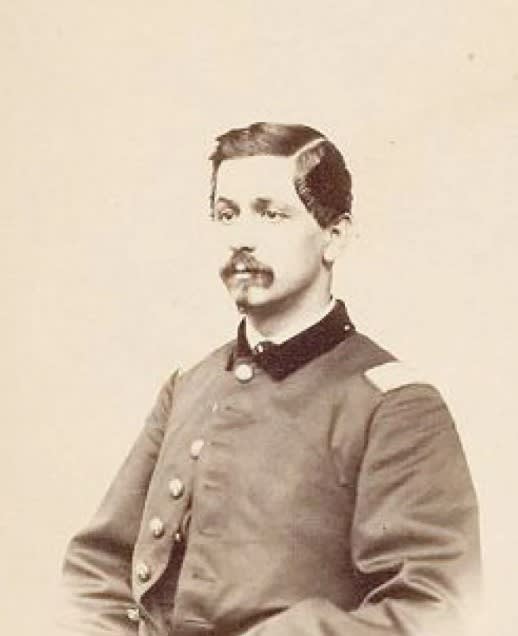
Charles Dearborn Copp was an American Union Army officer who received the Medal of Honor for his exceptional bravery during the American Civil War. Serving as a second lieutenant in Company C of the 9th New Hampshire Volunteer Infantry, Copp distinguished himself at the Battle of Fredericksburg, Virginia, on December 13, 1862. When his regiment's color bearer was shot down under heavy enemy fire, Copp seized the fallen colors, waved them, and rallied his fellow soldiers. His actions earned him the nation's highest military decoration nearly twenty-eight years after the battle.
Copp was born in Warren County, New Hampshire. Historical records differ concerning his exact birth date, but his connection to New Hampshire and his military service with the state's volunteer forces are well documented. Details of his childhood, education, and early family circumstances remain limited in the available biographical sources.
During the American Civil War, Copp entered Union military service from Nashua, New Hampshire, and served with Company C of the 9th New Hampshire Infantry. He held the rank of second lieutenant when he performed the action that would later bring him national recognition.
The 9th New Hampshire Infantry participated in the Union Army's operations in Virginia, including the Fredericksburg Campaign of December 1862. The Battle of Fredericksburg was fought on December 11–15, 1862, as Union forces attempted to assault Confederate positions around the city. Confederate troops occupied strong defensive ground, and the Union attacks resulted in substantial casualties.
On December 13, 1862, Copp and his regiment were engaged in the fighting at Fredericksburg. During the battle, the regiment's color bearer was shot down while carrying the unit's flag. The loss occurred under heavy enemy fire, creating a dangerous situation for the regiment.
Regimental colors served as important identifying symbols during Civil War combat. Soldiers used their flags to locate their units and maintain formation amid battlefield smoke, noise, and confusion. The loss of a color bearer during an engagement could therefore disrupt a regiment's organization at a critical moment.
Recognizing the situation, Copp seized the regimental colors after the bearer had fallen. He raised and waved the flag, using it to rally the soldiers around him despite the continuing enemy fire.
His decision placed him in an exposed position during the engagement. Carrying the colors made a soldier highly visible on the battlefield, particularly when attempting to encourage troops to reorganize or continue fighting.
Copp's official Medal of Honor citation specifically recognizes his actions in taking possession of the fallen colors and rallying the regiment under heavy fire. The documented achievement demonstrates his courage and leadership at a moment when his regiment faced intense battlefield pressure.
Although the battle itself was a costly Union defeat, Copp's individual conduct was later recognized as an extraordinary act of military bravery. His Medal of Honor was awarded for his personal actions during the fighting rather than for the outcome of the engagement.
Following his service as a second lieutenant, Copp eventually attained the rank of captain, the highest military rank recorded in his recipient profile. His advancement reflected a progression beyond the rank he held during the Battle of Fredericksburg, although the available recipient records do not provide a complete account of his subsequent assignments.
After the Civil War, Copp became associated with the Massachusetts Commandery of the Military Order of the Loyal Legion of the United States, an organization established by Union officers and their supporters during the war. His membership formed part of his documented connection to the community of Union veterans.
On June 28, 1890, Charles Dearborn Copp received the Medal of Honor for his actions at Fredericksburg. The award came more than twenty-seven years after he had seized the regimental colors and rallied his troops under enemy fire.
The recognition formally preserved the record of his courage during one of the Civil War's major engagements. His official citation continued to identify the specific action that distinguished his service as a Union Army officer.
Copp spent his later years in Massachusetts. He died on November 2, 1912, in Clinton, Massachusetts, and was buried at Middle Yard Cemetery in Lancaster, Massachusetts.
His Medal of Honor is recorded as being held by the Clinton Historical Society at Holder Memorial in Clinton, Massachusetts, connecting his military recognition with the community associated with his later life.
Charles Dearborn Copp's legacy rests on a decisive act of courage and leadership at the Battle of Fredericksburg. When his regiment's flag fell with its bearer, he took up the colors and rallied his fellow soldiers despite the danger surrounding him.
His actions on December 13, 1862, remain an enduring example of the bravery recognized by the Medal of Honor. Through his documented service with the 9th New Hampshire Infantry and his conduct under fire, Copp earned a permanent place in the history of American Civil War military valor.
Become the named supporter for this profile and edit the tribute biography and portrait (Owner account required). Proceeds help keep the archive online.
$25 USD / year — annual sponsorship renewal. Keeps the page online and, where enabled, the family anniversary remembrance emails active.