★
Loading archive…
Loading archive…

Corporal, U.S. Army
Support & adopt this hero ↓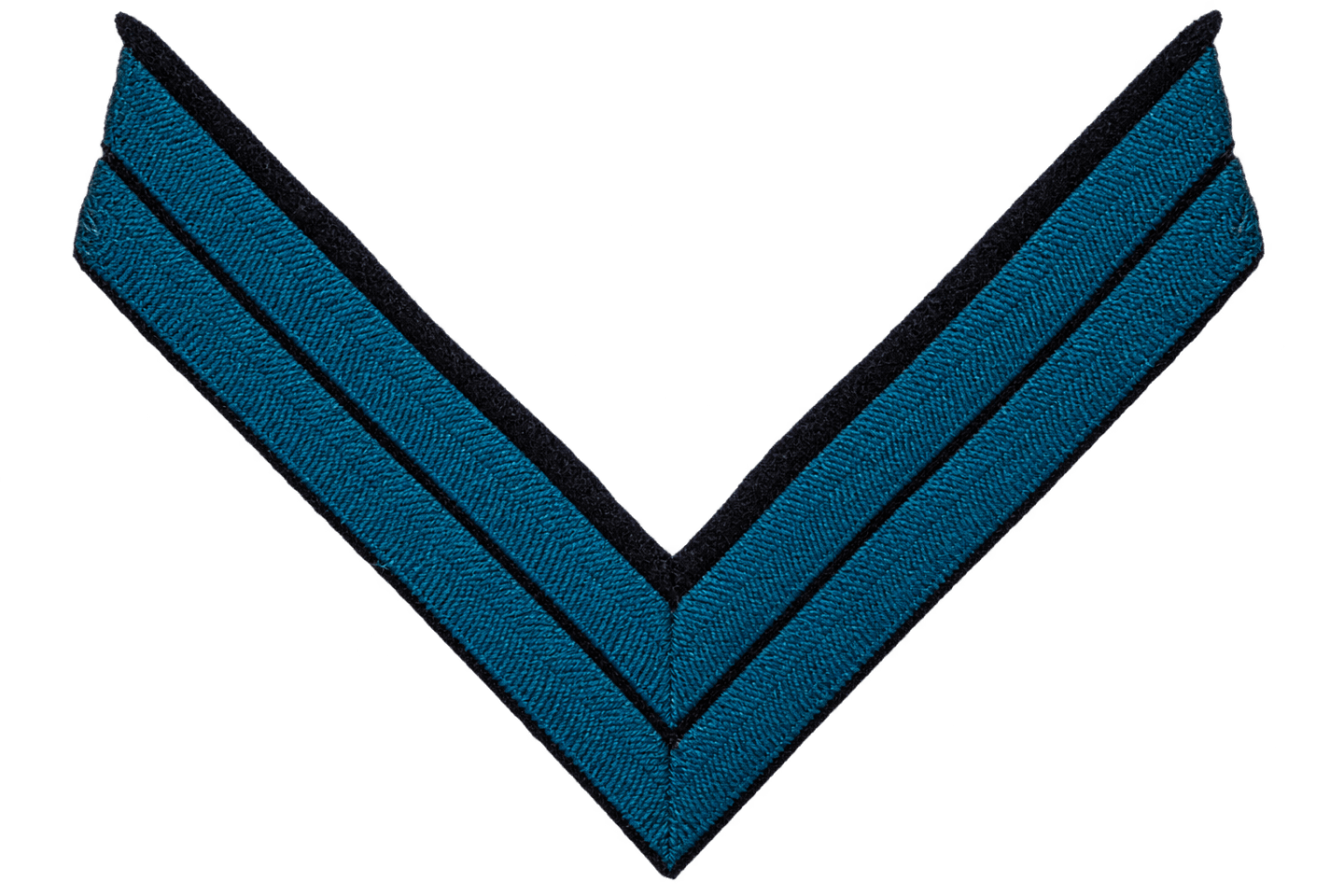
Charles Ferren Hopkins was born on May 16, 1842, in Hope, Warren County, New Jersey. His life eventually combined four remarkable experiences: service as a Union infantryman, repeated battlefield wounds, survival as a prisoner of war at Andersonville, and recognition with the United States Medal of Honor. He lived until 1934, long enough to become one of New Jersey’s most prominent surviving Civil War veterans. Hopkins entered the United States Army during the opening months of the American Civil War. He was mustered into Company I, 1st New Jersey Volunteer Infantry, on June 10, 1861, initially serving as a Private. The 1st New Jersey Infantry became part of the famous First New Jersey Brigade and served with the Army of the Potomac in the Eastern Theater. As Hopkins gained military experience, he was promoted to Corporal on January 1, 1862. This is the highest rank that can presently be supported with sufficiently strong recipient-specific evidence for the project, and it is also the rank recorded in authoritative Medal of Honor records for his heroic action. Therefore Corporal remains the appropriate final rank for his profile. The defining event of Hopkins’s military career occurred on June 27, 1862, during the Battle of Gaines’ Mill, Virginia. Gaines’ Mill was one of the major engagements of the Seven Days Battles during General George B. McClellan’s Peninsula Campaign. Confederate forces under General Robert E. Lee launched massive attacks against the Union defensive position, producing intense infantry and artillery combat. During the battle, Hopkins saw a fellow soldier who had been seriously wounded and was unable to reach safety. Rather than leave the wounded man exposed, Hopkins voluntarily went to his assistance under heavy enemy fire. The wounded soldier was Sergeant Richard Donnelly. Hopkins attempted to carry him away from the dangerous battlefield area while Confederate fire continued around them. The rescue exposed Hopkins directly to enemy fire, and he was wounded twice while carrying his comrade. Despite those wounds, Hopkins succeeded in bringing the wounded soldier toward safety. Even after being injured during the rescue, he did not immediately withdraw from the fighting. He continued in action until he himself was severely wounded again. This sequence of actions became the basis of his Medal of Honor citation: he voluntarily carried a wounded comrade under heavy fire to a place of safety, was wounded twice while doing so, and nevertheless continued fighting until he was severely wounded again. Hopkins’s experience at Gaines’ Mill did not end with the heroic rescue. As the Union Army withdrew and wounded soldiers remained behind, Hopkins fell into Confederate hands. He was subsequently paroled and eventually returned to Union control. His wounds required a period of recovery before he could resume active military service. The fact that Hopkins returned to the Army after suffering multiple wounds at Gaines’ Mill is an important part of his story. His Medal of Honor action was not the end of his wartime experience. After recovering, he rejoined the 1st New Jersey Infantry and continued serving during the Civil War. By the spring of 1864, Union forces were preparing for Lieutenant General Ulysses S. Grant’s Overland Campaign against General Robert E. Lee. The campaign opened with the Battle of the Wilderness on May 5–7, 1864, an exceptionally violent engagement fought through dense woods and tangled undergrowth in Virginia. Hopkins was again exposed to severe combat during the Wilderness fighting. He was wounded and captured by Confederate forces for a second time. This captivity would become very different from his earlier experience following Gaines’ Mill. After his capture, Hopkins was transported south with other Union prisoners. He eventually arrived at Camp Sumter in Georgia, better known as Andersonville Prison. Andersonville became infamous during the Civil War because of overcrowding, inadequate shelter, disease, malnutrition, contaminated water and severe shortages of essential supplies. Hopkins spent approximately ten months in Confederate captivity, including his imprisonment at Andersonville. The prison represented one of the most difficult experiences of his entire life. Tens of thousands of Union soldiers passed through Andersonville, and thousands died there from disease, exposure, malnutrition and the terrible sanitary conditions inside the stockade. Hopkins survived. His survival is particularly significant because he had already suffered serious wounds earlier in the war and had been wounded again before his capture. He experienced not only conventional battlefield danger but also the prolonged physical and psychological hardships of prisoner-of-war captivity. Hopkins later recorded his experiences in writings that became associated with The Andersonville Diary & Memoirs of Charles Hopkins, 1st New Jersey Infantry. His recollections provide valuable testimony about what Union prisoners experienced at Andersonville and became an important part of the historical record of Civil War captivity. As the Confederacy collapsed in 1865, Hopkins eventually returned to Union control. He was discharged from the United States Army as a paroled prisoner on April 21, 1865, at Trenton, New Jersey. His wartime service had therefore extended from 1861 through the closing weeks of the Civil War. His military experience had been unusually severe. He had served in front-line infantry operations, voluntarily rescued a wounded comrade under fire, suffered repeated wounds, been captured twice, survived prolonged confinement at Andersonville and remained alive to return home after the war. The United States did not formally recognize his Gaines’ Mill heroism with the Medal of Honor immediately after the battle. Three decades passed before the award was issued. On July 9, 1892, Charles Ferren Hopkins received the Medal of Honor for his action of June 27, 1862. He was therefore a living recipient, not a posthumous awardee. The Medal of Honor had itself originated during the Civil War. Congress first authorized a Medal of Honor for naval personnel in 1861 and authorized the Army version in 1862. It developed into the highest military decoration of the United States for extraordinary valor. For the database used in this project, Hopkins’s decoration belongs under the historical label Medal of Honor 1862–1895 Army. His Medal of Honor recognized one specific act of battlefield heroism: voluntarily rescuing a wounded comrade while under heavy fire, despite being wounded himself and continuing in battle until suffering another severe wound. No clasp, star, bar, oak leaf cluster or other device has been verified for Hopkins’s Medal of Honor. His final verified award therefore remains a plain Medal of Honor without additional devices. A separate Civil War Campaign Medal should not be added to his final medal rack. Hopkins unquestionably served during the Civil War and lived for many decades after the conflict, but the project requires recipient-specific evidence for every medal. Eligibility based solely on wartime service is not sufficient to prove individual entitlement or issuance. Until such documentation is established, that later campaign medal remains excluded. After the war, Hopkins established himself in civilian life in New Jersey. He became closely associated with Boonton and entered local public life. He eventually served as Mayor of Boonton, reflecting the standing he developed within the community after returning from military service. He also remained deeply involved with Civil War veterans and the preservation of their history. His experiences at Andersonville particularly influenced his later commemorative work. In 1898, Hopkins was appointed to participate in and lead efforts associated with New Jersey’s commemoration of soldiers who had died at Andersonville. The work resulted from his personal connection with the prison and his determination that the New Jersey soldiers who had died there should not be forgotten. The Andersonville experience remained central to his identity throughout his later life. Unlike historians who knew the prison only through military records or postwar investigations, Hopkins had lived inside the stockade and personally endured its conditions. His writings and veterans’ activities therefore helped preserve the perspective of an actual survivor. Hopkins also became involved in honoring Major General Philip Kearny, the prominent Union officer closely associated with New Jersey troops. In the early twentieth century, Hopkins helped lead efforts to secure a more appropriate final resting place for his former commander. These efforts eventually contributed to Kearny’s reinterment at Arlington National Cemetery. For Hopkins, such activities formed part of a broader commitment to preserving the memory of the soldiers and commanders with whom he had served during the Civil War. As the decades passed, the generation that had fought the Civil War gradually disappeared. Hopkins survived well into the twentieth century and became a living link between the battlefield generation of the 1860s and Americans of the 1930s. By the end of his life, he was recognized as the last surviving New Jersey Civil War Medal of Honor recipient. His longevity meant that the rescue he performed at Gaines’ Mill remained a living memory more than seventy years after the battle. Charles Ferren Hopkins died on February 14, 1934, in Boonton, New Jersey. He was ninety-one years old. He was buried at Greenwood Cemetery in Boonton. His life cannot be defined by the Medal of Honor alone. The decoration represents his most famous act, but his military record extended far beyond that single moment. He entered the Army as a Private in 1861, became a Corporal, faced the intense fighting at Gaines’ Mill, was repeatedly wounded, was captured, recovered and returned to service, fought again at the Wilderness, endured a second capture and survived approximately ten months of imprisonment that included Andersonville. After surviving the war, he spent decades serving his community and preserving the memory of his fellow veterans. He became a public official, an advocate for Civil War remembrance and an important firsthand witness to the experience of Union prisoners. The Medal of Honor he received on July 9, 1892, permanently recognized the courage he had demonstrated thirty years earlier. Under heavy enemy fire at Gaines’ Mill, Hopkins chose to risk his own life to save a wounded comrade. He was wounded twice during the rescue, continued fighting, and was then severely wounded again. That action remains the clearest expression of his military character and the reason his name remains recorded among America’s Medal of Honor recipients. Charles Ferren Hopkins’s final verified medal record is: Medal of Honor 1862–1895 Army — no device or clasp. His legacy extends from Gaines’ Mill to Andersonville and from the battlefields of the Civil War to decades of veterans’ remembrance in New Jersey. He is remembered as a Corporal of Company I, 1st New Jersey Infantry, a wounded combat veteran, a prisoner-of-war survivor, an Andersonville survivor, a Medal of Honor recipient and one of the last living representatives of New Jersey’s Civil War generation.
Become the named supporter for this profile and edit the tribute biography and portrait (Owner account required). Proceeds help keep the archive online.
$25 USD / year — annual sponsorship renewal. Keeps the page online and, where enabled, the family anniversary remembrance emails active.