★
Loading archive…
Loading archive…

Second Lieutenant, British Army
Support & adopt this hero ↓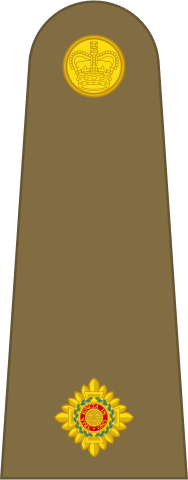
He took enemy posts and withdrew his men under hostile fire.
Charles Harry Coverdale (April 21, 1888–November 20, 1955) was a Manchester Regiment soldier whose bravery during the Third Battle of Ypres earned both the Military Medal and the Victoria Cross. An engineering fitter before his September 1914 enlistment, he served in the 11th Battalion, the Manchester Regiment, on the Western Front. He was a sergeant during the attack near Poelcappelle, Belgium, on October 4, 1917; he later became a second lieutenant.
As his platoon approached its objective, Coverdale dealt with three German snipers who were firing on the flank, killing one and taking two prisoner. He then rushed two machine-gun positions and overcame their crews. Coverdale reorganised his platoon for another assault, but a British barrage stopped the advance and the unit suffered nine casualties. He went out again with five men. When he saw a larger enemy force preparing to counterattack, he withdrew his detachment one soldier at a time, remaining last himself, and returned with warning of the danger. His initiative and example helped sustain the attack and protect his men as the situation changed.
Coverdale’s Military Medal had recognized earlier service in 1917. His Victoria Cross was announced in the London Gazette on December 18, 1917. A letter he sent his widowed mother after the action described the award recommendation with characteristic disbelief: “I think it is too good to be true.”
After demobilisation in 1919, Coverdale returned to engineering and married Clara Florence. He later became chief engineer for a Huddersfield textile business. During the Second World War he served with the Home Guard from 1941 until its stand-down in December 1944. He returned to the organisation in 1952 and became a captain in 1955. He died in Huddersfield on 20 November 1955 and was buried in Edgerton Cemetery.
Victoria Cross citation
For most conspicuous bravery in attack on enemy strong points. He showed the utmost gallantry in approaching his objective, and when close to it disposed of an enemy officer and two men who were sniping our flank, killing the officer and taking the two men prisoners. He then rushed two machine guns, killing or wounding the teams. He subsequently reorganised his platoon in order to capture another position, but, after getting within a hundred yards of it, he was held up by our own barrage, and was obliged to return, having sustained nine casualties. Later, this gallant non-commissioned officer again went out with five men to capture this position and when he had gone some distance he saw a considerable number of the enemy advancing. He thereupon withdrew his detachment man by man, he himself being the last to retire, when he was able to report that the enemy were forming for a counter-attack. By his gallant leadership and utter disregard of danger throughout the attack he set a splendid example of fearlessness to his men, and inspired all with a spirit of emulation which undoubtedly contributed largely to the success of the operations.
Become the named supporter for this profile and edit the tribute biography and portrait (Owner account required). Proceeds help keep the archive online.
$25 USD / year — annual sponsorship renewal. Keeps the page online and, where enabled, the family anniversary remembrance emails active.