★
Loading archive…
Loading archive…
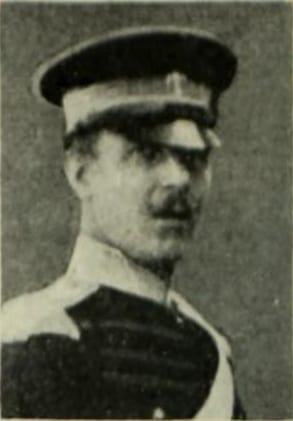
Corporal, British Army
Support & adopt this hero ↓
The Cavalryman Who Rode Back Into Enemy Fire to Save a Life
An officer lay trapped beneath his fallen horse. Enemy fighters were only yards away, and the battlefield was swept by gunfire. While others faced the danger of the charge, one British cavalryman made an extraordinary decision. He turned back to save a life, knowing he might lose his own.
On 5 September 1915, Private Charles Hull, a shoeing-smith serving with the 21st (Empress of India's) Lancers, performed an act of remarkable courage at Hafiz Kor, near Shabkadar, on the North-West Frontier of British India. During a cavalry attack against tribal fighters, Captain Geoffrey E. D. Learoyd's horse was shot and collapsed, trapping the officer beneath it. With enemy forces dangerously close, Hull rode to his rescue, freed Learoyd, lifted him onto his own horse and galloped to safety under fire.
For this extraordinary act, Charles Hull received the Victoria Cross, Britain's highest award for gallantry in the presence of the enemy. His official citation, published in The London Gazette on 3 March 1916, Issue 29496, page 2349, praised him for acting entirely on his own initiative and saving his officer's life at imminent personal risk.
Born in Harrogate, Yorkshire, on 24 July 1890, Hull worked as a postman before joining the British Army in 1908. He served with the 21st Lancers as a cavalry shoeing-smith and was posted with the regiment to India in 1912. His regiment operated on the North-West Frontier during the First World War, where Hull's courage at Hafiz Kor became one of its most memorable acts of gallantry.
Later in the war, Hull served with the detached squadron of the 21st Lancers that went to France. The Royal Lancers' regimental account records that he was captured by German forces, escaped, and subsequently helped rescue two French generals. The regiment associates this episode with his French Croix de Guerre, which was officially recorded in the Edinburgh Gazette on 12 November 1918.
After the war, Hull returned to Britain in 1919. On 11 November 1920, he served in the honour guard at the interment of the Unknown Soldier at Westminster Abbey. He subsequently joined Leeds City Police, continuing his life of public service and eventually becoming a police sergeant.
Hull's documented medal group included his Victoria Cross, First World War campaign medals, Defence Medal, King George VI Coronation Medal of 1937 and French Croix de Guerre. He wished his medals to be preserved by the 21st Lancers, the regiment he loved and served so well.
Charles Hull died in Leeds on 13 February 1953 and was buried with full military honours at Woodhouse Lane Cemetery. His Victoria Cross and associated medal group remain an important part of the regiment's heritage.
Charles Hull's legacy is not simply that he won the Victoria Cross. It is that, when another man's life hung in the balance, he chose to ride towards danger rather than away from it. His story remains a powerful example of courage, loyalty and selfless service.
Become the named supporter for this profile and edit the tribute biography and portrait (Owner account required). Proceeds help keep the archive online.
$25 USD / year — annual sponsorship renewal. Keeps the page online and, where enabled, the family anniversary remembrance emails active.