★
Loading archive…
Loading archive…
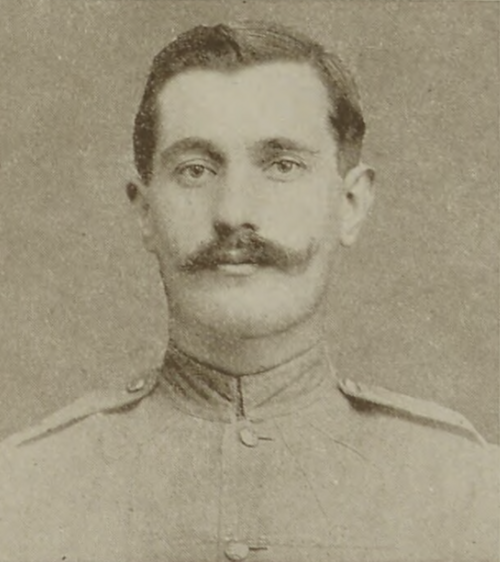
Corporal, British Army
Support & adopt this hero ↓
A bridge under enemy fire. Explosives that refused to ignite. And a Royal Engineers soldier who would not abandon his mission, even as German troops advanced around him. On 23 August 1914, at Jemappes in Belgium, Charles Alfred Jarvis performed an act of extraordinary courage that earned him the Victoria Cross, Britain's highest award for gallantry.
Charles Alfred Jarvis was a British Army soldier serving with the 57th Field Company, Royal Engineers, during the opening weeks of the First World War. As the British Expeditionary Force withdrew following the Battle of Mons, Royal Engineers units were tasked with destroying bridges to hinder the advancing German forces. At Jemappes, Jarvis was assigned the dangerous responsibility of preparing and firing demolition charges on a bridge that needed to be destroyed before the enemy could use it.
What followed became one of the remarkable acts of individual bravery of the First World War. Working for approximately one and a half hours under intense enemy fire and in full view of German troops, Jarvis repeatedly worked to prepare and ignite the explosives. Despite the immediate danger, he persisted until the charges successfully detonated and the bridge was demolished. His determination under fire exemplified the courage and professional dedication of the Royal Engineers during the desperate British retreat from Mons.
For his extraordinary gallantry at Jemappes on 23 August 1914, Lance-Corporal Charles Alfred Jarvis was awarded the Victoria Cross. His citation recognised his sustained work under heavy fire and his successful demolition of the bridge. The award was announced in the London Gazette in November 1914, making him one of the early recipients of the Victoria Cross during the Great War. In January 1915, King George V personally presented him with the decoration at Buckingham Palace.
Jarvis continued his association with the Royal Engineers before leaving military service in 1917. He subsequently worked at Portsmouth's naval dockyard, maintaining his connection with Britain's military and industrial establishment. His later years were spent in Scotland, particularly around Dundee, where he remained connected to his homeland.
Charles Alfred Jarvis died in 1948, but his actions at Jemappes remain an enduring example of courage under fire. At a time when the British Army was facing the shock of the German advance through Belgium, his determination to complete an exceptionally dangerous engineering task demonstrated how individual acts of bravery could make a difference during a retreat. His Victoria Cross stands as a lasting tribute to a soldier who continued his mission when the cost of failure was measured in lives. More than a century later, the story of Charles Alfred Jarvis remains an important chapter in the history of the Victoria Cross and the Royal Engineers in the First World War.
Become the named supporter for this profile and edit the tribute biography and portrait (Owner account required). Proceeds help keep the archive online.
$25 USD / year — annual sponsorship renewal. Keeps the page online and, where enabled, the family anniversary remembrance emails active.