★
Loading archive…
Loading archive…
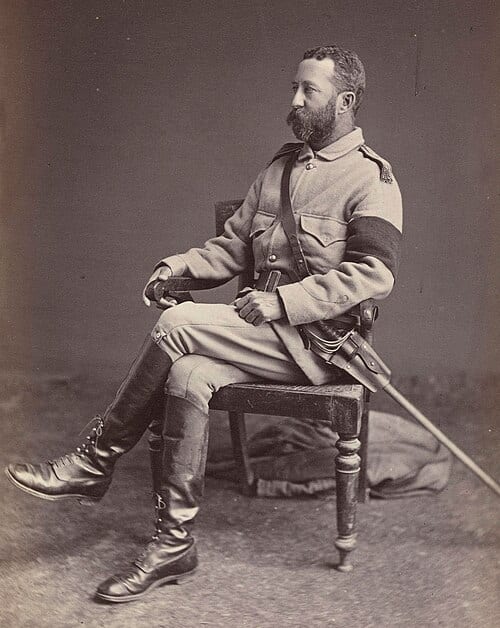
General, Indian Army
Support & adopt this hero ↓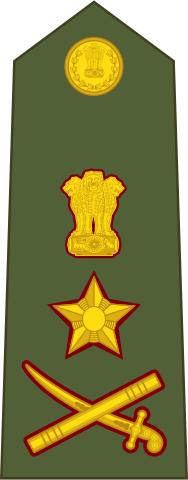
General Sir Charles John Stanley Gough (January 28, 1832–September 6, 1912) spent nearly five decades in the Indian Army and rose from a young Bengal cavalry officer to full general. Born in Chittagong, he entered the 8th Bengal Cavalry in 1848 and served in the Second Sikh War. During the Indian Rebellion of 1857–58, he rode with the Guides Cavalry and Hodson’s Horse, serving in operations around Delhi and Lucknow.
Gough’s Victoria Cross recognised four distinct acts of gallantry. At Khurkowdah in August 1857, he went to the aid of his wounded younger brother, Hugh, and killed two attackers. Three days later he led a cavalry charge and fought an enemy horseman hand to hand. At Shumshabad in January 1858, he attacked an opposing leader, lost his sword in the clash, and continued with his revolver. The following month at Meangunge he helped Brevet-Major O. H. St. George Anson and fought off two opponents. These episodes, recorded together in the Gazette, made his award unusual: it honoured courage shown in four separate engagements over several months.
After the rebellion, Gough commanded the 5th Bengal Cavalry and served in the Bhutan campaign. In the Second Anglo-Afghan War he commanded a brigade, including at Futtehabad and during the relief of Sherpur. He later held senior commands in India, was promoted to full general, and received the Knight Grand Cross of the Order of the Bath. His sons Hubert and John Edmond also became distinguished British Army officers; John Edmond, like his father, received the Victoria Cross. Gough retired to County Tipperary, where he died in 1912.
### Victoria Cross citation
5th Bengal European Cavalry, Major Charles John Stanley Gough. Acts of bravery: 15 and 18 August 1857, and 27 January and 23 February 1858.
First, for gallantry in an affair at Khurkowdah, near Rhotuck, on 15 August 1857, in which he saved his brother, who was wounded, and killed two of the Enemy.
Secondly, for gallantry on 18 August, when he led a Troop of the Guide Cavalry in a charge, and cut down two of the Enemy’s Sowars, with one of whom he had a desperate hand-to-hand combat.
Thirdly, for gallantry on 27 January 1858, at Shumshabad, where, in a charge, he attacked one of the Enemy’s leaders and pierced him with his sword, which was carried out of his hand in the melee. He defended himself with his revolver, and shot two of the Enemy.
Fourthly, for gallantry on 23 February, at Meangunge, where he came to the assistance of Brevet-Major O. H. St. George Anson, and killed his opponent, immediately afterwards cutting down another of the Enemy in the same gallant manner.
### Sources
The London Gazette. “Victoria Cross recommendations for Indian Military Forces.” No. 22318, October 21, 1859, p. 3792.
Murphy, David. “Gough, Sir Charles John Stanley.” *Dictionary of Irish Biography*. Royal Irish Academy, October 2009. DOI: 10.3318/dib.003546.v1.
National Army Museum. “Captain Charles John Stanley Gough, 5th [Bengal] European Cavalry winning the VC at Khurkowhah, Indian Mutiny, 15 August 1857.” Online Collection, accession no. 1958-12-43-1.
Become the named supporter for this profile and edit the tribute biography and portrait (Owner account required). Proceeds help keep the archive online.
$25 USD / year — annual sponsorship renewal. Keeps the page online and, where enabled, the family anniversary remembrance emails active.