★
Loading archive…
Loading archive…
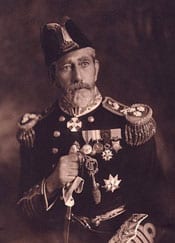
Father of the Canadian Navy
Charles Edmund Kingsmill was born on July 7, 1855, in Guelph, Canada West, the son of John Juchereau Kingsmill, Crown Attorney for Wellington County, and Ellen Diana Grange. He attended Upper Canada College in Toronto and entered the British Royal Navy as a cadet in September 1869, aged fourteen. He became a midshipman a year later. Those two appointments explain why accounts give both 1869 and 1870 as the start of his naval career.
As first lieutenant of HMS Arab, Kingsmill served in operations near the Red Sea port of Suakin in 1884. His first opportunity to command at sea came in 1889, when the captain of HMS Cormorant died and Kingsmill took charge. He went on to command the cruiser Archer on the China Station, Mildura on the Australia Station, and the battleships Majestic and Dominion. His career also included a serious setback. After Dominion grounded in 1906, a court martial severely reprimanded him. He subsequently commanded HMS Repulse and reached rear-admiral in May 1908.
Kingsmill returned to Canada in 1908 to command the Fisheries Protection Service. The appointment gave him firsthand knowledge of the ships, dockyards, and people Canada could draw upon for its own navy. On May 4, 1910, the Naval Service Act became law, and Kingsmill became the first Director of the Naval Service of Canada. The service received the title Royal Canadian Navy in 1911. Its first cruisers, HMCS Niobe at Halifax and HMCS Rainbow at Esquimalt, gave Canada a naval presence on both coasts. Political opposition stalled the larger shipbuilding programme.
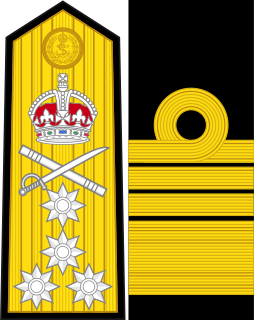
During the First World War, Kingsmill faced the practical problem of protecting shipping with the vessels Canada could put to sea. Under his direction, the naval service organized inshore patrols, supplied Allied vessels, and helped assemble merchant convoys at Halifax and Sydney. He also asserted Canadian control over naval bases and operations. The command and training institutions established during his tenure gave officers of the next generation a foundation for the navy’s expansion in the Second World War. Kingsmill reached the rank of admiral on the Royal Navy retired list in April 1917 and received a knighthood in 1918.
Commodore Walter Hose succeeded him as director in May 1920. Kingsmill spent his later summers on Grindstone Island in Big Rideau Lake, near Portland, Ontario. He died there on July 15, 1935, eight days after his eightieth birthday, and was buried in the Anglican cemetery at Portland. In 2010, the centennial year of the navy he had helped establish, Canada designated him a National Historic Person.
Two dates matter for publication. May 1920 is the documented handover to Hose, while Wikipedia gives December 31, 1921 as Kingsmill’s formal retirement. For his death, I favour July 15, 1935. The RCN commander profile gives August 15, which conflicts with the July date in the linked biography and the cadet corps account. I would also attribute the funeral flotilla to local recollection if you keep it in the social post.
Become the named supporter for this profile and edit the tribute biography and portrait (Owner account required). Proceeds help keep the archive online.
$25 USD / year — annual sponsorship renewal. Keeps the page online and, where enabled, the family anniversary remembrance emails active.