★
Loading archive…
Loading archive…
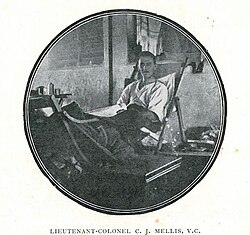
Major-General, British Army
Support & adopt this hero ↓
Few British Army officers combined fearless courage, distinguished leadership, and unwavering devotion to duty as completely as Major-General Sir Charles John Melliss. From the jungles of West Africa to the battlefields of India and Mesopotamia, Melliss built an extraordinary military career that spanned more than four decades. His gallantry earned the Victoria Cross, while his outstanding service brought him appointment as a Knight Commander of the Order of the Bath and a Knight Commander of the Order of St Michael and St George, securing his place among Britain's most decorated soldiers of the late Victorian and First World War eras.
Charles John Melliss was born on 28 January 1864 in Cape Town, Cape Colony, South Africa. After being educated at Wellington College in England, he entered the British Army and was commissioned into the Royal Berkshire Regiment in 1884. He later transferred to the Bengal Staff Corps, beginning a distinguished career with the Indian Army that saw him serve across Africa, India, and the Middle East.
His first active campaigns took him to British East Africa during the M'wele Expedition of 1895 to 1896, followed by the North West Frontier of India during the frontier campaigns of 1897 and 1898. He continued to build an impressive operational record during the Ashanti Campaign of 1900, where his courage would earn Britain's highest award for gallantry.
On 30 September 1900, during operations near Obassa in present-day Ghana, Captain Melliss led a determined attack against a strongly defended Ashanti position concealed in dense bush. Despite being wounded during fierce hand-to-hand fighting, he continued to direct his men until the enemy position was captured. For his exceptional bravery and leadership under fire, he was awarded the Victoria Cross, with the award announced in the London Gazette on 8 March 1901.
Melliss continued to distinguish himself throughout his career. He served in Somaliland, commanded the 53rd Sikhs, and later became Aide-de-Camp to King Edward VII, reflecting the confidence placed in his abilities both in the field and at the highest levels of military service. During the First World War, he commanded the 30th Indian Brigade in the Mesopotamian Campaign, leading his troops during the Battles of Shaiba, Nasiriyah, and Ctesiphon. Following the siege and surrender of Kut-al-Amara in April 1916, he spent more than two years as a prisoner of war in the Ottoman Empire, where he worked tirelessly to improve the conditions of British and Indian prisoners despite enduring great hardship himself.
For his distinguished service before and during the First World War, Melliss was appointed a Companion of the Order of the Bath in 1911 before being advanced to Knight Commander of the Order of the Bath in 1917. He was also appointed Knight Commander of the Order of St Michael and St George in recognition of his wartime service. His gallant leadership earned him several Mentions in Despatches, represented on his Victory Medal by a bronze oak leaf. In addition to his British honours, he received the Order of the Brilliant Star of Zanzibar and the French Croix de Guerre in recognition of his distinguished international service.
Away from the battlefield, Melliss also displayed remarkable courage in civilian life. In 1899, while travelling aboard the Sokoto, he dived into shark-infested waters to rescue a crewman who had fallen overboard. For this selfless act he received the Royal Humane Society Bronze Medal, a testament to the courage that defined both his military and personal life.
Major-General Sir Charles John Melliss retired from active service after the First World War but remained one of the British Army's most respected veterans. He died on 16 February 1944, leaving behind a remarkable legacy of courage, leadership, and selfless service. From the forests of Ashanti to the hardships of captivity in Mesopotamia, his career exemplified the highest traditions of the British Army, and his Victoria Cross remains a lasting symbol of extraordinary bravery in the face of overwhelming danger.
Become the named supporter for this profile and edit the tribute biography and portrait (Owner account required). Proceeds help keep the archive online.
$25 USD / year — annual sponsorship renewal. Keeps the page online and, where enabled, the family anniversary remembrance emails active.