★
Loading archive…
Loading archive…
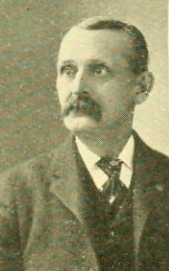
Second Lieutenant, U.S. Army
Support & adopt this hero ↓
Charles N. Gardner was a Union Army soldier during the American Civil War and a recipient of the Medal of Honor for exceptional bravery during the Battle of Five Forks in Virginia. He served in Company E, 32nd Massachusetts Infantry, and his military career reflected the experience of a front-line infantryman who later rose beyond his original enlisted rank.
Gardner entered the war as a Private, the rank he held during the action that ultimately earned him the Medal of Honor. As a Private in an infantry regiment, his responsibilities included marching with the unit, maintaining his weapon and equipment, standing guard, taking part in battlefield maneuvers, and fighting directly in the line of battle. Infantry soldiers formed the core of Civil War armies and were often required to advance against fortified positions under musket and artillery fire.
The 32nd Massachusetts Infantry served in major campaigns of the Eastern Theater and became part of the hard-fighting Union formations that operated against the Army of Northern Virginia. By 1865, the war had entered its final phase, and Union forces were applying increasing pressure around Petersburg and Richmond in an effort to break Confederate resistance.
Charles Gardner’s defining action occurred on April 1, 1865, during the Battle of Five Forks, Virginia. This battle was one of the decisive engagements of the closing days of the Civil War. Union forces attacked Confederate positions near the important road junction at Five Forks, threatening the final supply and escape routes supporting General Robert E. Lee’s Army of Northern Virginia.
The fighting was intense and fast-moving. Union infantry and cavalry pressed Confederate forces from multiple directions, and the battle rapidly developed into a major Confederate defeat. The Union victory at Five Forks helped make the Confederate position at Petersburg untenable and contributed directly to the evacuation of Petersburg and Richmond.
During this battle, Private Charles N. Gardner distinguished himself through extraordinary courage by capturing an enemy flag. The seizure of a Confederate battle flag was considered one of the most significant acts of individual valor during the Civil War.
Regimental colors were not merely ceremonial symbols. They served as visual rallying points for soldiers on the battlefield. In the smoke, confusion, and noise of combat, troops used their flags to identify their regiment and maintain formation.
Because of their importance, enemy flags were heavily protected. Color bearers and color guards were often positioned near the center of intense fighting, and they were expected to defend the colors even at great personal risk.
Capturing an enemy flag therefore usually required a soldier to move directly into the most dangerous part of the battlefield. Gardner’s successful capture of a Confederate flag at Five Forks demonstrated exceptional bravery and exposed him to immediate enemy fire.
For this act, Gardner was awarded the Medal of Honor. His recognized action occurred on April 1, 1865, while he was serving as a Private in Company E, 32nd Massachusetts Infantry.
The correct historical version of Gardner’s decoration is the Medal of Honor 1862–1895 Army. This was the early Army version of the Medal of Honor associated with Civil War-era recipients.
The Army Medal of Honor was authorized by Congress in 1862 during the American Civil War. At the time, the United States did not have the large system of military decorations that would exist in later generations. The Medal of Honor therefore became the principal national decoration for extraordinary gallantry and distinguished military conduct.
The early Army Medal of Honor featured a five-pointed star with a central symbolic design associated with the Union and victory. Over the following decades, the ribbon and suspension system changed, but Gardner’s service belongs to the original 1862–1895 Army period. No verified device or clasp is associated with Gardner’s Medal of Honor.
Gardner’s rank history is important because his Medal of Honor action rank and his later military rank were not the same. At Five Forks, he was a Private, and that is the rank that should be used when describing his heroic action.
Later in his military career, Gardner rose to the rank of Second Lieutenant. This advancement marked a significant progression from enlisted soldier to commissioned officer.
A Second Lieutenant was a junior commissioned officer responsible for helping lead soldiers, maintain discipline, supervise formations, and carry out the orders of more senior officers. The promotion therefore reflected a substantial increase in responsibility compared with his earlier service as a Private.
For the hero profile, however, the correct rank remains Private when specifically tied to the Medal of Honor action because that was the rank he held on April 1, 1865.
Gardner’s medal history also includes the Civil War Campaign Medal 1861–1865 Army under the client’s corrected database rules.
The Civil War Campaign Medal was established by the United States Army decades after the Civil War. It recognized qualifying Army service during the conflict.
Charles Gardner clearly served in the Union Army during the qualifying Civil War period. His service with the 32nd Massachusetts Infantry included combat in 1865, and he survived long enough to fall within the later period when the Army Civil War Campaign Medal existed. Gardner died on February 22, 1919. Because he was still alive well after the Army Civil War Campaign Medal was established, the medal is appropriate for his profile under the client’s current workflow.
This gives Gardner a final medal record of two confirmed decorations for the database: the Medal of Honor 1862–1895 Army and the Civil War Campaign Medal 1861–1865 Army.
The two medals represent different aspects of his military service.
The Medal of Honor recognizes a specific act of extraordinary bravery at Five Forks: the capture of an enemy flag under battlefield conditions.
The Civil War Campaign Medal represents his broader qualifying service in the Union Army during the Civil War.
Together, these decorations provide a fuller picture of Gardner’s military career than either medal alone.
The Battle of Five Forks itself was especially important because it helped trigger the final collapse of the Confederate defenses around Petersburg. After the Union victory, Confederate forces could no longer effectively protect the routes supporting Lee’s army.
Within days, Petersburg and Richmond were evacuated. Union forces then pursued the retreating Confederate army westward.
Only eight days after Gardner’s Medal of Honor action, General Robert E. Lee surrendered the Army of Northern Virginia to Lieutenant General Ulysses S. Grant at Appomattox Court House on April 9, 1865.
Gardner therefore performed his heroic act during one of the final major battles leading directly to the end of the war in Virginia.
His capture of a Confederate flag also symbolizes the broader collapse of Confederate resistance during this period. By April 1865, Union forces were winning major engagements, capturing prisoners, seizing equipment, and taking enemy colors as organized Confederate resistance rapidly weakened.
As an enlisted Private, Gardner had no control over grand strategy. He was not a senior commander and did not direct armies or divisions.
His importance comes from the personal courage he demonstrated at the tactical level. Civil War battles were ultimately fought by soldiers like Gardner, who had to make immediate decisions under intense fire.
His later promotion to Second Lieutenant shows that his military career continued to develop after the action at Five Forks. Moving from Private to commissioned officer represented a significant advancement in military responsibility and status.
The Medal of Honor remained the defining decoration of his career, but his later officer rank added another dimension to his service history.
Gardner’s life also extended far beyond the Civil War. He survived into the twentieth century, living until 1919.
This long life allowed him to witness enormous changes in the United States and in the Army he had once served. The military of his later years bore little resemblance to the Civil War force in which he had fought as a young infantryman.
Yet his identity remained permanently linked to the events of April 1, 1865.
Charles N. Gardner’s final confirmed military profile therefore reflects three central elements: his service as a Private in Company E, 32nd Massachusetts Infantry; his later advancement to Second Lieutenant; and his recognition with both the Medal of Honor 1862–1895 Army and the Civil War Campaign Medal 1861–1865 Army.
The Medal of Honor remains the highest and most important of these decorations. It commemorates the moment at Five Forks when Gardner captured a Confederate battle flag during active combat.
The Civil War Campaign Medal represents the broader scope of his service throughout the conflict.
Charles N. Gardner should ultimately be remembered as a Union infantryman who demonstrated extraordinary battlefield courage during the final days of the Civil War, earned the Medal of Honor as a Private, later rose to Second Lieutenant, and lived long enough to become one of the surviving veterans connected to the later Army Civil War Campaign Medal tradition.
His courage at Five Forks helped secure his place in the history of the 32nd Massachusetts Infantry, the United States Army, and the earliest generation of Medal of Honor recipients.
Become the named supporter for this profile and edit the tribute biography and portrait (Owner account required). Proceeds help keep the archive online.
$25 USD / year — annual sponsorship renewal. Keeps the page online and, where enabled, the family anniversary remembrance emails active.