★
Loading archive…
Loading archive…
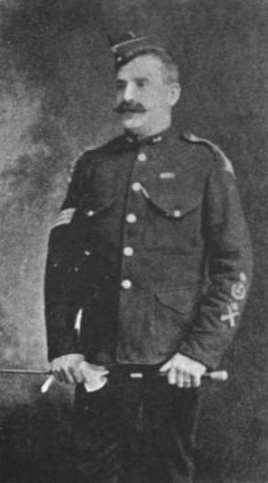
Warrant officer class 2, British Army
Support & adopt this hero ↓
Charles Edward Haydon Parker VC was one of the British soldiers whose courage helped save the guns of Q Battery, Royal Horse Artillery, during one of the most dramatic artillery actions of the Second Boer War. On 31 March 1900, at Korn Spruit, near Bloemfontein, he faced intense enemy fire in an exhausting struggle to rescue British artillery from a devastating Boer ambush. His gallantry earned him the Victoria Cross, Britain's highest award for valour.
Born in 1870, Parker enlisted in the Royal Horse Artillery in February 1885. His early military career included several years of service in India before he deployed to South Africa during the Second Boer War. Serving as a Sergeant with Q Battery, he became involved in the desperate fighting at Korn Spruit, also known as Sanna's Post.
As British forces withdrew towards Bloemfontein, Boer fighters opened a devastating ambush, capturing much of the baggage column and five guns from the leading artillery battery. Q Battery came under heavy fire, and its surviving personnel faced the dangerous task of pulling guns and limbers to safety by hand after their horses had been killed or wounded. Despite exhaustion and continued enemy fire, Parker and his comrades helped rescue four guns. Repeated attempts to recover the remaining gun and limber ultimately failed, but the determination and courage displayed by the battery became an extraordinary example of collective gallantry.
The action was so remarkable that Field Marshal Lord Roberts decided to recognise the collective bravery of Q Battery under Rule 13 of the Victoria Cross Warrant. Rather than selecting recipients through the usual individual recommendation process, representatives were chosen by their fellow soldiers. Parker was elected by the battery's non-commissioned officers to receive the Victoria Cross. His award was published in The London Gazette on 26 June 1900, and King Edward VII personally presented him with the decoration in July 1901.
Parker continued his military career after the Boer War, eventually reaching the rank of Battery Sergeant-Major in the Royal Field Artillery. When the First World War began, he returned to active service and arrived in France in July 1915. His later wartime service demonstrated his continued commitment to the British Army, although illness and physical incapacity eventually brought his military career to an end.
Charles Edward Haydon Parker died on 9 August 1918, leaving behind a remarkable record of service spanning more than three decades. His Victoria Cross remains a lasting reminder of the courage displayed by the men of Q Battery at Korn Spruit and of the extraordinary tradition of collective gallantry that made their story unique in British military history.
Become the named supporter for this profile and edit the tribute biography and portrait (Owner account required). Proceeds help keep the archive online.
$25 USD / year — annual sponsorship renewal. Keeps the page online and, where enabled, the family anniversary remembrance emails active.