★
Loading archive…
Loading archive…
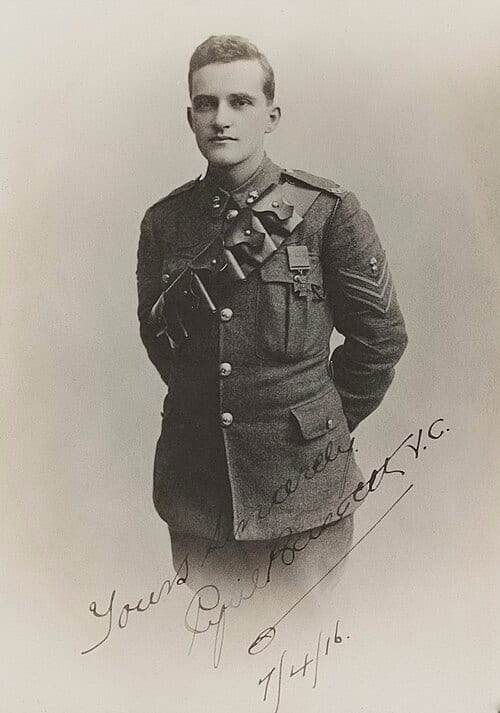
Lieutenant-Colonel, New Zealand Army
Support & adopt this hero ↓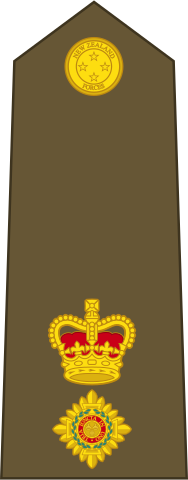
He kept Gallipoli connected while enemy fire cut every wire.
Cyril Royston Guyton Bassett was born on 3 January 1892 in Auckland, New Zealand. A bank employee in civilian life, he served with the Auckland College Rifles Volunteers from 1909 to 1911 and then the Auckland Divisional Signal Company. He attested for the New Zealand Expeditionary Force on 10 August 1914, with service number 4/515, and embarked with the Main Body on 16 October. After training in Egypt, he landed at ANZAC Cove on 25 April 1915 with the New Zealand Divisional Signal Company, Corps of New Zealand Engineers.
At Chunuk Bair in August 1915, Corporal Bassett repeatedly crossed exposed ground to establish and repair telephone communications between forward positions and headquarters. Ottoman fire continually threatened both the signallers and their fragile lines. He persisted under intense fire, helping commanders maintain contact with troops fighting for the heights. His Victoria Cross citation specifies 7 August, within the continuing communications operations of 7–9 August. The award was published in The London Gazette, issue 29328, page 10154, on 15 October 1915.
Evacuated through illness on 13 August 1915, Bassett later recovered and rejoined his unit in France in June 1916. He served during the Somme operations and continued the dangerous work of maintaining battlefield communications on the Western Front. He was commissioned second lieutenant on 21 September 1917 and was wounded during that year.
On 28 March 1918, during the German Spring Offensive, a shell struck the New Zealand Rifle Brigade headquarters at Colincamps. Bassett was temporarily buried by the explosion but survived and restored communications within approximately fifteen minutes. This was a separate achievement from Chunuk Bair; it should not be confused with an additional gallantry decoration.
He returned to New Zealand in December 1918 and was released from the NZEF in January 1919, having attained lieutenant rank. His First World War service brought the 1914–15 Star, British War Medal and Victory Medal. He maintained his Territorial connections, later receiving the New Zealand Territorial Service Medal and the George VI Efficiency Decoration in 1950 for sustained military service.
During the Second World War, Bassett served in the National Military Reserve under service number 802313. He rose to lieutenant-colonel and became Commander of Signals, Northern Military District. These responsibilities concerned home defence and communications in New Zealand, with no established overseas combat deployment during that war. Released from active duty in December 1943, he was placed on the retired list in 1948. His wartime service was recognized by the War Medal 1939–1945 and New Zealand War Service Medal.
Bassett also received the 1937 and 1953 Coronation Medals and the Queen Elizabeth II Silver Jubilee Medal in 1977. Together with his long-service awards, these honours reflected a military association extending far beyond Gallipoli. In civilian life he continued his banking career and remained modest about his Victoria Cross, emphasizing the courage of those who served alongside him.
He died at Stanley Bay, Auckland, on 9 January 1983, aged ninety-one. From corporal at Chunuk Bair to lieutenant-colonel responsible for district signals, his career demonstrated the vital connection between communications, command and the survival of soldiers in battle.
Become the named supporter for this profile and edit the tribute biography and portrait (Owner account required). Proceeds help keep the archive online.
$25 USD / year — annual sponsorship renewal. Keeps the page online and, where enabled, the family anniversary remembrance emails active.