★
Loading archive…
Loading archive…

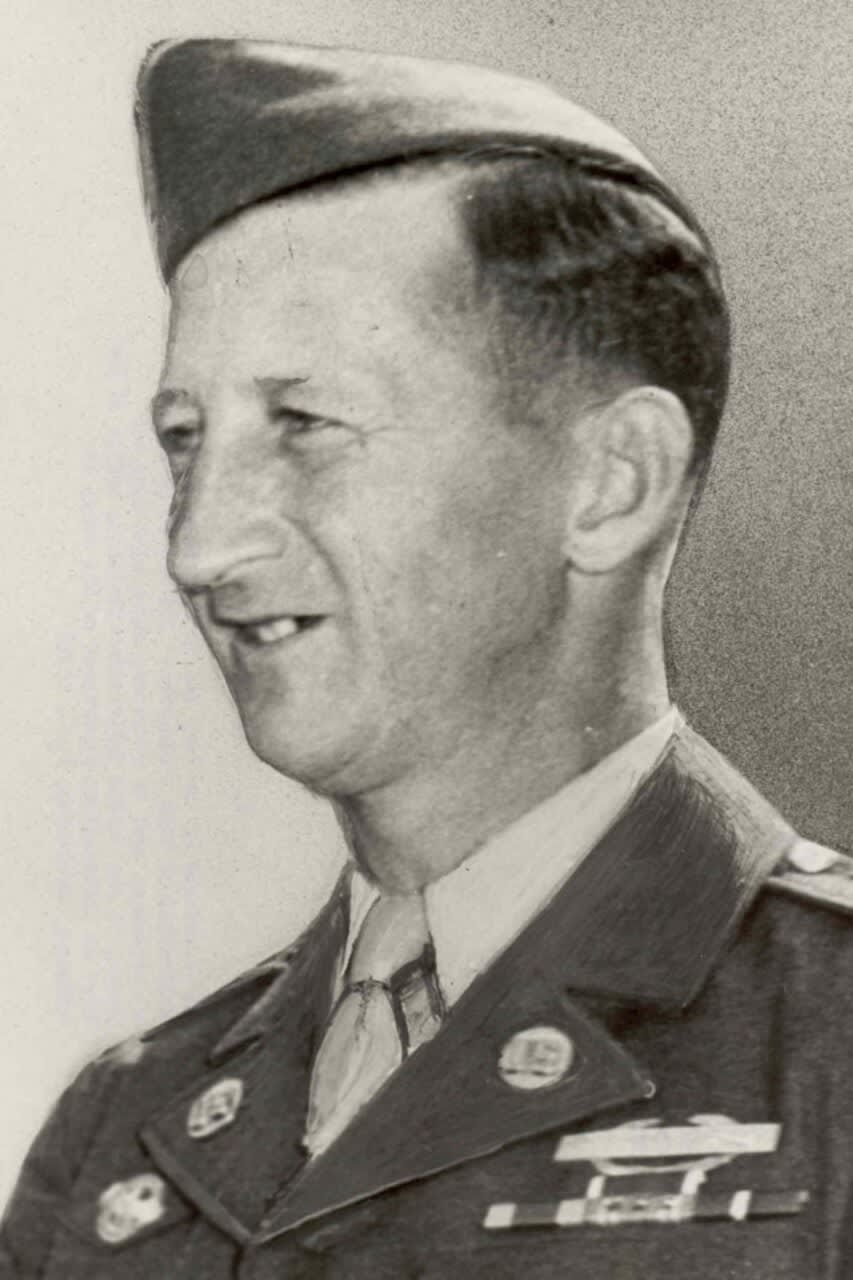
At 34 years old, Dexter James Kerstetter entered the U.S. Army older than most of the soldiers around him. They called him “Pop.” Three years later, on a steep and heavily defended ridge in the Philippines, the former creamery mechanic from Centralia, Washington, would perform an act of extraordinary courage that placed his name among the most celebrated American soldiers of World War II.
Born on December 21, 1907, in Centralia, Washington, Dexter James Kerstetter spent much of his early life far removed from military fame. He attended Centralia High School for two years before going to work as an equipment mechanic at the Hub City Creamery, where he remained for about 13 years. After the United States entered World War II, Kerstetter enlisted in the Army on March 18, 1942. His age made him noticeably older than many of his fellow recruits, earning him the affectionate nickname “Pop,” but it would soon become clear that age had done nothing to diminish his determination.
Kerstetter was assigned to Company C, 130th Infantry Regiment, 33rd Infantry Division. He initially served as a cook's aide, a role far removed from the fighting he wanted to join. The division trained in Hawaii beginning in 1943 and later moved to New Guinea. By February 1945, American forces were driving back into the Philippines, and the 33rd Infantry Division landed at Lingayen Gulf on Luzon. Kerstetter asked to leave the kitchen and serve on the front line. His request was approved, and he became a forward scout. HistoryLink records that his combat performance following the Luzon landing brought him the Bronze Star Medal on February 14, 1945.
Then came April 13, 1945.
Near Galiano, Luzon, Kerstetter's company launched a dawn attack against Japanese positions built into a narrow ridge bordered by steep cliffs. Mortars, machine guns, rifles, caves, tunnels and concealed fighting positions made the approach exceptionally dangerous. When the leading American troops were stopped by intense fire and suffered casualties, Private First Class Kerstetter moved forward. Instead of remaining behind cover, he placed himself ahead of his squad and began working his way toward the fortified positions.
What followed became the basis of his Medal of Honor citation. Kerstetter descended a cliff toward a cave entrance, attacked enemy soldiers at close range, returned to the ridge and destroyed a machine gun position with rifle fire and grenades. He continued attacking until his ammunition was exhausted, then returned for ammunition and treatment to a hand blistered by the heat of his rifle. Rather than withdrawing, he went forward again and guided fresh troops toward the enemy position. By the end of the action, he had been credited with killing 16 enemy soldiers, and the American force captured the hill and held it through three days of counterattacks. The official Army citation concluded that his heroism was largely responsible for taking the key position and that his actions inspired the soldiers fighting beside him.
The battle was not finished with him. During the fighting that followed, Kerstetter was struck in the leg by sniper fire and evacuated for treatment. He spent approximately two months hospitalized and was promoted to sergeant while recovering. His combat wound supports the Purple Heart represented in his wartime ribbon entitlement.
Kerstetter left active Army service in August 1945, but the nation had not forgotten what he had done on Luzon. On October 12, 1945, President Harry S. Truman presented Sergeant Dexter J. Kerstetter with the Medal of Honor during a White House ceremony. His award was formally recorded under War Department General Orders No. 97, dated November 1, 1945. His official citation identified him as a member of Company C, 130th Infantry, 33rd Infantry Division, and recognized his extraordinary actions near Galiano on April 13.
Kerstetter's verified World War II ribbon entitlement tells the broader story of that service. Along with the Medal of Honor, Bronze Star Medal, Purple Heart and Army Good Conduct Medal, his campaign service is represented by the American Campaign Medal, Asiatic-Pacific Campaign Medal with two bronze service stars, World War II Victory Medal, and Philippine Liberation Ribbon with one bronze service star. The two Asiatic-Pacific stars correspond to the New Guinea and Luzon campaigns, which are the World War II campaign credits officially recorded for the 130th Infantry Regiment by the U.S. Army Center of Military History.
His regiment also received the Philippine Republic Presidential Unit Citation for the period from October 17, 1944, through July 4, 1945. Kerstetter served with the 130th Infantry during this period, including its combat operations on Luzon. Unlike his personal ribbons, this foreign unit citation was worn separately as a unit award, making it an important part of the complete historical representation of his wartime service.
The war ended, but Kerstetter's military career did not. He returned to Washington and later served in the Washington National Guard, eventually reaching the rank of major. In civilian life he worked in mechanical repair and later became a machinist at the Puget Sound Naval Shipyard in Bremerton. By 1972, he was reportedly approaching promotion to lieutenant colonel and retirement from the National Guard. The soldier once called “Pop” by younger infantrymen had turned a wartime enlistment into decades of continued service.
On July 9, 1972, Dexter Kerstetter went fishing on Hood Canal with two of his sons. Their small boat capsized, and while they attempted to right it, Kerstetter was struck and disappeared beneath the water. His body was never recovered. A memorial marker at Tahoma National Cemetery preserves his name, and his legacy has continued in Washington, including the naming of a street at Joint Base Lewis-McChord in his honor.
Dexter James Kerstetter's story is powerful because it did not begin with the expectation of heroism. He entered the Army as a middle-aged mechanic, served first in a kitchen, volunteered for the front line, and ultimately stood almost alone against fortified enemy positions on Luzon. His official Medal of Honor citation records the courage of one day, but his wider service tells an equally important story. Sergeant Dexter J. Kerstetter was not simply a Medal of Honor recipient. He was a citizen-soldier who repeatedly chose to move toward danger when others needed him most.
Become the named supporter for this profile and edit the tribute biography and portrait (Owner account required). Proceeds help keep the archive online.
$25 USD / year — annual sponsorship renewal. Keeps the page online and, where enabled, the family anniversary remembrance emails active.