★
Loading archive…
Loading archive…

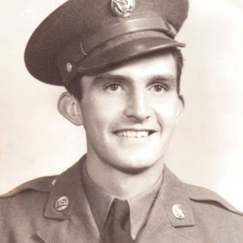
Most soldiers would have stopped after two attacks had been shattered by machine-gun fire. First Lieutenant Donald Kenneth Schwab did not. On September 17, 1944, near Lure, France, the young U.S. Army company commander watched his men take heavy casualties against a strongly defended German position. After leading them forward twice, helping recover the wounded, and reorganizing his battered company, Schwab prepared for a third attempt. This time, he would ultimately go forward alone. His actions that day would earn the Medal of Honor, although full recognition would not come until almost seventy years later.
Born on December 6, 1918, in Hooper, Nebraska, Donald K. Schwab entered the United States Army and eventually became an infantry officer during the Second World War. By 1944 he was serving as a First Lieutenant and commander of Company E, 15th Infantry Regiment, 3rd Infantry Division, one of the Army formations fighting its way across Europe. His wartime service took him through some of the hardest fighting of the Mediterranean and European campaigns before his company reached eastern France.
The defining moment of Schwab's military career came outside Lure, France, on September 17, 1944. According to his official Medal of Honor citation, Schwab led Company E across roughly 400 yards of exposed ground when intense German machine-gun and machine-pistol fire erupted from a wooded position ahead. He pulled his soldiers out of the ambush, reorganized them, and led another assault. When that attack was stopped, Schwab moved among his men under fire, supervised the collection of wounded soldiers, and organized another withdrawal.
Then came the act that defined his place in American military history. Schwab rallied his depleted company for a third attack and advanced to within about fifty yards of the German position. He ordered his men down and charged forward alone, firing his carbine while enemy automatic weapons swept the ground around him. Reaching the principal German emplacement, Schwab tore away its cover, struck the enemy gunner with the butt of his carbine, seized him, and dragged the prisoner back through enemy fire to the American line. His assault broke the cohesion of the German defense, and the enemy abandoned the position. The official citation described his conduct as extraordinary heroism and selflessness above and beyond the call of duty.
Schwab's courage was recognized during the war with the Distinguished Service Cross, the Army's second-highest decoration for valor. Decades later, Congress directed a review of military records to determine whether deserving veterans had been denied the Medal of Honor. The resulting review led to 24 Distinguished Service Crosses from World War II, Korea and Vietnam being upgraded. Schwab was among those veterans. On March 18, 2014, President Barack Obama posthumously presented the Medal of Honor to Schwab's son, Dr. Terry Schwab, at the White House. Donald Schwab had died nine years earlier and never knew that his wartime valor would ultimately receive the nation's highest military decoration.
His combat record went far beyond a single afternoon in France. The U.S. Army officially records Schwab as the recipient of the Bronze Star Medal and the Purple Heart with two Bronze Oak Leaf Clusters, signifying three awards of the Purple Heart. His campaign service was recognized by the European-African-Middle Eastern Campaign Medal with one Silver Service Star, two Bronze Service Stars and a Bronze Arrowhead Device, together with the World War II Victory Medal. The Army also lists his Combat Infantryman Badge, French Fourragere and Honorable Service Lapel Button-WWII. These honours reflect not only his celebrated action at Lure but a prolonged period of frontline infantry service during World War II.
The devices attached to Schwab's campaign medal tell part of that story in miniature. The silver service star and two bronze service stars represent extensive credited campaign participation, while the bronze arrowhead denotes participation in a qualifying combat assault. His three Purple Hearts provide another stark measure of the risks he endured. Contemporary and family-based accounts describe wounds suffered during the campaigns in the Mediterranean and Europe, including serious injuries that required hospitalization before he returned to combat.
When the war ended, Schwab did not build his life around fame. He left the Army on October 26, 1945, returned to Nebraska, farmed, and later worked for the U.S. Postal Service until retirement. The Army's biography remembers him as an active member of his church and community who enjoyed local sports. He died on February 19, 2005, aged 86, having lived for nearly sixty years after the war without receiving the Medal of Honor that history would eventually determine he had earned.
Donald K. Schwab's story is powerful precisely because recognition came so late. On a rain-soaked battlefield in France in 1944, he did not know that future generations would study his actions or that the Medal of Honor would one day bear his name. He knew only that his soldiers were pinned down and wounded in front of an enemy position that had to be overcome. He went forward when going forward meant going alone. Today, First Lieutenant Donald K. Schwab stands among the Medal of Honor recipients of World War II, remembered for courage under fire, devotion to his men, and an act of leadership that waited nearly seventy years for its highest recognition.
Become the named supporter for this profile and edit the tribute biography and portrait (Owner account required). Proceeds help keep the archive online.
$25 USD / year — annual sponsorship renewal. Keeps the page online and, where enabled, the family anniversary remembrance emails active.