★
Loading archive…
Loading archive…

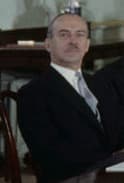
Few Canadian cabinet ministers entered politics after rescuing soldiers from a burning, torpedoed ship. Lieutenant-Colonel The Honourable Douglas Scott Harkness, PC, OC, GM, ED (29 March 1903 to 2 May 1999) did exactly that. A Royal Canadian Artillery officer, Second World War veteran, George Medal recipient, teacher, farmer, parliamentarian and federal cabinet minister, Harkness lived a career that joined battlefield leadership with more than a quarter-century of public service.
During the Second World War, Harkness served in Britain, Sicily, Italy and Northwest Europe. He rose from Major to Lieutenant-Colonel, survived the sinking of MV Devis during the voyage to Sicily, received the George Medal for gallantry, and ultimately commanded the 5th Anti-Tank Regiment, Royal Canadian Artillery, of the 4th Canadian Armoured Division. Years later, as Canada's Minister of National Defence, he again found himself at the centre of a national crisis, this time over nuclear weapons and Canadian defence policy.
Early life, education and militia service
Douglas Scott Harkness was born in Toronto, Ontario, on 29 March 1903 and grew up in Alberta. He graduated from the University of Alberta with a Bachelor of Arts degree, worked as a farmer, and became a teacher. He later taught at Crescent Heights High School in Calgary, where his principal was William Aberhart, the future premier of Alberta. Archival records describe Harkness as both a farmer and teacher before the war.
His military connection began well before the outbreak of the Second World War. Harkness joined the Canadian militia in 1926 and received a commission in the 20th Field Brigade, Canadian Artillery, at Red Deer in 1928. When Canada went to war in 1939, his years of militia experience gave him a foundation for the increasingly senior artillery appointments that followed. A contemporary Canadian Press profile records that he was mobilized in 1939 and went overseas in 1940 with the 2nd Anti-Tank Regiment.
Second World War service with the Royal Canadian Artillery
Harkness served overseas from 1940 to 1945. After service with the 2nd Anti-Tank Regiment, he became second-in-command of the 1st Anti-Tank Regiment, Royal Canadian Artillery, in 1942. His wartime service ultimately took him through the campaigns in Sicily, Italy and Northwest Europe. Library and Archives Canada specifically records his service in those three theatres and his progression from Major to Lieutenant-Colonel.
The defining act of gallantry in Harkness's military career occurred before he had even reached the beaches of Sicily.
The sinking of MV Devis and the George Medal
On 5 July 1943, Harkness was the officer commanding the troops aboard MV Devis, a British merchant vessel serving as an assault transport in Convoy KMS-18B. The convoy was carrying men, vehicles, artillery and equipment from Britain toward Sicily for Operation Husky, the Allied invasion of the island.
Off the North African coast, the German submarine U-593 torpedoed Devis. The explosion struck amidships, igniting fuel and ammunition and turning parts of the vessel into a burning wreck. Fifty-two men were killed in the sinking. The surviving troops were eventually rescued and landed at Bougie.
Harkness immediately began organizing the evacuation. Men were trapped below on the mess deck, with fire blocking their normal route of escape. Historical research published in Canadian Military History records that Harkness directed rescue efforts, organized the use of ropes through an opened hatch and remained aboard while trapped and panic-stricken soldiers were brought to safety. He and Armament Quartermaster Sergeant D. S. Milne continued working near the end, helping force reluctant or hysterical men into the sea as the ship was sinking beneath them.
His actions resulted in the award of the George Medal, one of the British Commonwealth's foremost decorations for acts of exceptional bravery outside the usual circumstances of direct combat with the enemy.
The award was formally published in The London Gazette, Issue 36427, on 17 March 1944, and was dated 4 March 1944. The official notice named Major Douglas Scott Harkness, Royal Canadian Artillery, and stated that the King, acting on the advice of His Majesty's Canadian Ministers, had approved the George Medal in recognition of:
"conspicuous gallantry in carrying out hazardous work in a very brave manner."
A later account published by the Royal Canadian Artillery Association records that Harkness descended toward the mess deck, helped rescue men from the flames and remained aboard until the final stages of the sinking.
The distinction between the dates is important. Harkness performed the act of gallantry on 5 July 1943, but his George Medal was formally awarded and gazetted in March 1944.
Command of the 5th Anti-Tank Regiment
Harkness continued fighting after Sicily and served during the Italian campaign. In 1944 he returned to Britain to assume command of the 5th Anti-Tank Regiment, Royal Canadian Artillery, part of the 4th Canadian Armoured Division.
Promoted to Lieutenant-Colonel, Harkness commanded the regiment during the final phase of the war in Northwest Europe. A contemporary Canadian profile records that he commanded the 5th Anti-Tank Regiment during 1944 and 1945, while the Royal Canadian Artillery Association identifies him specifically as the regiment's commanding officer.
His wartime career had taken him from militia artillery officer to a regimental commander, through the Mediterranean campaigns and into the final operations against Germany.
Post-war military service
After active wartime service, Harkness was posted to the Reserve of Officers in August 1945, but his artillery career did not end with victory in Europe.
From 1946 to 1949, he served as Commanding Officer of the 41st Anti-Tank Regiment, Reserve Army. Library and Archives Canada specifically records this post-war command, confirming that his connection with the Canadian artillery continued after his return home.
His long militia and reserve service was recognized by the Efficiency Decoration, represented by the post-nominal letters ED that accompanied his name in later military and honours records. The Royal Canadian Artillery Association records him as Lieutenant-Colonel The Honourable Douglas Scott Harkness, OC, GM, ED, PC.
From artillery commander to Member of Parliament
Harkness entered federal politics before the war had formally ended. While still overseas in 1945, he was approached to stand as the Progressive Conservative candidate in Calgary East. He accepted and was elected to the House of Commons in the federal election that June.
It was the beginning of an extraordinary parliamentary career. Harkness won election in Calgary East in 1945 and 1949, later represented Calgary North, and finally Calgary Centre. In total, he won nine federal elections and remained in the House of Commons until 1972. Parliamentary tributes following his death recalled both the length of his service and the unusual path that had taken him directly from wartime regimental command into national politics.
In 1957, following the election of John Diefenbaker's Progressive Conservative government, Harkness entered cabinet and was sworn to the Queen's Privy Council for Canada on 21 June 1957.
He initially served as Minister of Northern Affairs and National Resources and Acting Minister of Agriculture. He subsequently became Minister of Agriculture, a portfolio particularly suited to a politician who continued to identify closely with farming and western Canadian agriculture.
On 11 October 1960, Harkness became Minister of National Defence.
Minister of National Defence and the nuclear weapons crisis
Harkness assumed the defence portfolio during one of the most difficult periods of Cold War Canadian military policy. Canada faced unresolved questions concerning continental defence, NATO commitments and whether Canadian forces should be equipped with American nuclear warheads.
The dispute eventually divided Prime Minister John Diefenbaker's government. Harkness believed Canada should honour its existing defence commitments and accept nuclear warheads for weapons systems assigned a nuclear role. As disagreement within cabinet deepened, he concluded that he could no longer remain responsible for the Department of National Defence while supporting a policy different from that of the prime minister.
In February 1963, Harkness resigned as Minister of National Defence.
His resignation intensified the political crisis surrounding the Diefenbaker government and became one of the defining episodes of Canadian Cold War politics. Parliamentary tributes after Harkness's death specifically recalled his resignation over the nuclear arms dispute as the political decision for which he remained especially remembered.
Harkness nevertheless remained a Member of Parliament for nearly another decade, finally retiring from federal politics in 1972.
Officer of the Order of Canada
Harkness's military service, political career and voluntary work were formally recognized when he was appointed an Officer of the Order of Canada on 4 July 1978. He was invested on 18 October 1978.
The Governor General of Canada's official honours register records the citation for Lieutenant-Colonel Douglas Scott Harkness. It recognized his "distinguished military service", his political career and his service in several ministerial posts, particularly as Minister of National Defence. The citation also singled out his voluntary contribution as chairman of the Glenbow-Alberta Institute in Calgary.
The appointment added the post-nominal OC to a name already associated with the George Medal and Efficiency Decoration.
Later life and legacy
Harkness remained closely associated with Calgary and Alberta throughout his later life. His archival papers are preserved in major Canadian collections, including the Douglas Scott Harkness fonds at Library and Archives Canada and a separate fonds held by the University of Calgary's Glenbow Archives. Together they document decades of military, parliamentary, ministerial and political activity.
His name also became part of Calgary's civic landscape. Douglas Harkness School was named in his honour, preserving the memory of the former teacher, soldier and parliamentarian in the city he represented for decades.
Lieutenant-Colonel The Honourable Douglas Scott Harkness died in Calgary, Alberta, on 2 May 1999, aged 96.
His life linked two very different forms of public duty. In wartime, he commanded Canadian artillerymen and risked his life aboard a burning ship to help save trapped soldiers. In peace, he served Canadians through nine election victories, several cabinet portfolios and one of the most consequential defence debates of the Cold War.
The George Medal remained the clearest symbol of his personal courage. The Order of Canada recognized the broader span of his service. Together with his long career in the Royal Canadian Artillery and Parliament, they define Douglas Harkness as a Canadian soldier-statesman whose record stretched from the battlefields of the Second World War to the highest levels of national government.
Become the named supporter for this profile and edit the tribute biography and portrait (Owner account required). Proceeds help keep the archive online.
$25 USD / year — annual sponsorship renewal. Keeps the page online and, where enabled, the family anniversary remembrance emails active.