★
Loading archive…
Loading archive…

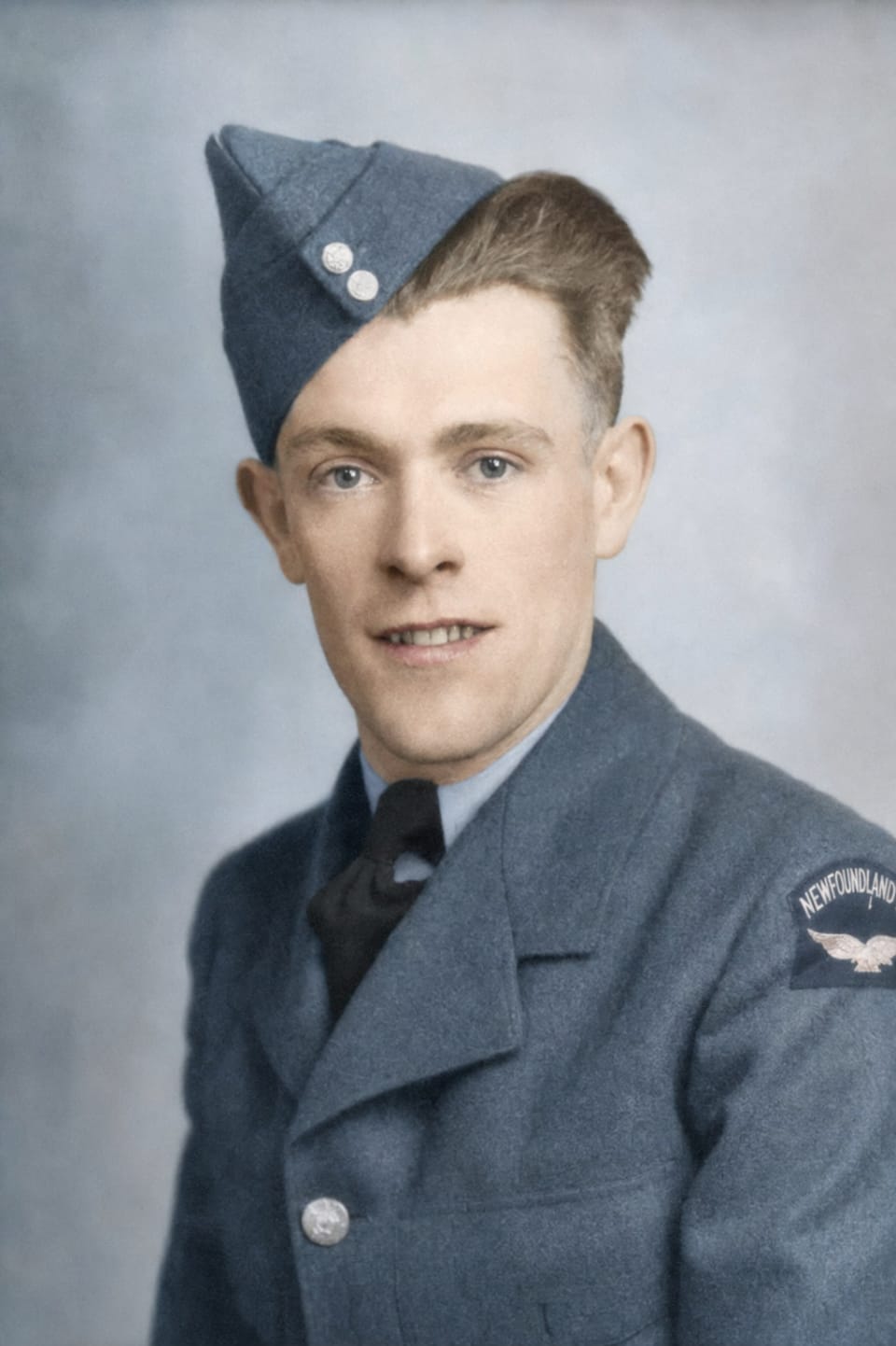
Newfoundland RAF Veteran of the Second World War
From the quiet community of Heart's Delight, Newfoundland, to wartime England, Harold Reid Hippern carried his sense of duty across the Atlantic and into the ranks of the Royal Air Force. His story is one of the thousands of individual journeys that made the Allied war effort possible, but it is also distinctly Newfoundland, shaped by a generation that volunteered for service while their homeland was still a separate Dominion.
Harold Reid Hippern was born in Glace Bay and spent his childhood in Heart's Delight, Newfoundland. When the Second World War called men and women from across the British Empire into service, Hippern joined the Royal Air Force and travelled overseas to England. A surviving Newfoundland RAF contingent list records him as Harold Reid Hippern, service number 798821, among the men who joined in Newfoundland and served with the RAF in the United Kingdom.
His wartime service placed him far from the Newfoundland community he knew as home. England was at the centre of the Allied air war, and RAF personnel on the ground were essential to keeping aircraft, airfields and the wider air-force system functioning. Hippern's obituary confirms that he served with the Royal Air Force in England during the Second World War, establishing the central chapter of his military career.
That service is represented in his historically supported ribbon group by the Defence Medal, Newfoundland Volunteer Service Medal, and War Medal 1939-45.
The Defence Medal recognized qualifying service in non-operational areas exposed to enemy attack or threat, including overseas service in Britain. Veterans Affairs Canada notes that service outside one's country of residence could qualify after the prescribed period, with reduced requirements in territories threatened or subjected to air attack. Hippern's documented RAF service in England places his wartime history within the type of service recognized by this medal.
The Newfoundland Volunteer Service Medal carries particular significance in Hippern's story because it commemorates the contribution of volunteers from the Dominion of Newfoundland. The governing Newfoundland legislation specifically defines the British Imperial Forces as including the Royal Air Force and provides for the medal to qualifying Newfoundland volunteers who served in the Allied war effort and were not recipients of another country's volunteer war service medal. Veterans Affairs Canada records that the medal was created in 1981 to recognize qualifying Second World War service from 3 September 1939 to 2 September 1945.
His group is completed by the War Medal 1939-45, the broad Commonwealth war service medal awarded for qualifying full-time service during the Second World War. Official criteria required 28 days of full-time Armed Forces service between 3 September 1939 and 2 September 1945. Hippern's documented overseas RAF service comfortably establishes the historical basis for this recognition.
But Hippern's connection with aviation did not end when the war did. After returning to civilian life, he built a long career in the aviation industry, working as an aircraft mechanic with Allied Aviation and later as a manager with Airconsol. His work took him through Gander, Sydney and Halifax, allowing the technical world that had helped shape his wartime experience to remain part of his life for decades.
Away from aviation, Hippern built an equally enduring family life. He was married to his wife Elizabeth for 59 years and became a father, grandfather and great-grandfather. He was also a long-time member of All Saints Anglican Church in Bedford, Nova Scotia. Harold Reid Hippern died on 9 September 2006, aged 82, leaving behind a legacy rooted in family, aviation and wartime service.
Harold Reid Hippern was not a famous fighter ace or decorated gallantry hero, and that is precisely why his story matters. The Allied air effort depended not only on the men who flew into combat, but also on the enormous body of trained personnel whose service sustained the Royal Air Force through six years of war. From Newfoundland to England and then into a lifetime in Canadian aviation, Hippern's career represents the quieter form of service on which victory also depended.
His ribbons preserve that story in three colours of remembrance: service in wartime Britain, Newfoundland's contribution to the Allied cause, and participation in the greatest conflict of the twentieth century. For Harold Reid Hippern, they are not simply medals. They are the surviving markers of a Newfoundland volunteer who crossed an ocean to serve, came home, and spent the rest of his working life close to the aircraft that had defined his wartime generation.
Become the named supporter for this profile and edit the tribute biography and portrait (Owner account required). Proceeds help keep the archive online.
$25 USD / year — annual sponsorship renewal. Keeps the page online and, where enabled, the family anniversary remembrance emails active.