★
Loading archive…
Loading archive…
The Hero Who Repeatedly Risked His Life to Save Others
On 9 April 1916, wounded soldiers lay helpless between opposing trenches in Mesopotamia, exposed to relentless enemy rifle fire. While every movement across the open ground could mean death, a 21-year-old British officer repeatedly left the safety of his position to rescue them. His name was Edgar Kinghorn Myles, and his extraordinary courage that day would earn him the Victoria Cross, Britain's highest military award for gallantry in the face of the enemy.
Born on 29 July 1894 in East Ham, Essex, England, Edgar Kinghorn Myles was educated locally and worked as a clerk for the Port of London Authority before the First World War transformed his life. He enlisted in the Worcestershire Regiment in August 1914 and soon earned a commission. Although subsequently commissioned into the Welsh Regiment, he served with the 9th Battalion, Worcestershire Regiment, taking part in the Gallipoli campaign before moving to Mesopotamia, present-day Iraq.
His defining moment came during the desperate British attempt to relieve the besieged garrison at Kut. On 9 April 1916, following fierce fighting at Sanna-i-Yat, numerous wounded soldiers remained stranded beyond the British trenches. Despite intense rifle fire, Second Lieutenant Myles ventured into the exposed ground on several occasions, assisting casualties and carrying a wounded officer back to safety. Accounts of the battle also describe how he was wounded while rescuing another man but continued until the soldier was safe.
His remarkable selflessness was officially recognised in the London Gazette on 26 September 1916. The Victoria Cross citation praised his repeated journeys beyond the advanced trenches under heavy fire, his disregard for personal danger and his determination to save wounded comrades. For Myles, the lives of the men lying helpless before him mattered more than his own safety.
But his Victoria Cross was not the end of his extraordinary story. On 25 January 1917, during fighting near Kut-al-Amara, Myles again demonstrated exceptional courage and leadership. With nearly all the officers around him becoming casualties, he helped sustain the defence for five critical hours against two enemy counterattacks. His accurate battlefield reports, composure and personal example maintained the confidence and steadiness of the surviving soldiers.
For this action, Myles received the Distinguished Service Order (DSO), announced in the London Gazette on 26 April 1917. His official citation specifically recognised his gallantry, devotion to duty, leadership during the prolonged defence and valuable reports from the battlefield. He was wounded during the fighting and subsequently recuperated in India. His conduct was so highly regarded that he had reportedly been considered for a second Victoria Cross before the DSO was awarded.
Myles was also Mentioned in Despatches twice, further recognising his distinguished wartime service. His First World War service was commemorated by the 1914–15 Star, British War Medal and Victory Medal, the latter bearing the oak-leaf emblem representing his mentions.
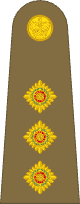
After the war, Myles continued his military career, transferring to the King's Regiment (Liverpool) in 1923. He attained the rank of Captain in 1925 and retired from regular military service in 1928. His later honours included the King George VI Coronation Medal of 1937 and the Queen Elizabeth II Coronation Medal of 1953, reflecting recognition extending well beyond the battlefields of the Great War.
Edgar Kinghorn Myles died on 31 January 1977 in Bishopsteignton, Devon, aged 82. His Victoria Cross and other medals are preserved in the Worcestershire Regiment collection at Worcester City Art Gallery and Museum, ensuring that future generations can encounter the story of his remarkable service.
His legacy is measured not simply by the medals he earned, but by the lives he risked everything to save. In the chaos of war, when survival itself demanded courage, Edgar Kinghorn Myles repeatedly chose to return for others. That decision remains the most powerful testimony to the man behind the Victoria Cross.
Become the named supporter for this profile and edit the tribute biography and portrait (Owner account required). Proceeds help keep the archive online.
$25 USD / year — annual sponsorship renewal. Keeps the page online and, where enabled, the family anniversary remembrance emails active.
