★
Loading archive…
Loading archive…
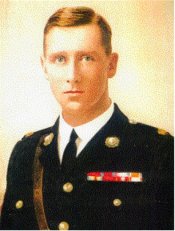
Major, Royal Marines
Support & adopt this hero ↓
At the Battle of Jutland, shellfire blew apart Edward Bamford's control position, wounded him in the leg and burned his face. He stayed in the fight. Less than two years later, he stepped onto the Zeebrugge Mole under heavy enemy fire and led Royal Marines against a German battery. Those two actions would earn Major Edward Bamford VC, DSO a place among the most distinguished Royal Marines officers of the First World War.
Edward Bamford was a British Royal Marine Light Infantry officer whose career stretched from the great naval battle of Jutland to one of the most audacious amphibious assaults of the war. He received the Distinguished Service Order for his conduct at Jutland in 1916 and the Victoria Cross for his leadership during the Zeebrugge Raid of 22 to 23 April 1918. His service was also recognised by Russia, France and Japan, giving his career an unusually international record of distinction.
Early Life and Royal Marines Career
Edward Bamford was born on 28 May 1887 at 34 Langdon Park Road, Highgate, London, the son of the Reverend Robert Bamford and Blanche Edith Bamford. He was educated at Sherborne School and at Malvern House, Kearsney, near Dover, before beginning a career in the Royal Marine Light Infantry.
His commission was formally recorded in the London Gazette, which appointed Edward Bamford a Second Lieutenant in the Royal Marine Light Infantry with effect from 1 September 1905. He subsequently attended the Royal Naval College, Greenwich, and served with the Portsmouth Division.
Bamford's pre-war career took him to sea in ships including HMS Bulwark, HMS Magnificent and HMS Britannia. By the time Europe entered the First World War, he had already accumulated years of naval and Royal Marines experience. In early 1916 he undertook musketry training at Hythe and spent a short period attached to the Guards Brigade in the Ypres sector before returning to naval service. On 2 May 1916 he joined the newly commissioned light cruiser HMS Chester, commanding her Royal Marine detachment.
What followed at Jutland would transform his career.
Edward Bamford at the Battle of Jutland
On 31 May 1916, HMS Chester entered the Battle of Jutland, the greatest clash of battleships and battlecruisers of the First World War. Bamford was in the ship's after-control position when it was struck and blown apart by a shell burst.
The official account published in the London Gazette recorded that Bamford was slightly burned in the face and wounded in the leg. Rather than withdraw, he helped work one gun with a badly reduced crew, controlled another gun and assisted in extinguishing a fire. The official assessment praised his "great coolness, power of command, judgment and courage" while under very heavy fire.
For his services during the battle, Captain Edward Bamford, RMLI, was appointed a Companion of the Distinguished Service Order. The DSO appointment was published in the London Gazette on 15 September 1916 in recognition of services described in Admiral Sir John Jellicoe's Jutland despatch.
Bamford was also Mentioned in Despatches for his wartime service, an distinction represented on his Victory Medal ribbon by the authorised bronze oak-leaves emblem. His First World War campaign entitlement comprised the 1914-15 Star, British War Medal and Victory Medal with Mention in Despatches.
Jutland was not the end of his wartime recognition. On 5 June 1917 the London Gazette recorded the award to Bamford of the Russian Order of St Anne, 3rd Class with Swords, one of a series of Russian decorations conferred for distinguished wartime service. The Gazette also recorded that King George V had granted unrestricted permission for the recipients to wear the decorations.
The Zeebrugge Raid and the Victoria Cross
By early 1918, Bamford had been selected for an operation unlike anything he had previously experienced. He was given command of a company in the specially formed 4th Battalion, Royal Marines, assembled for the British attack on the German-held Belgian coast.
On the night of 22 to 23 April 1918, British naval forces attacked Zeebrugge in an attempt to disrupt access to the German submarine and destroyer base at Bruges. Bamford landed on the Zeebrugge Mole from HMS Vindictive with Nos. 5, 7 and 8 platoons of the Marine storming force.
The official Victoria Cross citation describes a scene of extraordinary danger. Under heavy fire, Bamford took command on the Mole, established a strongpoint to the right of the landing area and, after securing it, led an assault against a battery to the left. The Gazette praised his initiative, disregard of danger and leadership, describing the final assault as being carried out "with the utmost coolness and valour."
His Victoria Cross was unusual in one important respect. Bamford was selected by the officers of the Royal Marine Artillery and Royal Marine Light Infantry detachments under Rule 13 of the Royal Warrant of 29 January 1856. This provision allowed the Victoria Cross to be awarded by selection when a body of men had collectively distinguished itself and individual claims could not readily be separated. The official citation specifically records Bamford's selection under that rule.
The award was published in the Supplement to the London Gazette on 23 July 1918. Eight days later, on 31 July, King George V invested Bamford with the Victoria Cross at Buckingham Palace.
His Zeebrugge service also brought accelerated promotion. The London Gazette announced that Captain Edward Bamford, DSO, was promoted to Major in the RMLI by brevet, the promotion being dated from 23 April 1918, the day of the Zeebrugge operation.
International Recognition After Zeebrugge
Bamford's courage was recognised beyond Britain.
France appointed him an Officer of the Légion d'honneur. Contemporary honours records list "Capt. (Bt. Major) Edward Bamford, V.C., D.S.O., R.M.L.I." within the Officer section of the French Legion of Honour awards.
After the war, Bamford continued his Royal Marines career. He served in HMS Royal Sovereign and later HMS Highflyer on the East Indies Station. In May 1921 he was attached to the entourage of the Crown Prince of Japan during the Prince's state visit to Britain. His service in connection with the visit was followed by the award of the Japanese Order of the Rising Sun, 4th Class.
Together with his Russian Order of St Anne, these awards reflected a remarkable international dimension to Bamford's career. A Royal Marine who had fought at Jutland and Zeebrugge was ultimately honoured by Britain, Russia, France and Japan.
Service in the Interwar Royal Marines
Bamford did not leave the service after the First World War. He attended the Naval War Staff Course at Greenwich and later commanded the 11th Battalion, Royal Marines, during service in the eastern Mediterranean at a time of tension between Greece and Turkey.
In September 1924 he began another sea-going appointment aboard HMS Curacoa. Two years later he went to the Far East, where he served at the naval base HMS Tamar in Hong Kong as Instructor of Small Arms and Musketry. On 1 March 1928, after years of holding brevet rank, Bamford was promoted to the substantive rank of Major.
His career had taken him from Edwardian battleships to the North Sea, the trenches near Ypres, the guns of Jutland, the Zeebrugge Mole, the eastern Mediterranean and finally the China Station.
It would end there only months after his promotion.
Death and Burial in Shanghai
In September 1928, Bamford accompanied Royal Marines aboard HMS Cumberland during a visit to Weihaiwei. He became seriously ill with pneumonia and was taken aboard the cruiser.
A contemporary obituary from the North China Herald, preserved in later research into Bamford's burial, reported that Major Edward Bamford VC, DSO died aboard HMS Cumberland while the ship was at Woosung, near Shanghai, at about five o'clock on the morning of 30 September 1928. He was 41 years old.
The same contemporary report provides an important correction to older accounts of his burial. Bamford's funeral took place on 7 October 1928 at Hungjao Cemetery, Shanghai, attended by representatives of the Navy, Army and other members of the local community. Earlier sources had identified Bubbling Well Road Cemetery as his burial place, but the North China Herald evidence supports Hungjao Cemetery instead.
Legacy of Major Edward Bamford VC, DSO
Edward Bamford's story is not defined by a single moment of bravery. At Jutland, wounded amid the wreckage of his control position, he remained in action and helped keep HMS Chester fighting. At Zeebrugge, he stepped ashore under intense fire, secured his position and then led his Marines forward against an enemy battery.
His documented honours reflect that service. In addition to the Victoria Cross and Distinguished Service Order, his recognised entitlement included the 1914-15 Star, British War Medal, Victory Medal with Mention in Despatches, Russian Order of St Anne, 3rd Class with Swords, Officer of the French Légion d'honneur, and Japanese Order of the Rising Sun, 4th Class.
His medal group is recorded as being preserved in the Royal Marines Museum collection, ensuring that the material record of his service survives alongside the official citations that describe his courage.
Major Edward Bamford VC, DSO died young, but his military career connected two of the most famous British naval operations of the First World War. The London Gazette records what made him exceptional at both. At Jutland it was coolness, command and courage under devastating shellfire. At Zeebrugge it was initiative, leadership and an extraordinary disregard for personal danger.
More than a century later, those official words still explain why Edward Bamford remains one of the outstanding Royal Marines Victoria Cross recipients of the First World War.
Become the named supporter for this profile and edit the tribute biography and portrait (Owner account required). Proceeds help keep the archive online.
$25 USD / year — annual sponsorship renewal. Keeps the page online and, where enabled, the family anniversary remembrance emails active.