★
Loading archive…
Loading archive…
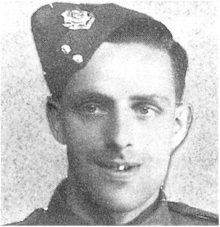
Private, British Army
Support & adopt this hero ↓
He was not charging forward to attack. He was walking alone into machine-gun and mortar fire to bring wounded men back.
Private Eric Anderson VC was a British Army stretcher-bearer whose courage during the Battle of Wadi Akarit in Tunisia on 6 April 1943 became one of the most remarkable acts of battlefield rescue of the Second World War. Serving with the 5th Battalion, East Yorkshire Regiment , Anderson repeatedly crossed exposed ground under intense enemy fire to save wounded comrades. He rescued three men. When he went forward for a fourth, he was mortally wounded while giving the casualty first aid. His actions earned him the Victoria Cross , Britain's highest decoration for gallantry in the face of the enemy.
Eric Anderson was born on 15 September 1915 in Fagley, Bradford, Yorkshire , the son of George and Mary Ann Anderson. Before the war, his life was far removed from the battlefield. He worked as a driver for a building contractor in Idle and sang in the Eccleshill Church Choir. He joined the Army in 1940 and served as a private in the 5th Battalion of the East Yorkshire Regiment. During home leave in June 1941, he married Irene Brear. Their marriage would last less than two years before the war carried Anderson to North Africa.
By April 1943, Anderson was serving with British forces fighting to break the Axis defensive line at Wadi Akarit , one of the important battles of the Tunisian campaign. At dawn on 6 April, the East Yorkshire Regiment attacked a strongly defended enemy position. A Company advanced across an exposed slope and was struck by concentrated machine-gun, mortar and small-arms fire from positions only a short distance away. The fire was so severe that the company was forced to withdraw behind the crest of the hill, leaving wounded soldiers trapped in the open.
That was when Anderson made his decision.
Seeing wounded men stranded on the bullet-swept ground, the stretcher-bearer went forward alone . He reached one casualty and carried him back to safety. Then he went out again and recovered a second. He crossed the exposed slope a third time and brought another wounded soldier back. Three lives had now potentially been saved, yet Anderson knew another man remained outside the British position. He went forward for a fourth time. With few other targets remaining on the slope, enemy fire was concentrated upon him. Anderson reached the wounded soldier and began administering first aid, but before he could bring him back, Anderson himself was hit and mortally wounded. The official citation credited his courage and disregard for his own safety with probably saving the lives of three comrades and inspiring those who witnessed what he had done.
Anderson was only 27 years old . Commonwealth War Graves Commission records identify him as 4347754 Private Eric Anderson, 5th Battalion, East Yorkshire Regiment , and record his death on 6 April 1943. He was the son of George and Mary Ann Anderson and the husband of Irene Anderson of Fagley, Yorkshire. He is buried at Sfax War Cemetery in Tunisia .
His sacrifice was recognised posthumously with the Victoria Cross . The award was published in The London Gazette on 27 July 1943, issue 36110 , placing Eric Anderson among the Second World War recipients of Britain's highest military decoration. His Victoria Cross was later presented to his widow, Irene, and his medal group has been associated with the regimental museum collection in York.
Anderson's wartime service was also recognised through his campaign and service medal entitlement. The Victoria Cross and George Cross Association records his other awards as the 1939-45 Star , the Africa Star with 8th Army clasp , the Defence Medal 1939-45 , and the War Medal 1939-45 . The Africa Star's 8th Army distinction is particularly significant because it links Anderson directly with the British Eighth Army's North African operations and the campaign in which he made his final act of courage.
What makes Eric Anderson's Victoria Cross story so powerful is not simply that he faced enemy fire. It is why he faced it. His task was to save men who could no longer save themselves. Each successful rescue gave him every reason to remain under cover. Instead, he returned to the exposed ground again and again until the fourth attempt cost him his life.
Private Eric Anderson VC did not survive to wear the Victoria Cross awarded for his actions at Wadi Akarit. His legacy survives in the soldiers he rescued, in his grave in Tunisia, in memorials in his native Yorkshire, and in the official record of a stretcher-bearer who placed the lives of his wounded comrades above his own. More than eight decades later, his actions remain a stark example of what the Victoria Cross was created to recognise: courage in the face of the enemy when the personal cost could not have been higher.
Become the named supporter for this profile and edit the tribute biography and portrait (Owner account required). Proceeds help keep the archive online.
$25 USD / year — annual sponsorship renewal. Keeps the page online and, where enabled, the family anniversary remembrance emails active.