★
Loading archive…
Loading archive…
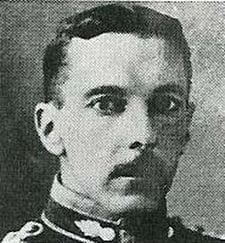
Major General, British Army
Support & adopt this hero ↓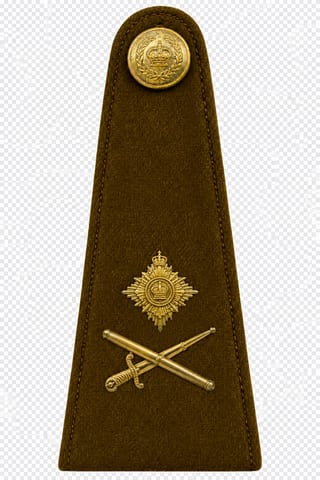
As British soldiers fought desperately to escape the advancing German Army in August 1914, one artillery officer made a decision that would define his place in military history. With enemy fire sweeping the battlefield, his guns in danger of capture, and wounded men struggling to survive, he refused to leave either behind. His name was Ernest Wright Alexander, and his extraordinary courage during the retreat from Mons would earn him Britain's highest award for battlefield gallantry, the Victoria Cross.
Major-General Ernest Wright Alexander, VC, CB, CMG, was a distinguished British Army officer whose military career spanned more than three decades. Born in Liverpool, England, on 2 October 1870, he was educated at Harrow School and the Royal Military Academy, Woolwich, before receiving his commission in the Royal Artillery in July 1889. His early military career included extensive service in India, where he developed the leadership, discipline, and artillery expertise that would later prove invaluable during the First World War.
When Britain entered the First World War in August 1914, Alexander was commanding the 119th Battery, Royal Field Artillery, serving with the British Expeditionary Force in France and Belgium. Within weeks, he would face the greatest test of his military career.
On 24 August 1914, during the desperate British withdrawal following the Battle of Mons, Alexander's battery came under intense pressure near Élouges, Belgium. German forces threatened the flank guard covering the retirement of the British 5th Division. Outnumbered and exposed to overwhelming enemy fire, Alexander directed his artillery with remarkable determination, maintaining effective fire against the advancing enemy while his comrades struggled to escape.
Then the situation became even more dangerous.
As enemy pressure increased and the battery's position became untenable, Alexander faced the possibility of losing his guns. Rather than surrender them, he personally joined three other men in dragging the artillery pieces out of danger by hand. The task was extraordinarily hazardous. German fire threatened them throughout the withdrawal, yet Alexander remained at his post, determined to save the weapons on which British soldiers depended.
Captain Francis Grenfell of the 9th Lancers and members of his regiment also played a courageous part in rescuing the guns. Their combined efforts helped preserve the artillery and enabled the 5th Division to continue its withdrawal without the devastating losses that might otherwise have followed.
But Alexander's remarkable actions were not over.
Despite the danger and the exhaustion of battle, he subsequently returned to rescue a wounded soldier under heavy enemy fire. At a moment when self-preservation would have been understandable, Alexander placed another man's life above his own safety. It was an act of personal courage that revealed the character behind his exceptional military leadership.
For his conspicuous bravery, outstanding command, and devotion to duty at Élouges, Ernest Wright Alexander was awarded the Victoria Cross. His gallantry was officially announced in the London Gazette on 18 February 1915, and King George V presented him with the decoration at Buckingham Palace on 12 July 1915. His actions became an enduring example of courage during one of the British Army's most difficult periods of the First World War.
Yet the Victoria Cross was only one chapter in Alexander's distinguished military service.
As the war continued, he rose through increasingly important artillery appointments, commanding larger formations and eventually serving as a senior Royal Artillery commander with XI Corps. By 1918, he had attained the rank of major-general and served at First Army headquarters. His responsibilities extended far beyond the guns he had personally helped save in 1914, placing him among the senior officers entrusted with directing British artillery operations during the final stages of the conflict.
His contributions were recognised through repeated mentions in despatches and distinguished British and foreign honours. He was appointed a Companion of the Order of the Bath and a Companion of the Order of St Michael and St George. His wartime service was further acknowledged by France through the Croix de Guerre with bronze palm, by Italy through the Military Order of Savoy, and by Portugal through the Military Order of Avis. These decorations reflected the international recognition of a British officer whose leadership and service had earned the respect of Allied nations.
Alexander retired from the Army in 1920, following a career that had taken him from the training grounds of Victorian Britain to the battlefields of the Western Front and the highest levels of wartime command. He settled in Devon, where his loyalty to fellow soldiers continued beyond military service. Among those he employed were three veterans who had fought alongside him during the action at Élouges, maintaining a personal connection with men who had shared one of the defining moments of his life.
Ernest Wright Alexander died on 25 August 1934, aged 63, leaving behind a legacy of extraordinary courage, professional excellence, and unwavering responsibility for the soldiers under his command.
What makes his story remarkable is not simply that he saved artillery guns under enemy fire or rose to become a major-general. It is that, in the chaos of a retreat when every moment mattered, he understood that leadership meant more than issuing orders. It meant sharing danger, accepting responsibility, and refusing to abandon those who depended upon him.
More than a century after the Battle of Élouges, Major-General Ernest Wright Alexander remains an inspiring figure in British military history. His Victoria Cross stands as a lasting tribute to the officer who helped save his battery, protected the withdrawal of his fellow soldiers, and risked his own life to rescue a wounded man.
His courage was proven not by the rank he held or the decorations he received, but by what he chose to do when the battlefield offered no easy choices.
Become the named supporter for this profile and edit the tribute biography and portrait (Owner account required). Proceeds help keep the archive online.
$25 USD / year — annual sponsorship renewal. Keeps the page online and, where enabled, the family anniversary remembrance emails active.