★
Loading archive…
Loading archive…
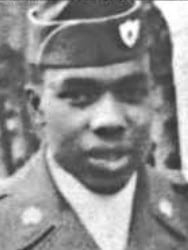
Sergeant First Class, U.S. Army
Support & adopt this hero ↓
Sergeant First Class Eugene Ashley Jr. was born on 12 October 1931 in Wilmington, North Carolina, according to official Army Special Operations and Medal of Honor records. He later entered military service from New York City. Ashley became a career United States Army soldier whose service took him through Germany, Korea, the airborne forces, the Dominican Republic and ultimately the U.S. Army Special Forces in Vietnam. He is remembered above all for his extraordinary leadership and sacrifice during the Battle of Lang Vei on 6–7 February 1968, for which he was posthumously awarded the Medal of Honor.
Ashley’s official Army personnel entry date was 7 December 1951. He completed basic combat training and infantry advanced individual training at Fort Jackson, South Carolina, during 1951–52. His first overseas assignment took him to Germany in 1952, where he served as an assistant ambulance driver with the 5380th Medical Ambulance Company. In 1953 he served as an ammunition bearer with Company D, 26th Infantry Regiment, 1st Infantry Division, also in Germany.
Later in 1953, Ashley was assigned to Headquarters and Headquarters Company, 88th Infantry Battalion, Eighth Army, in Korea, where he served as a wheel mechanic through 1954. He then returned to the United States and briefly served as an ammunition handler with the 749th Anti-Aircraft Artillery Battalion in New York. From December 1954 until June 1955 he was in the inactive reserve.
Ashley reenlisted in 1955 and joined Company D, 504th Airborne Infantry, 82nd Airborne Division, at Fort Bragg, North Carolina, as a heavy-weapons infantryman. In 1956 he graduated from Airborne School at Fort Benning, Georgia, beginning a long association with airborne units. He subsequently served as a parachute repairman and light-vehicle driver with the 82nd Airborne Division before moving into communications assignments.
Between 1958 and 1961, Ashley served in communications-related positions at Fort Dix, New Jersey; Fort Devens, Massachusetts; and Fort Campbell, Kentucky. His assignments included the 999th Signal Company, Headquarters and Headquarters Company of the 2nd Infantry Brigade, and Company A, 1st Airborne Battle Group, 501st Infantry, 101st Airborne Division. During these years he advanced from Private First Class through Specialist Four and continued developing the broad technical and infantry experience that would characterize his later career.
In 1961, Ashley began serving in increasingly responsible leadership positions in the Pacific. He was a squad leader on Okinawa with an element of the 8th Cavalry during 1961–62 and then with the 173rd Airborne Brigade during 1962–63. By 1963–64 he had become a Staff Sergeant and served as a chief fire-direction computer with Headquarters and Headquarters Company, 2nd Battalion, 503rd Infantry, 173rd Airborne Brigade.
From 1964 to 1965, Ashley served as both a squad leader and platoon sergeant with Company B, 1st Battalion, 325th Airborne Infantry, 82nd Airborne Division, at Fort Bragg. In 1965 he deployed with that unit to the Dominican Republic, where American forces were conducting intervention operations. After returning to Fort Bragg, he continued as a platoon sergeant and was promoted from Staff Sergeant to Sergeant First Class during 1965–66.
Ashley then volunteered for U.S. Army Special Forces. He completed the Special Forces Qualification Course at Fort Bragg in 1966–67. In 1967 he served as an operations sergeant with Company D, 7th Special Forces Group, and later with Company A, 3rd Special Forces Group, attached to the headquarters of the U.S. Army John F. Kennedy Special Warfare Center. By 1968 he was serving in the Republic of Vietnam as an operations sergeant with Company C, 5th Special Forces Group (Airborne), 1st Special Forces.
Battle of Lang Vei
By early February 1968, Ashley was associated with Detachment A-101 near Lang Vei Special Forces Camp in the Republic of Vietnam. On the night of 6–7 February 1968, North Vietnamese Army forces launched a major attack on the camp. Surviving American Special Forces advisers became trapped inside the camp while enemy forces occupied commanding positions around them.
During the initial attack, Ashley supported the besieged camp by firing high-explosive and illumination mortar rounds. When communications with the main camp were lost, he assumed the additional responsibility of directing air strikes and artillery support. He then organized and equipped a hastily assembled assault force made up primarily of local friendly personnel, with the objective of reaching and rescuing the trapped American advisers.
Ashley personally led this improvised force in a series of five assaults against entrenched North Vietnamese positions. During each attack, he exposed himself to heavy grenade, machine-gun and automatic-weapons fire. The approaches were also obstructed by booby-trapped satchel charges placed in enemy bunkers. Despite the danger and the repeated difficulty of reaching the trapped defenders, Ashley continued reorganizing his force and launching new attacks.
During his fifth and final assault, Ashley adjusted air strikes extremely close to his own assault element. The resulting pressure forced enemy troops to withdraw and enabled his force to gain control of the summit of the hill. While exposed to intense enemy fire, Ashley was seriously wounded by machine-gun fire, but he continued directing the mission rather than withdrawing.
After the fifth assault, Ashley finally lost consciousness and was carried from the summit by his comrades. While he was being evacuated, an enemy artillery round exploded nearby, inflicting a fatal wound. He died on 7 February 1968.
Although Ashley did not survive the battle, his attacks had a decisive tactical effect. His five assaults placed sustained diversionary pressure on the North Vietnamese forces and helped create an opening through their positions. The official Medal of Honor citation states that his efforts helped create the route through which the surviving defenders of Camp Lang Vei were eventually able to escape.
Medal of Honor
For his actions on 6–7 February 1968, Sergeant First Class Eugene Ashley Jr. was awarded the Medal of Honor posthumously. Army Special Operations records list 18 November 1969 as the date of issue and Department of the Army General Orders No. 84, dated 12 December 1969, as the formal Army publication of the award.
His family received the Medal of Honor at the White House on 2 December 1969, where Vice President Spiro T. Agnew presented the decoration on Ashley’s behalf. The Congressional Medal of Honor Society records the same presentation date and location.
The award recognized not merely a single charge but Ashley’s sustained leadership throughout the battle: supporting the camp with mortar fire, taking responsibility for coordinating artillery and air support, organizing an improvised relief force, personally leading five assaults, continuing after being seriously wounded, and ultimately sacrificing his life while attempting to rescue fellow American soldiers.
Decorations and service record
Ashley’s confirmed service record spans the Korean-era Army, airborne assignments, the 1965 Dominican Republic deployment and the Vietnam War. His Medal of Honor and Purple Heart are firmly documented, while his broader ribbon rack reflects his long Army career and Korean and Vietnam service.
For the corrected database version, the Armed Forces Expeditionary Medal should not be inferred solely from his Dominican Republic deployment unless an individual award record confirms it. His service there is unquestionably documented, but service in a qualifying operation and confirmed personal issuance are separate questions. This distinction is important for keeping the medal record documentary rather than inferential.
The same strict approach should be used for devices attached to his service medals: campaign stars and multiple-award devices should reflect documented individual entitlement rather than simply the number of years or locations in which he served.
Death and burial
Ashley was killed in action at Lang Vei on 7 February 1968, aged 36 according to the official 1931 birth date. His body was later returned to the United States, and he was buried at Rockfish Memorial Park Cemetery in Fayetteville, North Carolina. The U.S. Department of Defense/War Department’s later Medal of Honor profile independently confirms the cemetery.
Legacy
Eugene Ashley Jr.’s memory has remained especially strong within the U.S. Army Special Operations community. His actions at Lang Vei are studied as an example of Special Forces leadership under extreme pressure: he was outside the main camp when fellow advisers became trapped, yet repeatedly chose to attack rather than abandon them.
In 2001, Eugene Ashley High School near Wilmington, North Carolina, was dedicated in his honor. In 2013, an operations complex used by the 3rd Battalion, 5th Special Forces Group (Airborne) at Fort Campbell was named Ashley Hall. In 2019, he was inducted into the U.S. Special Operations Command Commando Hall of Honor, further recognizing his enduring place in American special operations history.
His son, Darrin Ashley, also served in the United States Army and later became a Gulf War veteran, extending the family’s connection to military service.
Eugene Ashley Jr.’s career was far broader than the single battle for which he received the Medal of Honor. Beginning with his enlistment in 1951, he served in medical support, infantry, airborne, communications, fire-direction and leadership assignments before earning the Green Beret and becoming a Special Forces operations sergeant. He served in Germany, Korea, Okinawa, the Dominican Republic and Vietnam, rising to Sergeant First Class before his death.
His defining legacy, however, remains Lang Vei. Over the course of five assaults, Ashley repeatedly exposed himself to overwhelming enemy fire in an effort to rescue trapped comrades. Even after being seriously wounded, he continued directing the attack. His actions helped make possible the eventual escape of the surviving defenders, and his sacrifice remains one of the most prominent examples of courage and selfless leadership in the history of U.S. Army Special Forces.
Become the named supporter for this profile and edit the tribute biography and portrait (Owner account required). Proceeds help keep the archive online.
$25 USD / year — annual sponsorship renewal. Keeps the page online and, where enabled, the family anniversary remembrance emails active.