★
Loading archive…
Loading archive…

Captain, British Army
Support & adopt this hero ↓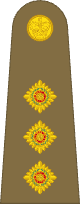
The Officer Who Refused to Let the Attack Fail
When the first wave was shattered, its commander killed and the surviving soldiers began to falter, Eugene Paul Bennett did not order his men forward from behind. Already injured by an exploding shell, he placed himself at their head and led them directly into enemy fire. Only sixty men reached the objective, but Bennett remained with them, wounded and isolated, directing the defence under machine-gun fire from both flanks. His leadership near Le Transloy earned him the Victoria Cross and secured his place among the most courageous officers of the First World War.
Captain Eugene Paul Bennett VC, MC was born on 4 June 1892 at Church School House in Cainscross, near Stroud, Gloucestershire. He was the son of Charles Bennett, a railway clerk who later became a schoolmaster, and Florence Emma Sophia Bennett, née Ody. After attending Uplands Council School, Bennett won a scholarship to Marling School, where he studied from 1905 to 1908. He later moved to London and joined the Accountant’s Department of the Bank of England.
Although his civilian career appeared secure, Bennett was drawn towards military service. In October 1913, he enlisted as a private in the 28th Battalion, London Regiment, better known as the Artists’ Rifles. Mobilised at the outbreak of the First World War, he sailed from Southampton on 27 October 1914 and landed at Boulogne the following day. After receiving officer training in France, he was commissioned into the Worcestershire Regiment and joined its 2nd Battalion on 1 January 1915.
Bennett quickly experienced the brutality of trench warfare. He fought at Neuve Chapelle in March 1915 and was wounded at Festubert in May when a mine exploded beneath his position, leaving him buried until his comrades dug him out. Promoted to lieutenant in August, he soon demonstrated the courage and composure that would define his wartime service.
On the night of 10 and 11 November 1915, shortly after his battalion occupied trenches near Cambrin, the Germans detonated a mine beneath D Company’s position. Approximately sixty metres of trench were destroyed, trapping soldiers beneath earth and wreckage. Bennett organised rescue parties and led them across the devastated position to dig out the survivors. Enemy troops were firing from only about thirty metres away, but he continued the rescue until the trapped men had been recovered. His gallantry was recognised with the Military Cross, which King George V presented to him at Buckingham Palace on 10 May 1916.
Bennett’s defining action came on 5 November 1916 during the fighting near Le Transloy on the Somme. Serving as a temporary lieutenant and commanding the second wave of an infantry assault, he was thrown into the air by an exploding shell as the attack began. The first wave then encountered devastating resistance, suffered heavy casualties and lost its commander. As the line began to waver, Bennett took control and advanced at the head of the second wave.
Through what the official Victoria Cross citation described as his “personal example of valour and resolution,” Bennett drove the attack forward and reached the objective with only sixty men. Cut off from supporting troops, he immediately began consolidating the captured position while rifle and machine-gun fire swept in from both flanks. Although wounded, he refused to surrender command and continued directing his men. The citation concluded that without Bennett’s personal courage, the attack would probably have been stopped at its beginning.
Bennett was reportedly wounded three times during the engagement. His Victoria Cross was announced in the supplement to The London Gazette dated 29 December 1916, and King George V presented the decoration to him at Buckingham Palace on 5 February 1917. He was only twenty-four years old when he performed the action.
After recovering, Bennett served at the War Office and at Aldershot before returning to France. On 18 October 1918, only weeks before the Armistice, he suffered severe shell-splinter wounds and was treated at No. 8 Stationary Hospital near Boulogne. His recovery lasted many months, and he eventually relinquished his commission because of ill health on 11 June 1920, having attained the rank of captain. Later that year, he served in the Victoria Cross Guard of Honour at the burial of the Unknown Warrior in Westminster Abbey.
Bennett then returned briefly to the Bank of England before studying law. He was called to the Bar in 1923 and developed a distinguished legal career, serving as prosecuting counsel to the Post Office on the South Eastern Circuit and later as a Metropolitan stipendiary magistrate. He sat at West London Magistrates’ Court from 1935 and subsequently at Marlborough Street Court, continuing in judicial service until his retirement in 1961.
During the Second World War, Bennett again entered uniform, receiving a commission in the Royal Air Force Volunteer Reserve and serving with the Air Training Corps. He helped prepare a younger generation for military service before resigning his commission in March 1946. His wartime and public service were also reflected in his complete medal group, which included the 1914 Star with clasp, British War Medal, Victory Medal with Mentioned in Despatches emblem, and the Coronation Medals of 1937 and 1953.
Following his retirement, Bennett and his wife Violet settled in Vicenza, Italy. Captain Eugene Paul Bennett died there on 6 April 1970 at the age of seventy-seven and was cremated in Vicenza. His medals are preserved in the Worcestershire Regiment Museum collection, ensuring that the story of the officer who led sixty men through devastating fire continues to be remembered.
Become the named supporter for this profile and edit the tribute biography and portrait (Owner account required). Proceeds help keep the archive online.
$25 USD / year — annual sponsorship renewal. Keeps the page online and, where enabled, the family anniversary remembrance emails active.