★
Loading archive…
Loading archive…

He took a smoke marker into enemy fire to save his comrades.
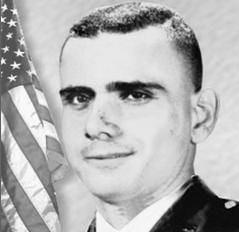
Eurípides Rubio was born in Ponce, Puerto Rico, on 1 March 1938. He served as a U.S. Army captain and battalion communications officer assigned to Headquarters and Headquarters Company, 1st Battalion, 28th Infantry Regiment, 1st Infantry Division.
On 8 November 1966, an enemy force attacked the battalion at Ap Cha Do in Tây Ninh Province, South Vietnam, during Operation Attleboro. Rubio left his post to distribute ammunition, restore defensive positions and assist wounded soldiers. Despite repeated wounds, he took command of a rifle company after its commander was evacuated.
He then saw that a smoke grenade intended to mark the enemy for air strikes lay dangerously close to American troops. Under fire, Rubio picked it up and carried it toward the enemy position before throwing it among the attackers. He died in the action; the corrected marker enabled supporting aircraft to strike the hostile positions.
His family received his posthumous Medal of Honor at the Pentagon on 11 July 1968. He is buried in Puerto Rico National Cemetery in Bayamón. His citation honors leadership that continued despite several wounds.
Medal of Honor citation
For conspicuous gallantry and intrepidity in action at the risk of his life above and beyond the call of duty. Capt. Rubio, Infantry, was serving as communications officer, 1st Battalion, when a numerically superior enemy force launched a massive attack against the battalion defense position. Intense enemy machine-gun fire raked the area while mortar rounds and rifle grenades exploded within the perimeter. Leaving the relative safety of his post, Capt. Rubio received two serious wounds as he braved the withering fire to go to the area of most intense action where he distributed ammunition, reestablished positions, and rendered aid to the wounded. Disregarding the painful wounds, he unhesitatingly assumed command when a rifle company commander was medically evacuated. Capt. Rubio was wounded a third time as he selflessly exposed himself to the devastating enemy fire to move among his men to encourage them to fight with renewed effort. While aiding the evacuation of wounded personnel, he noted that a smoke grenade which was intended to mark the Viet Cong position for air strikes had fallen dangerously close to the friendly lines. Capt. Rubio ran to reposition the grenade but was immediately struck to his knees by enemy fire. Despite his several wounds, Capt. Rubio scooped up the grenade, ran through the deadly hail of fire to within 20 meters of the enemy position and hurled the already smoking grenade into the midst of the enemy before he fell for the final time. Using the repositioned grenade as a marker, friendly air strikes were directed to destroy the hostile positions. Capt. Rubio's singularly heroic act turned the tide of battle, and his extraordinary leadership and valor were a magnificent inspiration to his men. His remarkable bravery and selfless concern for his men are in keeping with the highest traditions of the military service and reflect great credit on Capt. Rubio and the U.S. Army.
Become the named supporter for this profile and edit the tribute biography and portrait (Owner account required). Proceeds help keep the archive online.
$25 USD / year — annual sponsorship renewal. Keeps the page online and, where enabled, the family anniversary remembrance emails active.