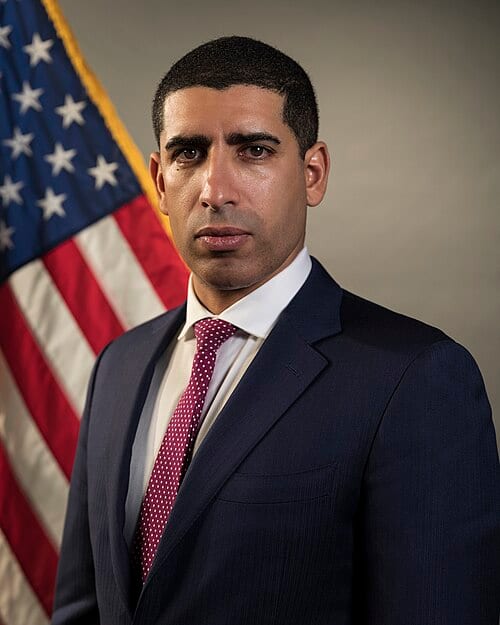
★
Loading archive…
Loading archive…

What would you do if you had only seconds to stop a suicide bomber? On 8 August 2012, in the dangerous streets of Asadabad, Afghanistan, U.S. Army Captain Florent A. “Flo” Groberg made a decision that would change countless lives, including his own. Rather than retreat from a deadly threat, he charged directly toward it. His extraordinary courage would earn him the Medal of Honor, but behind that recognition lay a story of sacrifice, brotherhood, and four lives that could not be saved.
Born on 8 May 1983 in Poissy, France, Florent Groberg grew up across Europe before settling in the United States. He became an American citizen in February 2001 and later graduated from the University of Maryland, where he competed in collegiate track and cross-country. Driven by a desire to serve his adopted country, he entered the U.S. Army in July 2008 and earned his commission as an infantry officer that December. After completing Airborne and Ranger training, he joined the 4th Infantry Division at Fort Carson, Colorado.
Groberg's first deployment to Afghanistan began in November 2009, when he served as an infantry platoon leader in the fiercely contested Pech River Valley of Kunar Province. Returning for a second deployment in February 2012, he became the personal security detachment commander for Task Force Mountain Warrior, responsible for protecting senior American and Afghan military leaders.
Then came the morning that would define his military career.
On 8 August 2012, Groberg was leading a 28-member coalition and Afghan formation toward the provincial governor's compound in Asadabad when he noticed a suspicious man moving toward the group. Recognizing the danger, he immediately placed himself between the stranger and a senior commander. As the attacker approached, Groberg rushed forward and, with the assistance of Sergeant Andrew Mahoney, physically forced the man away from the formation.
The attacker detonated his suicide vest, triggering a second bomber's explosives prematurely. Groberg's intervention disrupted the coordinated attack and saved numerous lives. Tragically, four Americans were killed: Command Sergeant Major Kevin J. Griffin, Major Thomas E. Kennedy, Air Force Major Walter D. Gray, and USAID Foreign Service Officer Ragaei Abdelfattah.
Groberg himself suffered devastating injuries, losing nearly half the muscle in his left calf and sustaining severe nerve damage, a ruptured eardrum, and a traumatic brain injury. His long recovery at Walter Reed National Military Medical Center continued until May 2015. He was medically retired from the Army on 23 July 2015.
For his extraordinary actions, Groberg received the Medal of Honor from President Barack Obama on 12 November 2015. His official citation recognized his exceptional gallantry, personal courage, and willingness to risk his life beyond the call of duty. By driving the suicide bomber away from the formation, he had significantly reduced the devastating consequences of an attack intended to kill senior military leaders and their escorts.
His distinguished military record also includes two Bronze Star Medals, represented by a bronze oak leaf cluster, the Purple Heart for wounds sustained in combat, the Meritorious Service Medal, the Army Commendation Medal, and two Army Achievement Medals. His Afghanistan service is further recognized by the Afghanistan Campaign Medal with three bronze service stars, alongside the National Defense Service Medal, Global War on Terrorism Service Medal, NATO Medal, Army Service Ribbon, Overseas Service Ribbon, and his unit's Meritorious Unit Commendation. He also earned the Combat Infantryman Badge, Parachutist Badge, and Ranger Tab.
Yet for Groberg, the Medal of Honor has never been solely a personal achievement. He has consistently directed attention toward the soldiers who fought beside him and the four Americans who lost their lives that August morning. Their sacrifice remains inseparable from his story.
Florent Groberg's legacy is not simply that he ran toward a suicide bomber when every instinct might have told him to run away. It is that, even after receiving America's highest military decoration, he continued to honour those who never returned. His story reminds us that the deepest meaning of military courage is found not only in the lives saved, but also in the lives remembered.
Medal of Honor citation
Captain Florent A. Groberg distinguished himself by acts of gallantry and intrepidity at the risk of his life above and beyond the call of duty while serving as a Personal Security Detachment Commander for Task Force Mountain Warrior, 4th Infantry Brigade Combat Team, 4th Infantry Division, during combat operations against an armed enemy in Asadbad, Kunar Province, Afghanistan on August 8, 2012. On that day, Captain Groberg was leading a dismounted movement consisting of several senior leaders to include two brigade commanders, two battalion commanders, two command sergeants major, and an Afghanistan National Army brigade commander. As they approached the Provincial Governor’s compound, Captain Groberg observed an individual walking close to the formation. When the individual made an abrupt turn towards the formation, he noticed an abnormal bulge underneath the individual’s clothing. Selflessly placing himself in front of one of the brigade commanders, Captain Groberg rushed forward, using his body to push the suspect away from the formation. Simultaneously, he ordered another member of the security detail to assist with removing the suspect. At this time, Captain Groberg confirmed the bulge was a suicide vest and with complete disregard for his life, Captain Groberg again with the assistance of the other member of the security detail, physically pushed the suicide bomber away from the formation. Upon falling, the suicide bomber detonated his explosive vest outside the perimeter of the formation, killing four members of the formation and wounding numerous others. The blast from the first suicide bomber caused the suicide vest of a previously unnoticed second suicide bomber to detonate prematurely with minimal impact on the formation. Captain Groberg’s immediate actions to push the first suicide bomber away from the formation significantly minimized the impact of the coordinated suicide bombers’ attack on the formation, saving the lives of his comrades and several senior leaders. Captain Groberg’s extraordinary heroism and selflessness above and beyond the call of duty at the risk of life are in keeping with the highest traditions of military service and reflect credit upon himself, 4th Infantry Brigade Combat Team, 4th Infantry Division and the United States Army.
Become the named supporter for this profile and edit the tribute biography and portrait (Owner account required). Proceeds help keep the archive online.
$25 USD / year — annual sponsorship renewal. Keeps the page online and, where enabled, the family anniversary remembrance emails active.