★
Loading archive…
Loading archive…
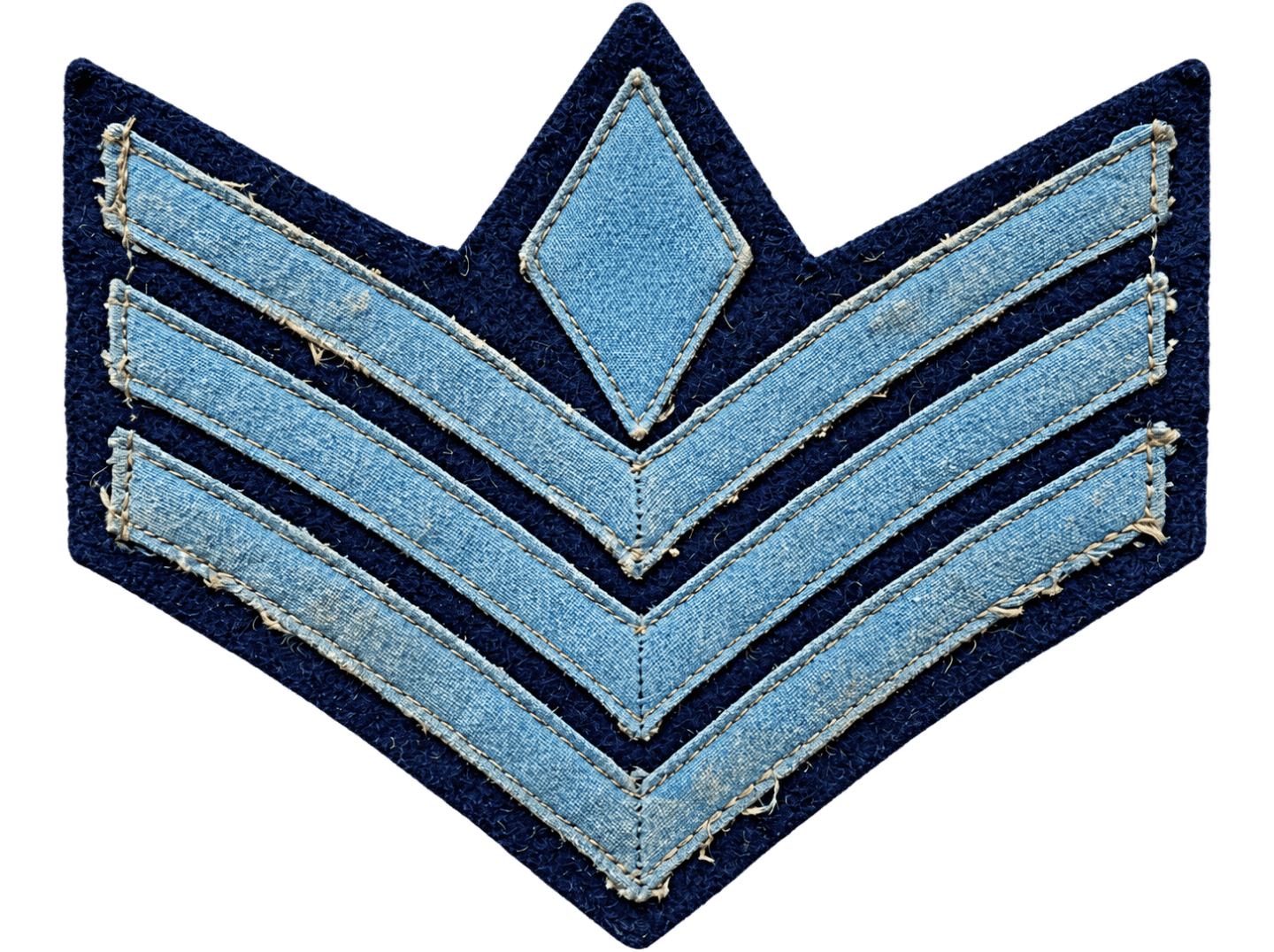
Francis Henry Goodall was born on January 10, 1838, in Bath, Grafton County, New Hampshire. The surviving historical record contains relatively little dependable information about his childhood and early civilian life, but his connection with Bath remained important throughout his military record. When the American Civil War brought an enormous demand for soldiers, Goodall entered United States service from Bath and became part of the Union Army. Goodall served with Company G of the 11th New Hampshire Volunteer Infantry. The regiment was organized in New Hampshire during the summer and early autumn of 1862 for three years of service. After leaving the state, it moved south through Baltimore and Washington and became attached to the 2nd Brigade, 2nd Division, IX Corps of the Army of the Potomac. Goodall held the rank of First Sergeant. This was one of the most important enlisted leadership positions in a Civil War infantry company. A First Sergeant helped maintain discipline, formation, accountability, communication, and the day-to-day efficiency of the company. In battle, the position also required leadership under fire and placed the First Sergeant close to both the company officers and the enlisted soldiers. Only a few months after the 11th New Hampshire entered Federal service, the regiment faced its first major battle. In December 1862, Major General Ambrose E. Burnside’s Army of the Potomac moved against Confederate forces commanded by General Robert E. Lee around Fredericksburg, Virginia. The Rappahannock River and the powerful Confederate positions beyond the town made the operation extremely difficult from the beginning. Union troops crossed the river and prepared for a major assault on December 13, 1862. Much of the battle became famous for repeated attacks against heavily defended Confederate positions, particularly around Marye’s Heights, while other Union formations fought farther south against Confederate forces positioned along the ridges and wooded ground. The 11th New Hampshire entered the battle as part of the IX Corps. For First Sergeant Francis Henry Goodall, December 13 became the defining day of his military life. During the fighting, one of Goodall’s fellow Union soldiers was wounded and left in an exposed position. The wounded man was unable to reach the comparative safety of the Union line on his own. Enemy fire continued across the battlefield. Goodall, assisted by another soldier, went forward to reach the wounded comrade. The rescue required both men to expose themselves to the same fire that had already wounded the soldier they were attempting to save. They nevertheless reached him and succeeded in bringing him back into the Union lines. Goodall’s official Medal of Honor citation later described the action simply: with the assistance of another soldier, he brought a wounded comrade into the lines under heavy fire. The wording is brief, but the circumstances explain its importance. Goodall was not acting from behind a protected position. He voluntarily entered an area exposed to Confederate fire for the purpose of saving another soldier. Reaching the wounded man was only the first part of the danger; Goodall and his companion then had to assist or carry him back while remaining vulnerable to enemy fire. His action demonstrated a form of battlefield courage centered on rescue rather than attack. He did not receive the Medal of Honor for capturing a flag, taking an enemy position, or leading a charge. His recognition came because he deliberately risked his own life to save the life of a wounded fellow soldier. The Battle of Fredericksburg ended as a serious Union defeat. Federal forces suffered enormous casualties without achieving their principal objectives, and the Army of the Potomac eventually withdrew across the Rappahannock. For the 11th New Hampshire, Fredericksburg marked the beginning of a long and demanding combat history. After the battle the regiment spent time at Newport News, Virginia. During 1863 it moved west with the IX Corps and became involved in operations connected with the Vicksburg Campaign and later the fighting in East Tennessee. In 1864 the regiment returned east and served through some of the most severe campaigns fought by the Army of the Potomac, including the Wilderness, Spotsylvania, Cold Harbor, and the operations around Petersburg. The regiment ultimately remained in service until 1865 and participated in the final stages of the war before returning to Washington. However, Goodall’s individually documented Medal of Honor record specifically establishes his service at Fredericksburg. Additional engagements fought by the regiment should not automatically be assigned to Goodall personally unless his own service record confirms his presence during each action. The rank securely associated with Goodall’s heroic action was First Sergeant, and no higher later military rank has been sufficiently verified for his profile. First Sergeant therefore remains both his action-time rank and his highest verified rank. Although Goodall’s rescue occurred in December 1862, he did not receive the Medal of Honor immediately. More than thirty years passed before the United States formally recognized his courage. On December 14, 1894, Francis Henry Goodall was presented with the Medal of Honor for his actions at Fredericksburg. The distinction between the two dates is important. His heroic action occurred on December 13, 1862. His Medal of Honor was issued on December 14, 1894. Because the medal was actually issued in 1894, the correct historical database representation is Medal of Honor 1862–1895 Army — 1894. The Medal of Honor itself was still a comparatively young American military decoration when Goodall performed his act of heroism. Congress authorized the Army Medal of Honor in 1862, the same year as the Battle of Fredericksburg. During the Civil War it became the principal federal military decoration available for recognizing extraordinary conduct by Union soldiers. Many Civil War Medal of Honor recipients were recognized during the war or shortly afterward. Others, including Goodall, received their medals decades later as wartime actions were reviewed and surviving evidence was considered. Goodall’s award therefore belongs to the large body of Civil War heroism formally recognized during the later nineteenth century. His Medal of Honor was not a posthumous award. Goodall was alive when the decoration was presented in 1894 and would survive for another three decades. No separate clasp, star, bar, oak leaf cluster, or other device has been verified for Goodall’s Medal of Honor. His final verified award therefore remains one Medal of Honor without an additional device. A separate Civil War Campaign Medal has not been included in his verified medal rack. Goodall clearly served in the Union Army during the Civil War, but wartime service by itself does not prove recipient-specific issuance of the later-created Civil War Campaign Medal. Under the evidence standard applied to his profile, a campaign decoration must be supported by evidence showing that the individual veteran was actually issued the medal or otherwise specifically entitled to it. No sufficiently strong recipient-specific record has been established showing that Francis Henry Goodall personally received that later campaign medal. It therefore remains excluded from his final verified rack. His confirmed award history consists of a single decoration: Medal of Honor 1862–1895 Army — 1894. Goodall lived for many years after receiving the medal. The surviving authoritative records provide far greater detail about his military heroism than about his later civilian career. For that reason, his postwar occupation, family circumstances, and movements should not be expanded with unsupported assumptions. What is firmly established is that he lived into the twentieth century and eventually resided in the Washington, D.C., region. By then, the Civil War generation was rapidly disappearing. Goodall had survived long enough to see the country change dramatically from the divided United States of 1861–1865 into an industrial and increasingly global power. The Medal of Honor itself also changed significantly during his lifetime. What had begun during the Civil War as a relatively new military decoration became recognized as the highest award for military valor in the United States. Goodall’s own medal remained connected permanently with the events at Fredericksburg. His Medal of Honor is preserved by the New Hampshire Historical Society in Concord, providing a physical connection between Goodall, his home state, and the act of courage he performed as a First Sergeant during the Civil War. Francis Henry Goodall died on April 12, 1925, in Takoma Park, Maryland. He was eighty-seven years old. He was buried at Rock Creek Cemetery in Washington, D.C., in Section M, Lot 169, Site 7. His burial placed him among the generation of Civil War veterans who survived well into the twentieth century, carrying personal memories of the conflict for more than sixty years after Appomattox. Goodall’s military legacy ultimately rests on a decision made during one of the Union Army’s most difficult days. On December 13, 1862, the battlefield at Fredericksburg was filled with wounded and dying soldiers. Confederate fire made movement across exposed ground extremely dangerous. A wounded Union soldier lay outside the safety of the line. First Sergeant Francis Henry Goodall and another soldier went after him. They reached the wounded man and brought him back despite the continuing fire. More than thirty years later, the United States formally recognized that action with the Medal of Honor. Francis Henry Goodall is therefore remembered as a First Sergeant of Company G, 11th New Hampshire Infantry, a Union Army veteran of the American Civil War, and a Medal of Honor recipient whose heroism was defined by the decision to risk his own life in order to save another soldier. His single verified decoration, Medal of Honor 1862–1895 Army — 1894, remains the official recognition of the courage he demonstrated at Fredericksburg, Virginia, on December 13, 1862.
Become the named supporter for this profile and edit the tribute biography and portrait (Owner account required). Proceeds help keep the archive online.
$25 USD / year — annual sponsorship renewal. Keeps the page online and, where enabled, the family anniversary remembrance emails active.
