★
Loading archive…
Loading archive…
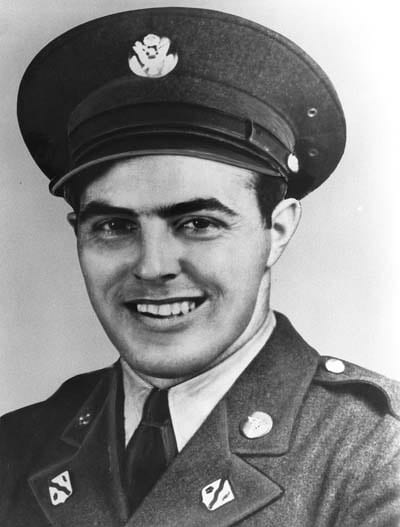
Private First Class, U.S. Army
Support & adopt this hero ↓
On his twenty-fifth birthday, American Army medic Frank Joseph Petrarca crawled toward a wounded soldier through a storm of Japanese mortar and automatic weapons fire. Enemy positions were only yards away. He had already risked his life repeatedly to save his comrades, yet he refused to abandon another wounded man. His final act of courage on 31 July 1943 would earn him America's highest military decoration, the Medal of Honor.
Born on 31 July 1918 in Cleveland, Ohio, Frank J. Petrarca graduated from East High School in 1938 and worked as a carpenter alongside his father. He joined the Ohio National Guard in 1939 and later served as a Private First Class with the Medical Detachment, 145th Infantry Regiment, 37th Infantry Division during World War II. His battlefield responsibility was to save lives, even under the same deadly enemy fire faced by frontline infantrymen.
In July 1943, during the New Georgia Campaign in the Solomon Islands, Petrarca demonstrated extraordinary heroism at Horseshoe Hill. On 27 July, as American troops advanced toward heavily defended Japanese positions, enemy mortar and small-arms fire inflicted numerous casualties. Petrarca moved forward to aid Private First Class Scott, who lay critically wounded within 75 yards of enemy fortifications. Despite the danger, he treated Scott and two other wounded soldiers, shielding Scott with his own body until the wounded man died.
Two days later, on 29 July, an intense Japanese mortar barrage partially buried an American sergeant beneath the wreckage of a collapsed foxhole. Petrarca rushed to his assistance, dug him free, restored him to consciousness, and arranged his evacuation. Once again, he placed another soldier's survival above his personal safety.
The ultimate test came on 31 July 1943. Against a fellow soldier's warning, Petrarca crossed an exposed hillcrest to reach a wounded comrade. Japanese troops positioned approximately 20 yards away unleashed concentrated mortar and automatic weapons fire. Petrarca continued forward until he was within two yards of the casualty, where enemy mortar fire mortally wounded him. Even as he lay dying, he struggled to his knees, shouted defiance at the enemy, and made one final attempt to reach the wounded soldier.
Private First Class Frank J. Petrarca died on his twenty-fifth birthday, leaving behind an extraordinary record of courage and devotion to duty.
For his actions from 27 to 31 July 1943, Petrarca was posthumously awarded the Medal of Honor under War Department General Orders No. 86, dated 23 December 1943. His citation recognized his conspicuous gallantry and extraordinary courage beyond the call of duty. Major General Charles L. Scott presented the medal to Petrarca's parents at their Cleveland home on 23 December 1943.
His sacrifice is also recognized by the Purple Heart. His wartime service qualified him for the American Defense Service Medal, Asiatic–Pacific Campaign Medal with a bronze service star for the Northern Solomons Campaign, and World War II Victory Medal. The retrospective Bronze Star Medal and Army Good Conduct Medal remain subjects of individual award-record verification.
Frank Joseph Petrarca was laid to rest at Calvary Cemetery in Cleveland in June 1948. His name continues to represent the extraordinary courage of World War II combat medics. At Horseshoe Hill, he proved that heroism was not measured by the enemies a soldier defeated, but by the lives he was willing to risk everything to save.
Medal of Honor citation
For conspicuous gallantry and intrepidity in action above and beyond the call of duty. Pfc. Petrarca advanced with the leading troop element to within 100 yards of the enemy fortifications where mortar and small-arms fire caused a number of casualties. Singling out the most seriously wounded, he worked his way to the aid of Pfc. Scott, lying within 75 yards of the enemy, whose wounds were so serious that he could not even be moved out of the direct line of fire. Pfc. Petrarca fearlessly administered first aid to Pfc. Scott and two other soldiers and shielded the former until his death. On 29 July 1943, Pfc. Petrarca, during an intense mortar barrage, went to the aid of his sergeant who had been partly buried in a foxhole under the debris of a shell explosion, dug him out, restored him to consciousness, and caused his evacuation. On 31 July 1943 and against the warning of a fellow soldier, he went to the aid of a mortar fragment casualty where his path over the crest of a hill exposed him to enemy observation from only 20 yards distance. A target for intense knee mortar and automatic fire, he resolutely worked his way to within two yards of his objective where he was mortally wounded by hostile mortar fire. Even on the threshold of death he continued to display valor and contempt for the foe; raising himself to his knees, this intrepid soldier shouted defiance at the enemy, made a last attempt to reach his wounded comrade and fell in glorious death.
Become the named supporter for this profile and edit the tribute biography and portrait (Owner account required). Proceeds help keep the archive online.
$25 USD / year — annual sponsorship renewal. Keeps the page online and, where enabled, the family anniversary remembrance emails active.