★
Loading archive…
Loading archive…
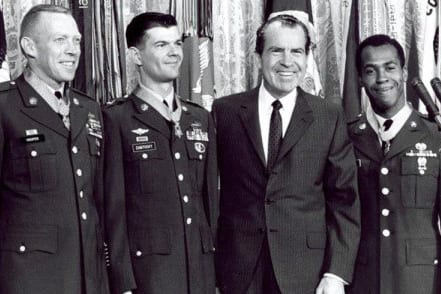
He survived a helicopter crash deep behind enemy lines, then ran back into the flames to save another man's life. Surrounded by North Vietnamese soldiers, severely wounded and facing almost certain death, Fred William Zabitosky refused to abandon his comrades. His extraordinary courage during a secret reconnaissance mission in Laos on 19 February 1968 earned him the Medal of Honor and secured his place among the most remarkable Green Berets of the Vietnam War.
Born on 27 October 1942 in Trenton, New Jersey, Fred Zabitosky grew up facing considerable hardship. When his father left the family, the young Zabitosky helped support his mother and siblings, eventually leaving high school to work. In November 1959, at just seventeen, he enlisted in the United States Army. After serving in Germany, he returned to military service in 1963 and completed the demanding training required to become a member of the U.S. Army Special Forces. He subsequently served with the 5th Special Forces Group and the highly classified Military Assistance Command, Vietnam, Studies and Observations Group, better known as MACV-SOG.
What does courage look like when nine men are surrounded by a vastly superior enemy force, and their only escape lies through a storm of gunfire? On 19 February 1968, Staff Sergeant Zabitosky was serving as assistant leader of a nine-man long-range reconnaissance patrol operating in enemy-controlled territory east of Attopeu, Laos. When North Vietnamese troops attacked, he immediately organized defensive positions, rallied his men and exposed himself to intense automatic weapons fire to direct their response. Recognizing that his patrol could not withstand the enemy indefinitely, he ordered a withdrawal toward a helicopter landing zone while covering his comrades with rifle fire and grenades.
As the enemy tightened its grip, Zabitosky repeatedly risked his life to direct supporting helicopter gunships and maintain the patrol's fragile defensive perimeter. When extraction helicopters finally arrived, he continued firing from the doorway of an aircraft as it lifted off. Moments later, enemy fire sent the helicopter crashing to the ground. Thrown clear and briefly knocked unconscious, Zabitosky regained consciousness with serious injuries, including crushed ribs and burns. Yet instead of seeking safety, he rushed toward the burning wreckage.
With fuel and ammunition threatening to explode, he pulled the severely wounded pilot from the flames and repeatedly attempted to reach other trapped comrades. Driven back by unbearable heat, he carried and dragged the unconscious pilot through enemy fire toward another rescue helicopter. He came within ten feet of the hovering aircraft before collapsing from his injuries. His official Medal of Honor citation recognized not only this extraordinary rescue but also his leadership, determination and willingness to risk his life throughout the desperate battle.
On 7 March 1969, President Richard Nixon presented Zabitosky with the Medal of Honor during a White House ceremony. His gallantry represented the highest traditions of the United States Army and its Special Forces. His wider military service also brought substantial recognition. Contemporary Army reporting credited him with two Bronze Star Medals, one for heroism and another for meritorious service, an Air Medal, two Army Commendation Medals and the Republic of Vietnam Gallantry Cross with Bronze Star. His Purple Heart reflected the personal cost of combat, while his Vietnam campaign and service medals recorded years of military duty during one of America's most difficult conflicts.
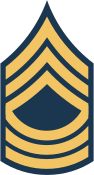
But Zabitosky's story did not end with his Medal of Honor. Despite the devastating injuries he suffered in Laos, he continued serving his country. His military career included four tours in Vietnam, with his final combat deployment in 1971 and 1972 alongside the 75th Ranger Infantry of the 101st Airborne Division. He retired from the United States Army on 16 November 1977, having attained the rank of Master Sergeant.
After retirement, Zabitosky remained committed to those who had served. He worked with veterans and supported efforts to investigate the fate of American prisoners of war and personnel missing in action. His dedication reflected the same principle that had defined his actions in Laos: a soldier's responsibility to his comrades does not end when the fighting stops.
Fred William Zabitosky died in January 1996, aged fifty-three, and was laid to rest at Lumbee Memorial Gardens in Lumberton, North Carolina. His legacy lives on in the history of the U.S. Army Special Forces, the Medal of Honor community and the generations of soldiers inspired by his example. From a struggling teenager in New Jersey to one of America's most highly honored Green Berets, Zabitosky demonstrated that true heroism is measured not simply by bravery under fire, but by the lives a soldier is willing to risk everything to save.
Become the named supporter for this profile and edit the tribute biography and portrait (Owner account required). Proceeds help keep the archive online.
$25 USD / year — annual sponsorship renewal. Keeps the page online and, where enabled, the family anniversary remembrance emails active.