★
Loading archive…
Loading archive…
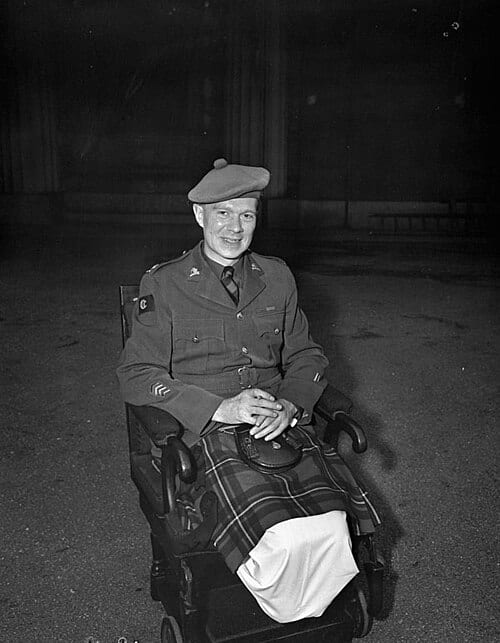
Major, Canadian Army
Support & adopt this hero ↓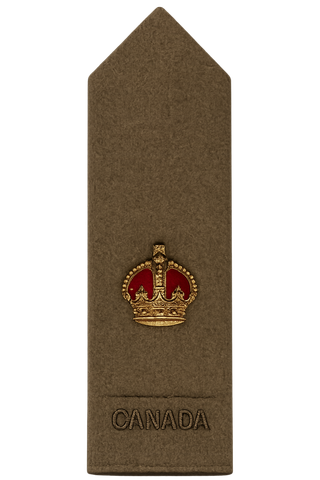
Three times wounded, fighting through machine-gun fire, and facing the destruction of his company, Frederick Albert Tilston refused to abandon his men. Even after suffering injuries that would cost him both legs, he remained determined to ensure that his soldiers could hold their ground. His extraordinary courage in the Battle of the Hochwald Forest would earn him the Victoria Cross, the highest award for gallantry in the British and Commonwealth armed forces.
Frederick Albert Tilston was born on 11 June 1906 in Toronto, Ontario, Canada. After the death of his father, he assumed greater responsibility for supporting his family. He studied pharmacy and entered the pharmaceutical profession, eventually establishing himself as a successful businessman and sales manager. When the Second World War began, Tilston answered the call to military service. He enlisted in 1940, received a commission in the Canadian Army and joined the Essex Scottish Regiment. By 1941, he was serving in Britain as the regiment prepared for the eventual liberation of occupied Europe.
Tilston's military journey was not without hardship. He survived a serious training injury and subsequently suffered another wound caused by a land mine during the Normandy campaign. For much of his wartime service, he performed administrative duties, but in early 1945 he was given command of a rifle company. It was a responsibility that would soon test every measure of his courage, leadership and determination.
On 1 March 1945, during Operation BLOCKBUSTER, the Canadian advance through the Hochwald Forest near Udem, Germany, encountered fierce German resistance. The Essex Scottish Regiment was ordered to attack heavily defended enemy positions. The terrain was waterlogged, and the planned armoured support could not advance as intended. The infantry consequently faced the formidable German defences with limited protection.
Acting Major Tilston led his company forward through intense machine-gun and artillery fire. Remaining close to the supporting artillery barrage, he directed his men through deep barbed-wire obstacles and into the German positions. During the assault, he was wounded in the head but refused to withdraw. He personally attacked an enemy machine-gun position with a grenade, helping his men continue their advance. A second wound struck his hip as the company pushed towards the woods. Despite his injuries, Tilston continued to lead from the front and participated in the fierce close-quarter fighting that secured the objective.
The battle was far from over. With his company reduced to approximately a quarter of its original strength, Tilston organised its defensive positions against repeated German counterattacks. Ammunition was running dangerously low, communications with battalion headquarters had become a serious concern, and the surviving soldiers faced the prospect of being overwhelmed. Rather than accept defeat, Tilston repeatedly exposed himself to enemy fire. He made at least six journeys across open, fire-swept ground to obtain ammunition and supplies, while also working to restore communications and strengthen the company's defensive position.
Then came the wound that finally brought his extraordinary battlefield leadership to an end. Despite being seriously injured for the third time, Tilston refused immediate evacuation. He remained until he had explained the defensive arrangements and ensured that command had been properly transferred to another officer. Only then did he allow himself to be taken from the battlefield. His injuries were so devastating that both of his legs ultimately had to be amputated.
For his conspicuous gallantry, exceptional leadership and selfless devotion to his men, Frederick Albert Tilston was awarded the Victoria Cross. The award recognised not simply his personal bravery under fire, but also his determination to continue leading, supplying and protecting his company despite repeated and life-threatening injuries. King George VI personally presented him with the Victoria Cross in June 1945.
Yet Tilston's story did not end with his return from war. Faced with the immense challenges of life as a double amputee, he undertook a remarkable rehabilitation journey and learned to walk again. He returned to the pharmaceutical industry and resumed his professional career with Sterling Drugs, eventually rising to senior executive positions, including president and chairman. His determination to rebuild his life became an inspiration to fellow veterans and people living with disabilities.
His commitment to service extended well beyond his military career. Tilston became an advocate for war amputees and worked to encourage and support other amputees as they rebuilt their lives. He also maintained a lifelong connection with his regiment. In 1963, he was appointed Honorary Colonel of the Essex and Kent Scottish, a distinction that reflected the lasting respect and affection in which he was held by the regiment.
His later honours included appointment as a Knight of the Most Venerable Order of the Hospital of St John of Jerusalem, alongside the Canadian Forces Decoration and several national commemorative medals. These recognitions reflected a lifetime of service that extended far beyond the battlefield.
Frederick Albert Tilston died in Toronto on 23 September 1992 and was laid to rest at Mount Hope Cemetery. His legacy, however, remains inseparable from the extraordinary events of 1 March 1945. He was a Canadian soldier whose courage under fire saved lives, whose leadership sustained his men through one of the most dangerous moments of their campaign, and whose determination carried him through the immense challenges of life after war.
Frederick Albert Tilston, Victoria Cross recipient, is remembered not only for what he endured in the Hochwald Forest, but for what he continued to accomplish after leaving the battlefield. His story is a powerful testament to courage, leadership, sacrifice and the enduring strength of the human spirit.
Become the named supporter for this profile and edit the tribute biography and portrait (Owner account required). Proceeds help keep the archive online.
$25 USD / year — annual sponsorship renewal. Keeps the page online and, where enabled, the family anniversary remembrance emails active.