★
Loading archive…
Loading archive…
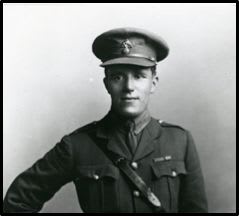
Wing Commander, Royal Air Force
Support & adopt this hero ↓
Frederick William Palmer entered the First World War from civilian life in London's publishing trade and emerged from it as one of the most highly decorated men of his battalion. Born in Hammersmith on 11 November 1891, he was educated locally and worked in publishing, being recorded as a publisher's assistant before later becoming business manager of the Poetry Review. He enlisted on 22 September 1914 and joined the 22nd (Service) Battalion, Royal Fusiliers (City of London Regiment), the Kensington Battalion, under service number 731. Palmer landed in France with the battalion on 16 November 1915, initially serving in the Béthune sector before taking part in the fighting on the Somme. He was promoted to corporal on 21 September 1916. His Military Medal was associated with the fighting at Redan Ridge between 13 and 15 November 1916, but the specific circumstances that led to the award have not been established in the surviving published accounts and should not be reconstructed without further contemporary evidence.
By February 1917 Palmer was serving as a lance-sergeant. During the operations of 16 and 17 February 1917, north of Courcelette in the direction of Miraumont, all the officers of his company became casualties and Palmer assumed command. He cut his way through wire under point-blank machine-gun fire, rushed an enemy trench with six men, put a hostile machine gun out of action and established a defensive block. He then gathered men from other units and held the position for nearly three hours against repeated German counter-attacks. When another attack threatened the flank while he was away obtaining bombs, Palmer, although exhausted and having been knocked from his feet by an explosion, rallied his men and recovered the position. His Victoria Cross was announced in The London Gazette on 3 April 1917, which described him as No. 731 Lance-Sergeant Frederick William Palmer, by then a second lieutenant.
The official citation praised Palmer's "most conspicuous bravery, control and determination" and recorded that his conduct had prevented what might otherwise have become a serious disaster on that sector of the line. He was commissioned as a second lieutenant in the Royal Fusiliers in March 1917 and soon returned to operations. On 3 May, during renewed fighting north of Oppy Wood, he commanded men from the badly depleted 22nd Battalion in a composite formation. Palmer and his men became caught in the German wire, where they remained isolated for many hours, and he was wounded in the head before being evacuated to Britain. King George V presented Palmer with both his Victoria Cross and Military Medal during the great Hyde Park investiture of 2 June 1917.
After the 22nd Battalion was disbanded in early 1918, Palmer moved into flying service, serving with the Royal Flying Corps as an observer and subsequently with the newly formed Royal Air Force. On 1 July 1918 he was appointed a temporary second lieutenant in the RAF's kite-balloon service and joined No. 2 Balloon Training Wing at Richmond. He was promoted to lieutenant on 14 September and later served with 16th Balloon Company. After demobilisation he returned to civilian life and, during the 1920s, established a business career in Malaya and Singapore, becoming associated with several commercial enterprises.
With another war underway, Palmer returned to Britain and again volunteered for service. On 7 November 1940 he was commissioned in the Royal Air Force Volunteer Reserve in the Administrative and Special Duties Branch under service number 87556. He served principally in Britain, including duties connected with Operational Training Units and ground defence, and eventually attained the rank of Wing Commander. His Second World War service also brought a Mention in Despatches, represented on his War Medal 1939-45 ribbon by the bronze oak-leaf emblem. Palmer relinquished his commission on medical grounds on 13 March 1945 and retained the rank of Wing Commander. His surviving medal group records the Victoria Cross, Military Medal, 1914-15 Star, British War Medal, Victory Medal, Defence Medal, War Medal 1939-45 with Mention in Despatches oak leaf, King George VI Coronation Medal and Queen Elizabeth II Coronation Medal.
Palmer's family endured the war separately from him. His wife Doris and their children remained in Singapore when the Japanese conquered the colony and their home was destroyed. Published accounts agree that Palmer lost contact with them for nearly four years, but they differ in describing their circumstances: detailed accounts by Lord Ashcroft and other VC researchers describe them as having been taken to a refugee camp, whereas the Royal Fusiliers Museum describes them as having been interned. Because no primary family or camp record has yet been located to resolve that difference, it is safer not to describe them specifically as civilian internees. Palmer was reunited with his family in 1946.
After the war Palmer returned briefly to Singapore before retiring through ill health. The family eventually settled at Hordle in Hampshire. Frederick William Palmer died at Lymington Hospital on 10 September 1955, aged 63. He was cremated at Bournemouth Crematorium and his ashes were interred in the family grave at All Saints Church, Hordle. In June 2006 his family placed his medal group on permanent loan with the Royal Fusiliers Museum at the Tower of London, where the group preserves the record of a military career spanning both world wars.
Become the named supporter for this profile and edit the tribute biography and portrait (Owner account required). Proceeds help keep the archive online.
$25 USD / year — annual sponsorship renewal. Keeps the page online and, where enabled, the family anniversary remembrance emails active.