★
Loading archive…
Loading archive…
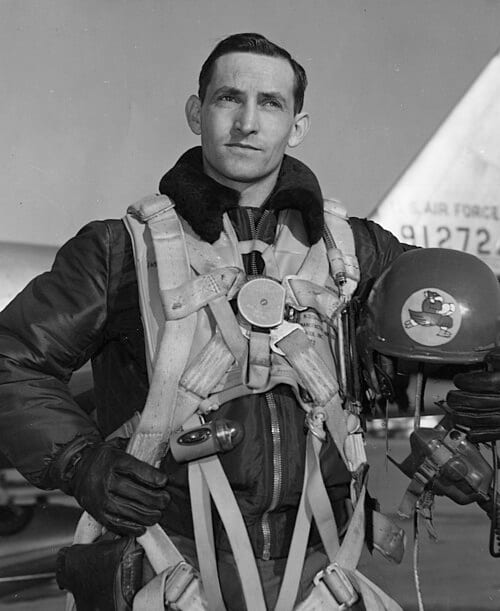
Lieutenant Colonel (posthumous), U.S. Air Force
Support & adopt this hero ↓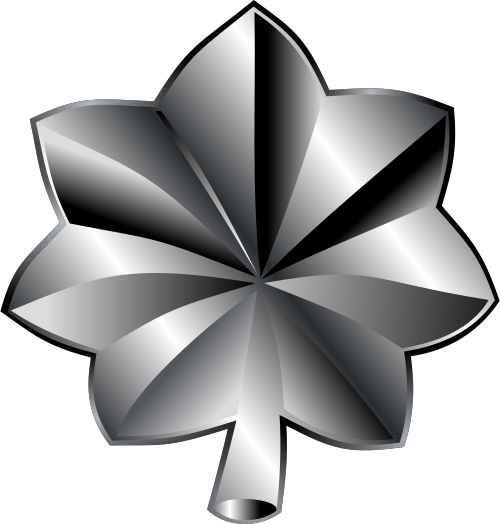
He flew straight into impossible odds, and never turned away. Lieutenant Colonel George Andrew Davis Jr. became one of the most formidable American fighter pilots of World War II and the Korean War, earning the Medal of Honor and becoming an ace in two wars. By the time he was killed in combat at just 31 years old, Davis had been credited with 21 aerial victories, seven in World War II and 14 in Korea, and had built a combat record defined by aggressive leadership, exceptional flying skill, and repeated acts of courage against overwhelming enemy forces.
Born on 1 December 1920 in Dublin, Texas, Davis enlisted in the Army Air Corps at Lubbock on 21 March 1942. After earning his wings and commission, he entered combat in the Pacific in August 1943 with the 342nd Fighter Squadron, 348th Fighter Group, Fifth Air Force. Flying the powerful P-47 Thunderbolt, Davis completed 266 combat missions and 705 combat hours before returning to the United States in 1945. He destroyed seven enemy aircraft and emerged from World War II as a fighter ace.
His wartime decorations reveal just how dangerous those missions were. On 10 December 1944, while leading four P-47s near Ormoc Bay, Davis pursued Japanese fighters across the Philippines. His Distinguished Flying Cross citation records that he destroyed one aircraft over Cebu and then pursued another toward Negros, where the enemy pilot was forced to bail out. Ten days later, over the Mindoro beachhead, Davis again engaged enemy fighters. His second Distinguished Flying Cross citation credited him with destroying another Japanese aircraft, his fifth confirmed aerial victory, after repeatedly striking it during a fierce interception.
On 24 December 1944, Davis demonstrated that his mission was not simply to chase victories, but to protect the men around him. Escorting B-24 bombers over Clark Field near Manila, he repeatedly left and returned to the bomber formation as enemy fighters attacked. His Silver Star citation credited him with personally destroying two Japanese aircraft while maintaining protection over the bombers, whose attack was successfully completed. His courage and leadership, the citation stated, upheld the highest traditions of the United States Army Air Forces. During his Pacific service he also earned nine Air Medals, recognition of sustained achievement during an extraordinary number of combat missions.
After World War II, Davis remained in the service as the Army Air Forces became the independent United States Air Force. He served in flying, inspection, and jet fighter assignments across the United States and was promoted to major in February 1951. That October he returned to war, this time as commander of the 334th Fighter-Interceptor Squadron, 4th Fighter-Interceptor Group, flying the F-86 Sabre against MiG-15s over Korea. Within only a few months, Davis became the leading ace of the Korean War.
His Korean combat record escalated almost immediately. On 27 November 1951, Davis led 32 F-86s near Sinanju when he encountered a much larger enemy force. His Distinguished Service Cross citation described how he attacked MiG-15s at close range, personally destroying two despite dwindling fuel, then reorganized his formation to meet an enemy force of roughly 80 aircraft. His leadership helped the American formation destroy additional MiGs against overwhelming numerical odds.
Three days later came one of the most remarkable sorties of his career. On 30 November 1951, Davis led eight Sabres against a heavily escorted formation of enemy bombers. His second Silver Star citation records that he attacked despite overwhelming opposition, personally destroying three Tu-2 bombers. While returning with critically low fuel, he heard another American pilot in distress. Davis reversed course, returned to the fight, destroyed a MiG-15 threatening the damaged Sabre, and escorted the pilot toward safety. He landed with less than five gallons of fuel remaining. The action gave him four victories in a single mission and made him one of the early American jet aces of the Korean War.
Davis struck again on 13 December 1951. One Distinguished Flying Cross citation describes him leading 22 F-86s against approximately 50 MiG-15s, skillfully positioning his smaller force and helping break up the enemy formation while personally destroying two MiGs. A separate Silver Star citation from the same date records another engagement in which Davis led eight Sabres against ten MiGs. His squadron destroyed five and probably destroyed another without suffering damage, while Davis personally accounted for two of the kills. The citation praised his courage, leadership, and tactical skill. He ultimately received four Distinguished Flying Crosses and three Silver Stars. His fourth Distinguished Flying Cross was awarded posthumously for extraordinary achievement in aerial flight, although the publicly available award record preserves only a synopsis rather than the complete narrative citation.
Then came 10 February 1952. While leading a combat air patrol near the Sinuiju-Yalu River and the Manchurian border, Davis's four-aircraft flight was reduced to only two Sabres after another pilot suffered an oxygen problem. Ahead of them were approximately 12 MiG-15s, moving toward friendly fighter-bombers operating at low altitude. Davis could have withdrawn. Instead, he attacked.
His Medal of Honor citation records that Davis dove into the enemy formation despite the overwhelming odds, destroyed one MiG, remained under continuous enemy fire, and then destroyed a second. Rather than use the Sabre's speed to escape, he slowed and pursued a third enemy fighter. His aircraft was struck during the attack and crashed into a mountain approximately 30 miles south of the Yalu River. His assault shattered the MiG formation and allowed the friendly fighter-bombers below to complete their mission. The citation concluded that his fighting spirit, heroic aggressiveness, and courage against formidable odds “exemplified valor at its highest.”
Davis was posthumously awarded the Medal of Honor, which was presented to his widow in 1954, and he was posthumously promoted to Lieutenant Colonel in 1953. His Korean service added two more Silver Stars, the Distinguished Service Cross, two more Distinguished Flying Crosses, and a tenth Air Medal to an already exceptional record.
George Andrew Davis Jr. did more than become an ace in two wars. He repeatedly chose the most dangerous place in the sky because other American airmen were depending on him. From the P-47 battles of the Pacific to the jet combat of Korea, his career became a lasting example of fighter leadership, selfless courage, and combat aviation at its highest level.
Become the named supporter for this profile and edit the tribute biography and portrait (Owner account required). Proceeds help keep the archive online.
$25 USD / year — annual sponsorship renewal. Keeps the page online and, where enabled, the family anniversary remembrance emails active.