★
Loading archive…
Loading archive…

Volunteered to sink a collier across an enemy harbour mouth.
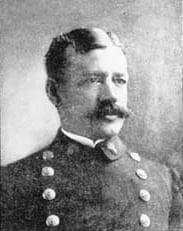
George Charrette was born in Lowell, Massachusetts, on 6 June 1867 and enlisted in the United States Navy in September 1884. By the Spanish-American War he was a gunner's mate serving in the armoured cruiser New York. He volunteered for an unusually hazardous attempt to obstruct the entrance to Santiago de Cuba, where the Spanish fleet lay sheltered.
Before dawn on 3 June 1898, Lieutenant Richmond Hobson and seven enlisted volunteers took the collier Merrimac into the harbour entrance. Their task was to sink it across the channel. Spanish batteries and ships opened fire, damaging steering and other equipment before the vessel could be placed as intended. The men abandoned the sinking ship and survived by remaining near a small floating support. Spanish forces captured them. The attempt failed to seal the channel, but the crew's exposure to fire and determination earned recognition for courage.
Charrette and his companions remained prisoners until their exchange in July 1898. He received the Medal of Honor for the operation and continued a long naval career, advancing from enlisted service into warrant and commissioned rank. His temporary wartime lieutenant rank became permanent on 3 August 1920, and he retired in 1925. His service extended through the First World War as well as the 1898 conflict. Charrette died on 7 February 1938 and was buried in Arlington National Cemetery. The destroyer USS Charrette later carried his name.
Become the named supporter for this profile and edit the tribute biography and portrait (Owner account required). Proceeds help keep the archive online.
$25 USD / year — annual sponsorship renewal. Keeps the page online and, where enabled, the family anniversary remembrance emails active.