★
Loading archive…
Loading archive…
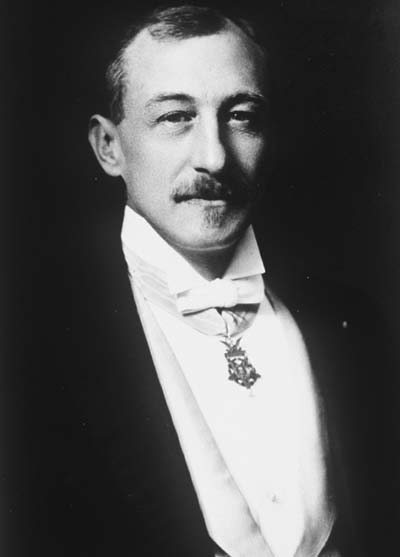
Major, U.S. Army
Support & adopt this hero ↓
How far would a military surgeon go to save a life? For Major George Franklin Shiels, the answer was straight into enemy fire. From the battlefields of the Philippines to the shell-torn trenches of France, this American Medal of Honor recipient repeatedly risked his own life to save others. His remarkable story proves that some of the greatest acts of battlefield courage are performed not with a weapon, but with the determination to keep another human being alive.
Born on April 13, 1863, in San Francisco, California, George Franklin Shiels pursued medical studies at the University of Edinburgh in Scotland before joining the United States Army as a volunteer surgeon in 1898. His medical training would soon be tested under circumstances no classroom could prepare him for.
On March 25, 1899, during the Philippine-American War, Shiels witnessed two wounded Filipinos lying approximately 150 yards beyond American lines near the Tuliahan River. Enemy fire made reaching them extraordinarily dangerous. Yet Shiels refused to leave them exposed. Accompanied by four men, he voluntarily advanced into the line of fire, reached the casualties, and personally carried one wounded man to safety.
For this extraordinary act, Shiels received the Medal of Honor on November 22, 1906. His official citation recognized his voluntary exposure to enemy fire, his effort to reach two wounded Filipinos, and his personal rescue of one of them. His service in the Philippine campaign also established his eligibility for the Philippine Campaign Medal.
But Shiels's battlefield story did not end in the Philippines.
Nearly two decades later, when World War I engulfed Europe, Shiels returned to military service as a major in the U.S. Army Medical Department. He served with the 369th Infantry Regiment, famously known as the Harlem Hellfighters, an African American regiment whose extraordinary courage earned recognition while fighting alongside French forces.
On September 29, 1918, at Fontaine, France, Shiels once again demonstrated exceptional bravery. Amid heavy German shellfire, he continued caring for wounded soldiers despite the danger surrounding him. His conduct earned an official American gallantry citation under General Headquarters, American Expeditionary Forces, Citation Orders No. 5, dated June 3, 1919. The citation recognized his care of the wounded under heavy shellfire and authorized him to wear the Silver Citation Star on his World War I Victory Medal ribbon. This distinction subsequently became eligible for conversion into the Silver Star Medal established in 1932.
His courage also received international recognition. The 369th Infantry's original wartime honours record lists Major Franklin Shiels, under a variant spelling and initials, among the individual recipients of the French Croix de Guerre 1914–1918. Although the precise wording and grade of his personal French citation remain unconfirmed, the historical roster strongly supports his identification among the regiment's decorated medical officers.
After the war, Shiels returned to civilian life. He died on October 26, 1943, in Palo Alto, California, at the age of 80, and was laid to rest at Cypress Lawn Memorial Park in Colma.
George Franklin Shiels lived through two generations of warfare, yet his defining mission never changed. Whether rescuing wounded Filipinos under rifle fire or treating soldiers beneath exploding artillery shells, he placed human life above his own safety. His legacy stands as a powerful reminder that courage is not measured only by enemies defeated or ground captured, but also by the lives a person is willing to risk everything to save.
Become the named supporter for this profile and edit the tribute biography and portrait (Owner account required). Proceeds help keep the archive online.
$25 USD / year — annual sponsorship renewal. Keeps the page online and, where enabled, the family anniversary remembrance emails active.