★
Loading archive…
Loading archive…

When German artillery shattered communications near Greves Farm, France, First Lieutenant George Price Hays carried messages between American and French batteries. He made journeys to restore contact and help direct accurate fire as seven horses were shot beneath him. Wounded during the mission, he remained until his work was done. These journeys helped check the German advance in July 1918.
First Lieutenant George Price Hays was carrying messages between artillery units near Greves Farm, France, when German guns shattered the communications on which the American defense depended. The Second Battle of the Marne had opened under an unprecedented bombardment. On 14 and 15 July 1918, Hays rode through the fire to restore contact between the 30th Infantry and the 10th Field Artillery, then helped maintain liaison with two French batteries. Seven horses were shot beneath him. He kept going until he was wounded and evacuated.
The officer who carried the messages
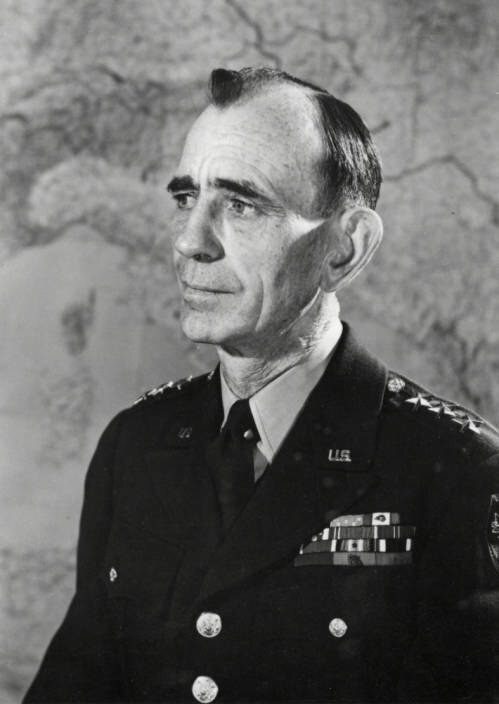
Hays was born in Chefoo, China, on 27 September 1892. He attended high school in El Reno, Oklahoma, and studied engineering at Oklahoma A&M College. In 1917, while in the Reserve Officers' Training Corps, he entered officer training and earned a commission in the Field Artillery. He joined the 10th Field Artillery Regiment of the 3rd Division and served as a liaison officer with infantry units in France.
When the bombardment destroyed his line of communication, Hays did not wait for another method to be found. He used his horse to carry communiques that helped artillery commanders coordinate counterattacks. He visited French artillery positions so frequently that his work helped them deliver accurate fire. A shell fragment struck his helmet, passed through his gas mask, and grazed his chest; another wounded his thigh. He was evacuated only after completing his mission. A contemporary report from an infantry commander called the liaison between the infantry and artillery a vital factor in repelling the German drive. Hays received the Medal of Honor for his conduct, along with the Purple Heart and French decorations.
From the Meuse-Argonne to the mountain division
Despite his wounds, Hays returned to duty for the Meuse-Argonne offensive. After the Armistice, he remained in Europe to help settle the affairs of the American Expeditionary Forces, then returned to the United States in late 1919. He married Gladys Stepto in London. Between the wars, his assignments included artillery commands, staff work, and four years teaching military science and tactics at Cornell University.
In World War II, Hays served on the War Department's operations staff before taking command assignments in Europe. He led division artillery, helped direct operations in Italy, and later went ashore at Omaha Beach with the 2nd Infantry Division. His division fought for weeks to secure Brest, served on the Siegfried Line, and took part in the Battle of the Bulge. Promoted to major general, Hays assumed command of the 10th Mountain Division as it prepared for combat in Italy. He led the division through the mountain operations at Riva Ridge and Mount Belvedere and into the Po River Valley. Soldiers later recalled his attention to morale and the confidence he brought to the division.
Hays continued in senior command and occupation assignments after the war, including service in Germany and Austria. He retired in 1953 as a lieutenant general. George Price Hays died in 1978. His career stretched from a young field artillery officer riding through the Marne bombardment to the command of an American division fighting across Italy.
Become the named supporter for this profile and edit the tribute biography and portrait (Owner account required). Proceeds help keep the archive online.
$25 USD / year — annual sponsorship renewal. Keeps the page online and, where enabled, the family anniversary remembrance emails active.