★
Loading archive…
Loading archive…
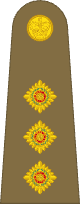
Few officers packed more gallantry into so short a military career than Captain George Stuart Henderson. Before his death at just 26, the Scottish-born officer of the Manchester Regiment had earned the Victoria Cross, the Distinguished Service Order and Bar, the Military Cross, and five Mentions in Despatches. His final act near Hillah in 1920 transformed an already remarkable record of courage into one of the most compelling stories in British military history. George Stuart Henderson was born on 5 December 1893 at East Gordon, Berwickshire, Scotland, the son of Robert Henderson and Mary Agnes Henderson. He was educated at St Michael's School and Rossall School before training for an Army career at the Royal Military College, Sandhurst. Commissioned as a second lieutenant in the Manchester Regiment on 24 January 1914, he initially served in India. With the outbreak of the First World War, Henderson returned with the 1st Battalion to Europe, landing at Marseilles in September 1914. He was promoted lieutenant in November and was wounded shortly afterwards. His reputation for battlefield leadership was established near Ypres on 26 April 1915. After his company commander was wounded and many senior officers had become casualties, Henderson assumed command and led the company forward to within close range of the German trenches. Despite being exposed for hours during daylight, he maintained the position and ultimately established his men there. His Military Cross, gazetted on 3 July 1915, praised his "great gallantry and determination" and the example he set during the operation. Henderson's courage was tested again after the Manchester Regiment moved to Mesopotamia. On 8 March 1916, during an attack on the Dujaila Redoubt, he entered the enemy position and organised bombing parties that cleared the defenders. The official citation for his Distinguished Service Order, published in The London Gazette on 31 May 1916, recorded his "conspicuous gallantry and determination", noting that he personally shot five enemy soldiers and later covered the British withdrawal, remaining among the last men to leave the redoubt. Further distinguished service followed. Henderson received a Bar to his Distinguished Service Order, announced in The London Gazette on 25 August 1917, for further operational gallantry associated with action on 9 January 1917. The Gazette announcement records the award of the Bar but does not provide a separate narrative citation in that entry. The Gazette By this stage Henderson had developed a remarkable record under fire. He was ultimately Mentioned in Despatches five times. In 1918 he volunteered for General Lionel Dunsterville's force, later known as Dunsterforce, and served alongside Armenian formations during operations in the region. After the First World War, Henderson joined the 2nd Battalion, Manchester Regiment. The battalion subsequently returned to Mesopotamia as unrest developed into the Iraqi Revolt of 1920. On 24 July 1920, about fifteen miles from Hillah, Henderson was commanding a company ordered to withdraw when a large force opened fire from the flank. His men began to split and waver, but Henderson immediately reorganised them and personally led a counterattack. He then led two further bayonet charges, repeatedly forcing the attackers back. Even after being wounded during the second charge, Henderson refused to leave his men. When he was wounded again as the company reached its intended position, he continued encouraging the soldiers around him. His posthumous Victoria Cross citation, published in The London Gazette on 29 October 1920, described his conduct as "most conspicuous bravery and self-sacrifice" and credited his courage and composure with preventing his company from being overwhelmed. Unable to continue, Henderson asked an NCO to support him on the embankment and told his men, "I'm done now, don't let them beat you." He died fighting. Henderson's body was never recovered. He is commemorated on the Basra Memorial in Iraq, as well as on memorials in Scotland and within the traditions of the Manchester Regiment. His Victoria Cross was presented by King George V to his sister on 8 March 1921 at Buckingham Palace. Captain George Stuart Henderson's military career lasted little more than six years, yet it carried him from India and the trenches of the Western Front to Mesopotamia and the turbulent aftermath of the First World War. His Military Cross, DSO and Bar, five Mentions in Despatches, and posthumous Victoria Cross tell a consistent story: when command became most difficult and danger most immediate, Henderson repeatedly chose to lead from the front.
Become the named supporter for this profile and edit the tribute biography and portrait (Owner account required). Proceeds help keep the archive online.
$25 USD / year — annual sponsorship renewal. Keeps the page online and, where enabled, the family anniversary remembrance emails active.
