★
Loading archive…
Loading archive…
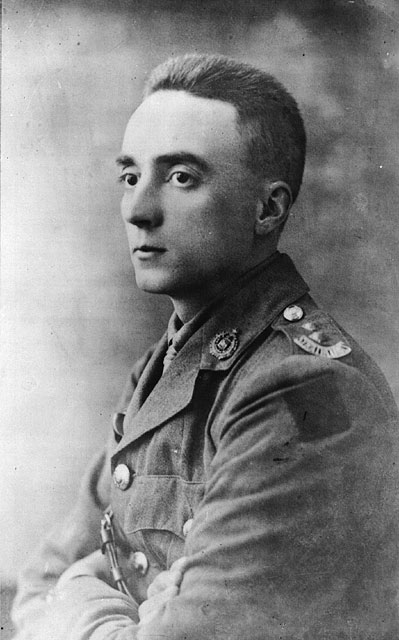
Lieutenant, Canadian Army
Support & adopt this hero ↓
Lieutenant Gordon Muriel Flowerdew, VC (2 January 1885 – 31 March 1918), army service number 2505, was an English-born Canadian cavalry officer who was posthumously awarded the Victoria Cross for extraordinary gallantry during the First World War. Born at Billingford Hall, Norfolk, England, Flowerdew completed his secondary education at Framlingham College in Suffolk. After suffering a serious attack of pleurisy in 1903, he emigrated to Canada in search of farming opportunities and eventually settled in Saskatchewan and British Columbia. In the orchard community of Walhachin, British Columbia, he worked as a rancher, store manager and butcher. A skilled horseman, he also distinguished himself in regional steeplechase and target-shooting competitions. His interest in riding and military service led him to join the local militia, the 31st Regiment, British Columbia Horse, in 1911.
Following the outbreak of the First World War, Flowerdew volunteered for overseas service with the Canadian Expeditionary Force at Valcartier, Quebec, on 25 September 1914. He was taken on strength with Lord Strathcona's Horse (Royal Canadians) and deployed to the Western Front in May 1915. Demonstrating aptitude for field leadership, he advanced from private to lance sergeant before receiving a field commission as a temporary lieutenant on 26 March 1916. He sustained a slight wound during frontline operations on 19 May 1917. By January 1918, Flowerdew had been placed in command of C Squadron of Lord Strathcona's Horse within the Canadian Cavalry Brigade.
The strategic situation on the Western Front changed dramatically following the opening of the German spring offensive, Operation Michael, on 21 March 1918. As German forces advanced through Allied positions along the Somme, the vital railway centre of Amiens came under increasing threat. The Canadian Cavalry Brigade was committed to help close gaps in the Allied line in the Avre valley. On 30 March 1918, German infantry occupied positions in Moreuil Wood, an important wooded height overlooking approaches toward Amiens. During the Canadian effort to recapture the wood, Flowerdew brought C Squadron into action near its northeastern corner.
On reaching his first objective, Flowerdew saw two lines of German infantry, each about sixty men strong, with machine guns positioned in the centre and on the flanks. Recognizing the critical importance of preventing the enemy from consolidating its position, Flowerdew ordered one troop under Lieutenant Frederick Maurice Watson Harvey, VC, to dismount and carry out a separate movement while he personally led the remaining three troops in a mounted sabre charge. The squadron galloped through both German lines, attacking the enemy with the sword, then wheeled and charged them again.
The fighting was devastating. Flowerdew's force lost about 70 per cent of its strength killed or wounded under rifle and machine-gun fire from the front and both flanks. Nevertheless, the German troops broke and withdrew. The surviving cavalrymen established themselves in the captured position and were later joined by Harvey's party after further close fighting. Flowerdew was dangerously wounded through both thighs during the action but continued to encourage his men. He was evacuated for medical treatment and died of his wounds on 31 March 1918, aged thirty-three.
For his conduct at Moreuil Wood, Flowerdew was awarded the Victoria Cross posthumously. His citation appeared in the Second Supplement to The London Gazette on 24 April 1918, Issue 30648:
“For most conspicuous bravery and dash when in command of a squadron detailed for special service of a very important nature. On reaching the first objective, Lieutenant Flowerdew saw two lines of the enemy, each about sixty strong, with machine guns in the centre and flanks, one line being about two hundred yards behind the other. Realising the critical nature of the operation and how much depended upon it, Lieutenant Flowerdew ordered a troop under Lieutenant Harvey, V.C., to dismount and carry out a special movement while he led the remaining three troops to the charge. The squadron (less one troop) passed over both lines, killing many of the enemy with the sword; and wheeling about galloped at them again. Although the squadron had then lost about 70 per cent of its numbers, killed and wounded, from rifle and machine-gun fire directed on it from the front and both flanks, the enemy broke and retired. The survivors of the squadron then established themselves in a position where they were joined, after much hand-to-hand fighting, by Lieutenant Harvey’s party. Lieutenant Flowerdew was dangerously wounded through both thighs during the operation, but continued to cheer on his men. There can be no doubt that this officer’s great valour was the prime factor in the capture of the position.”
Flowerdew was buried in Plot I, Row H, Grave 1 of Namps-au-Val British Cemetery, approximately 16 kilometres southwest of Amiens, France. His posthumous Victoria Cross was presented by King George V to his mother, Hannah Flowerdew, during a private audience at Buckingham Palace on 29 June 1918. The action at Moreuil Wood was subsequently immortalized by war artist Alfred Munnings in his 1918 painting Charge of Flowerdew's Squadron, now held in the national collection of the Canadian War Museum in Ottawa.
Become the named supporter for this profile and edit the tribute biography and portrait (Owner account required). Proceeds help keep the archive online.
$25 USD / year — annual sponsorship renewal. Keeps the page online and, where enabled, the family anniversary remembrance emails active.