★
Loading archive…
Loading archive…
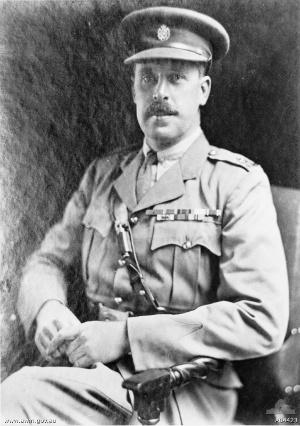
Colonel, British Army
Support & adopt this hero ↓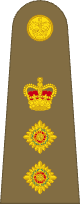
Guy George Egerton Wylly was born into a family firmly entrenched within the imperial military and administrative structures of the late nineteenth century. His birth on 17 February 1880 in Hobart, Tasmania, occurred during a period of significant demographic and institutional consolidation in the Australian colonies. His father, Edward Arthur Egerton Wylly, served as an officer in the British Indian Army, specifically associated with the 109th Regiment and the Madras Staff Corps, while his mother, Henrietta Mary Clerk, was the daughter of the Serjeant-at-Arms to the Tasmanian House of Assembly. This transatlantic and trans-oceanic heritage meant that Wylly's early infancy was spent in Madras, India, surrounded by the culture of the British Raj, before the family permanently relocated back to Australia, settling at Sandy Bay, Hobart, in 1885. The elder Wylly retired from military service in 1888, providing a stable colonial upbringing for his son. Wylly received his foundational education in a traditional, British-aligned public school environment, attending The Hutchins School in Hobart before crossing to the mainland to complete his studies at the Collegiate School of St Peter in Adelaide, South Australia. The education provided at these institutions placed a heavy emphasis on imperial loyalty, physical endurance, and martial virtue, perfectly positioning young men of Wylly's social class for military commissions.
The outbreak of the Second Boer War in October 1899 provided the catalyst for Wylly's transition into military service. The early phases of the conflict in South Africa had exposed severe tactical deficiencies in the regular British Army, particularly regarding mobility and marksmanship against the highly mobile, mounted Boer commandos. To counter this, the imperial command urgently requested mounted infantry from the colonies, men accustomed to rough riding, outdoor survival, and independent thought. In response, the Australian colonies raised contingents of "Bushmen". Wylly was commissioned as a lieutenant in the 1st Battalion, Tasmanian Imperial Bushmen, in April 1900. Service number Officer. On 26 April 1900, he embarked from Hobart with the 3rd (1st Tasmanian Imperial) Contingent, heading into a theatre of war that was rapidly shifting from conventional set-piece battles to a bitter, highly dispersed guerrilla conflict across the vast expanses of the veldt.
Upon arrival in South Africa, the Tasmanian Imperial Bushmen were absorbed into the broader 4th Imperial Bushmen and assigned to the forces under the command of Major General A. H. Paget. Paget’s force was tasked with a demanding and continuous operational directive: clearing the hostile territory north of Pretoria between the railway line to Potgietersrus and the Limpopo River. This phase of the war was characterised by constant movement, logistical strain, and the omnipresent threat of ambush. The Boers, operating in smaller, self-sufficient bands, exploited their intimate knowledge of the local topography to harass the imperial columns, sever supply lines, and inflict attritional casualties before melting back into the landscape. Throughout August 1900, Wylly and his unit were almost constantly engaged in these minor, yet highly lethal, skirmishes.
The defining action of Wylly's early career occurred on 1 September 1900, during a patrol near Warm Bad in the Transvaal. Wylly was in command of a small troop of bushmen assigned to act as the advanced scouting element for a larger foraging party. The terrain in this region was treacherous, demanding acute situational awareness. While navigating through a narrow, rocky, and thickly wooded gorge known as Zwartkloof, the eight-man scouting party rode directly into a carefully prepared Boer ambush. The concealed enemy forces initiated contact with a sudden, concentrated enfilading fire at point-blank range. The effect was immediate and devastating. Within seconds, six of the eight men in the advanced element were wounded, and Wylly himself sustained injuries. The sudden volume of fire threatened to annihilate the isolated scouts entirely.
Amid the chaos and the continuing fusillade, Wylly observed that one of his men, Corporal E. S. Brown, was in a highly precarious situation. Brown had been shot in the leg, a wound that immobilised him, and his horse had been killed out from under him by the initial volley. Completely exposed and unable to withdraw under his own power, Brown was facing certain death or capture. Ignoring his own wounds and the intense fire sweeping the gorge, Wylly abandoned whatever cover he had and moved back into the killing zone to assist the stricken non-commissioned officer. Reaching Brown, Wylly relinquished his own mount, forcing the wounded corporal to take the horse to ensure his escape. Rather than attempting to run alongside the horse to safety, Wylly deliberately remained in the engagement area. Taking up a static firing position behind a rock formation, he opened sustained suppressive fire against the concealed Boer positions. By actively drawing the enemy's attention and fire onto himself, Wylly successfully covered the retreat of Corporal Brown and the other surviving members of the patrol, doing so at the immediate and obvious risk of being cut off and killed. The full official citation for the Victoria Cross, gazetted on 23 November 1900, reads:
"On the 1st September, 1900, near Warm Bad, Lieutenant Wylly was with the advanced scouts of a foraging party. They were passing through a narrow gorge, very rocky and thickly wooded, when the enemy in force suddenly opened fire at short range from hidden cover, wounding six out of the party of eight, including Lieutenant Wylly. That Officer, seeing that one of his men was badly wounded in the leg, and that his horse was shot, went back to the man's assistance, made him take his (Lieutenant Wylly's) horse, and opened fire from behind a rock to cover the retreat of the others, at the imminent risk of being cut off himself. Colonel T. E. Hickman, D.S.O., considers that the gallant conduct of Lieutenant Wylly saved Corporal Brown from being killed or captured, and that his subsequent action in firing to cover the retreat was instrumental in saving others of his men from death or capture."
Following the engagement at Zwartkloof, the overall action at Rooikop yielded substantial results for the imperial forces, including the capture of 100 rifles, 40,000 rounds of ammunition, 350 cattle, two supply wagons, and the taking of seven Boer prisoners. Wylly managed to make his own escape from the gorge but required medical attention for his wounds. Despite his injuries, he soon returned to the field. However, during a subsequent engagement at Nooitgedacht—the exact date of which remains unstated in official records but was reported in January 1901—he was dangerously wounded once again. The severity of this second wound, or perhaps a complication from his previous injuries, necessitated his withdrawal from the theatre of operations. Wylly was formally invalided to England, departing Cape Town on 5 March 1901 aboard the hospital ship Avoca.
Arriving in Southampton on 26 March 1901, Wylly began a period of convalescence. The 1901 United Kingdom Census places him in Shepton Mallet, recovering at Charlton House, the residence of his uncle, retired Colonel Robert M. Clark. As his physical condition improved, Wylly attended an investiture at Buckingham Palace on 25 July 1901, where King Edward VII formally presented him with the Victoria Cross. His demonstrated courage and tactical competence in South Africa facilitated a permanent career in the regular military establishment. Initially granted a commission in the Royal Berkshire Regiment in late 1900, this was cancelled, and he was instead commissioned as a second lieutenant in the South Lancashire Regiment on 5 December 1900. He deployed to India to join the 2nd Battalion of the South Lancashire Regiment, gaining promotion to lieutenant on 5 March 1902.
The Indian subcontinent, with its vast military apparatus and complex strategic requirements, became the geographic anchor of Wylly’s long professional career. On 1 October 1902, he executed a transfer to the British Indian Army, initially serving with the 46th Punjabis from 1902 to 1904. He subsequently secured a highly prestigious posting to the Queen's Own Corps of Guides. The Guides were a unique and elite frontier force, comprising both cavalry and infantry elements, renowned for their intelligence-gathering capabilities and rapid deployment along the volatile North-West Frontier. Wylly served in the infantry branch of the Guides from 1904 to 1906 before transferring to their cavalry wing. His operational competence and social standing within the officer corps led to his appointment as aide-de-camp to Lord Kitchener, the Commander-in-Chief of the East Indies, on 7 January 1906. Serving under Kitchener during a period of massive structural reform and modernisation of the Indian Army provided Wylly with invaluable insight into high-level strategic administration and logistics. He retained this position until September 1909, receiving a promotion to captain on 26 April of that year. Recognising the necessity of formal staff training for further advancement, Wylly prepared for and passed the rigorous entrance examination for the Staff College, Quetta, in 1913.
The outbreak of the First World War abruptly interrupted his staff studies. In December 1914, Wylly was dispatched to the Western Front in France, appointed as a Staff Captain in the 5th (Mhow) Cavalry Brigade. The deployment of Indian cavalry to the European theatre was fraught with operational difficulties. The static, highly attritional nature of trench warfare, dominated by artillery, barbed wire, and machine guns, negated the cavalry's traditional advantages of speed, shock, and mobility. Consequently, mounted units were frequently held in reserve for breakthroughs that rarely materialised, or they were dismounted to serve in the trenches as conventional infantry. Wylly operated in this frustrating and highly dangerous environment, sustaining another wound in action in August 1915.
Despite the physical toll, his administrative capabilities were in high demand. He was advanced to Brigade Major on 14 September 1915 and formally completed his Quetta staff course qualifications in February 1916. Promoted to temporary major on 26 April 1916, he was appointed a General Staff Officer, Grade 2, on 20 June 1916. His staff duties brought him into contact with various formations; he briefly served on the staff of the British 4th Division before being attached to the newly forming 3rd Australian Division in England in July 1916. Between 24 February and 26 July 1917, he served on the staff of the I Anzac Corps, representing his final posting on the Western Front before returning to India. Throughout his gruelling tenure in France and Belgium, Wylly's consistent performance under the extreme pressures of industrial warfare resulted in his being Mentioned in Despatches three times—specifically on 15 June 1916, 15 May 1917, and 11 December 1917. His wartime service was formally recognised when he was appointed a Companion of the Distinguished Service Order (DSO) in the 1918 New Year Honours. Additionally, following the death of Lord Kitchener at sea in 1916, Wylly was among the former aides who received a personal bequest of £200 from the Field Marshal's estate.
Following the armistice in Europe, Wylly returned to the Indian establishment, where the strategic environment remained highly volatile. The immediate post-war period was dominated by the Third Anglo-Afghan War in 1919, during which Wylly served once again as a General Staff Officer, Grade 2, operating from 6 May 1919. The interwar years on the North-West Frontier were characterised by near-constant low-intensity conflict, punitive expeditions, and the complex pacification of fiercely independent tribal groups. Wylly was deeply embedded in this machinery of imperial control. He received promotion to lieutenant colonel on 26 April 1926 and was given command of the 6th Duke of Connaught's Own Lancers, a prestigious cavalry regiment within the Indian Army. Concurrently, his standing within the imperial hierarchy was reaffirmed when he was appointed an aide-de-camp to King George V on 15 November 1926, a position he maintained until his retirement.
His senior command capabilities were heavily utilised during the late 1920s and early 1930s. He received a brevet promotion to colonel in November 1929 and a substantive promotion to the rank on 26 April 1930. Operating as the Assistant Adjutant and Quartermaster General (AA & QMG) for the Peshawar District from November 1929, Wylly was responsible for the complex logistics and administrative support required for sustained counter-insurgency operations. He played a crucial role during the suppression of the Afridi and the Red Shirt Rebellion, an operation combining political unrest with armed tribal incursions, for which he was Mentioned in Despatches on 6 May 1931. The operational tempo did not diminish in the following years. Wylly was again Mentioned in Despatches on 8 September 1933 for his logistical and staff work during the Chitral Reliefs.
In recognition of a lifetime of distinguished military service spanning multiple continents, different types of warfare, and immense technological change, Colonel Wylly was appointed a Companion of the Order of the Bath (CB) in the King's Birthday Honours of 1933. He stepped down from his position in Peshawar in November 1933 and officially retired from the army on 30 December 1933. A final Mention in Despatches was gazetted posthumously to his active career on 3 July 1934, recognising his contributions to the Mohmand and Bajaur Operations conducted between July and October 1933. He attended an investiture at Buckingham Palace on 27 February 1934 to receive his CB insignia. Transitioning to civilian life in England, Wylly continued to serve the military community by working for the Retired Army Officers Employment Bureau. Although he remained on the reserve list, he reached the age limit for service in February 1940 and was not recalled for the Second World War. Colonel Wylly lived quietly in his final decades and died on 9 January 1962 in Camberley, Surrey, at the age of 81. His ashes were scattered in the Tennyson Lake Garden of Remembrance at Woking Crematorium.
Become the named supporter for this profile and edit the tribute biography and portrait (Owner account required). Proceeds help keep the archive online.
$25 USD / year — annual sponsorship renewal. Keeps the page online and, where enabled, the family anniversary remembrance emails active.