★
Loading archive…
Loading archive…

Lt Colonel, Australian Army
Support & adopt this hero ↓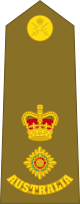
From Private Soldier to Australia's Most Decorated First World War Hero
He entered the First World War as a private soldier and emerged as the Australian Imperial Force's most highly decorated fighting man. From the deadly cliffs of Gallipoli to the shattered trenches of France, Lieutenant Colonel Henry William “Harry” Murray became a symbol of extraordinary courage, battlefield leadership, and devotion to his men. His remarkable journey would earn him the Victoria Cross, Britain's highest award for gallantry in the face of the enemy.
Born in Tasmania on 1 December 1880, Murray worked as a farmer and bushman before enlisting in the Australian Imperial Force in 1914. He landed at Gallipoli on 25 April 1915 with the 16th Battalion, serving in a machine-gun crew. During operations near Gaba Tepe between 9 and 31 May, he repeatedly demonstrated exceptional courage and skill, inflicting heavy losses on enemy forces despite being wounded twice. His actions earned him the Distinguished Conduct Medal (DCM), the first recognition of a military career that would become legendary.
Commissioned into the 13th Battalion, Murray continued to distinguish himself on the Western Front. During the Battle of Mouquet Farm in August 1916, he led his company through intense fighting, repelled repeated German counterattacks, and remained at his post despite suffering two wounds. On another occasion, he risked his life to remove exploding equipment from a fellow soldier. His remarkable leadership and personal courage earned him the Distinguished Service Order (DSO).
But Murray's greatest test was still ahead.
On the night of 4–5 February 1917, Captain Murray led his company against the heavily defended German position known as Stormy Trench, near Gueudecourt, France. After capturing the objective, his exhausted men faced three major counterattacks and relentless artillery bombardment. Murray moved constantly along the line, directing grenade attacks, leading bayonet charges, rescuing wounded soldiers, and personally rallying men when their position threatened to collapse. Of approximately 140 men in his company, only 48 remained in fighting condition when the unit was relieved.
For this extraordinary display of courage and leadership, Murray received the Victoria Cross (VC). His citation recognised the exceptional bravery through which he inspired his men and helped hold the captured position against overwhelming pressure.
Remarkably, the Victoria Cross did not mark the end of his battlefield achievements. At the First Battle of Bullecourt on 11 April 1917, Murray led his company across approximately 1,200 yards of ground swept by shellfire and machine-gun bullets. Despite devastating casualties, he organised defensive positions, rallied troops from different units, and continued fighting until withdrawal became unavoidable. His bravery and tactical judgement earned him a Bar to the Distinguished Service Order, representing a second award of the decoration.
Promoted to lieutenant colonel in 1918, Murray assumed command of the 4th Australian Machine Gun Battalion. His skilful leadership during operations alongside French forces earned him the French Croix de Guerre, while his successful command during the Hindenburg Line operations, including his contribution as a liaison officer with the American II Corps, led to his appointment as a Companion of the Order of St Michael and St George (CMG) in 1919. He was also Mentioned in Despatches four times for his distinguished wartime service.
When the Second World War began, Murray answered the call again. He commanded the 26th Battalion in northern Queensland and later served with the Volunteer Defence Corps, continuing his military responsibilities until retirement in 1944.
Despite his extraordinary reputation, Murray remained known for his modesty and commitment to those under his command. He died on 7 January 1966, aged 85.
From an ordinary Australian bushman to a Victoria Cross recipient and lieutenant colonel, Harry Murray's life stands as one of the most remarkable stories of courage and leadership in Australian military history. His legacy rests not simply in the honours he received, but in the lives he protected, the soldiers he inspired, and the determination he displayed when the fighting was at its fiercest.
Become the named supporter for this profile and edit the tribute biography and portrait (Owner account required). Proceeds help keep the archive online.
$25 USD / year — annual sponsorship renewal. Keeps the page online and, where enabled, the family anniversary remembrance emails active.