★
Loading archive…
Loading archive…
He Faced Richmond’s Fire—and Rose From the Ranks
Henry F. W. Little was born on June 27, 1842, in Manchester, New Hampshire. He came of age just as the United States was descending into the Civil War, and his early adulthood would become inseparable from the Union war effort. Little entered the United States Army and served with Company D of the 7th New Hampshire Volunteer Infantry, a regiment that would experience hard campaigning across several theaters of the conflict.
The 7th New Hampshire Infantry saw demanding service in the coastal South and later in Virginia. Its soldiers endured operations in South Carolina, including the struggle around Charleston Harbor and Fort Wagner, and subsequently fought in Florida and Virginia. By 1864 the regiment had become part of the operations against Confederate forces defending Richmond and Petersburg, placing Little and his comrades in some of the most dangerous campaigning of the final full year of the war.
During this period Little advanced through the enlisted ranks and was serving as a Sergeant when the action that defined his military legacy occurred. In September 1864, while operating near Richmond, Virginia, he demonstrated exceptional courage while serving on the skirmish line. Skirmishers operated ahead of the main body of troops, where they were frequently the first soldiers to encounter enemy fire and where individuals were often separated from the protection provided by a larger formation.
Little's conduct occurred during a reconnaissance toward Richmond. His bravery on the skirmish line was considered notable enough that senior Union command formally recognized him for gallant and meritorious service. The surviving recognition was concise—“Gallantry on the skirmish line”—but behind those few words stood conduct under direct battlefield danger that distinguished him from the ordinary demands of combat.
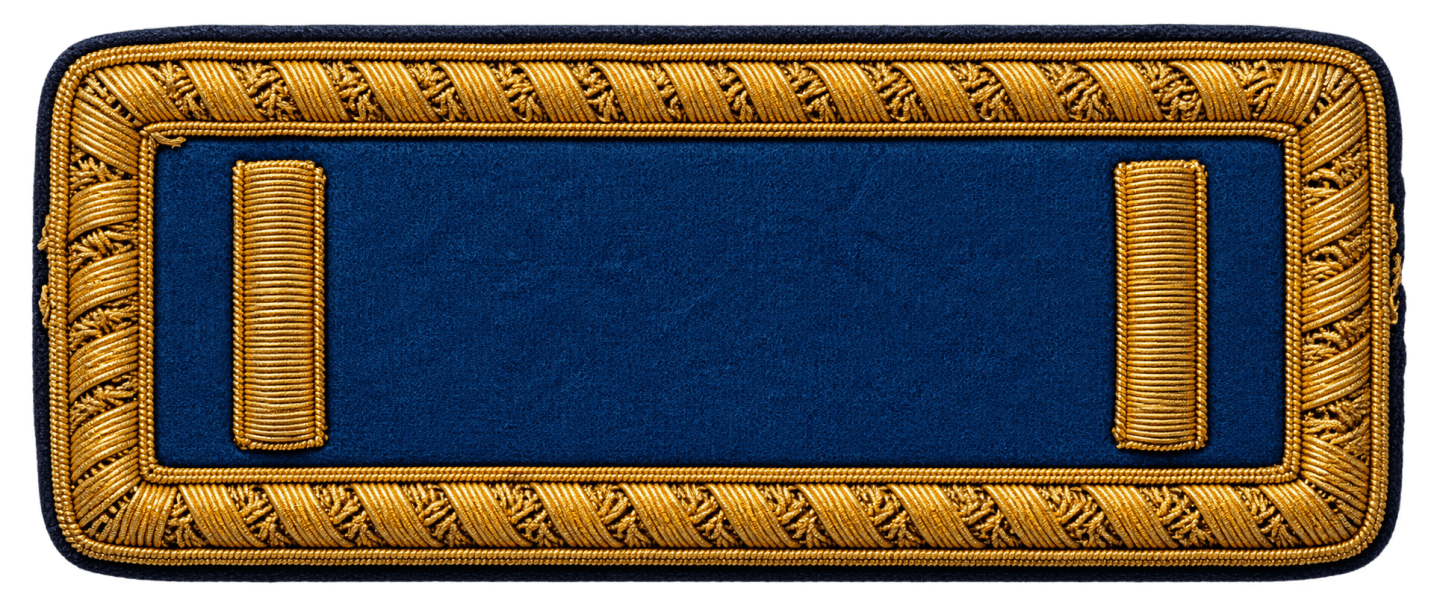
His courage produced more than immediate praise. An order issued from the Department of Virginia and North Carolina in October 1864 specifically recognized Sergeant Little for his actions and recommended him for the Medal of Honor. His battlefield performance also contributed to his advancement from the enlisted ranks into commissioned service. Little subsequently became associated with the 4th United States Colored Troops and attained the rank of First Lieutenant, the highest verified rank of his military career.
This transition was significant. Little had entered the war as an enlisted soldier in a New Hampshire infantry regiment and eventually became a commissioned officer. Serving with the United States Colored Troops also placed him within one of the most important developments of the later Civil War, when Black Union soldiers were playing an increasingly significant role in the campaigns against the Confederacy. As a commissioned officer, Little carried responsibilities far beyond those he had held earlier as an enlisted man.
The recognition for his September 1864 courage did not immediately become a Medal of Honor. The war ended, the Union was preserved, and Little returned to civilian life before the federal government formally completed the award process. On January 14, 1870, several years after the fighting near Richmond, Henry F. W. Little was presented with the Medal of Honor for his gallantry on the skirmish line.
For his final medal record, the verified decoration is Medal of Honor 1862–1896 Army — 1870, with no additional device or clasp. The distinction between his action date and his award date is important: his act of courage occurred during the Civil War in September 1864, while the formal national recognition came in 1870. His Medal of Honor therefore preserved the memory of a battlefield action that had taken place more than five years earlier.
After the war, Little returned primarily to Manchester, New Hampshire, although he also spent a period of his postwar life in Iowa. He worked in civilian trades including carpentry and building, creating a life far removed from the skirmish lines and military campaigns that had defined his early twenties. He married, raised a family, and became part of the generation of Union veterans who returned home and helped shape American communities after the Civil War.
Little also remained involved in public and veterans' affairs. He served as a justice of the peace and became involved in local and state civic life, including service as a representative from Manchester's Ward 3 in 1888. He was also connected with the Grand Army of the Republic, the influential organization of Union veterans whose members worked to preserve the memory of Civil War service and support former soldiers and their families.
His contribution to Civil War memory became especially important in 1896, when he published The Seventh Regiment New Hampshire Volunteers in the War of the Rebellion. The substantial regimental history preserved the experiences, battles, losses, movements, and memories of the soldiers with whom he had served. Through that work, Little became more than a participant in Civil War history—he became one of the veterans who helped document it for later generations.
The book also reflected the extraordinary distance his life had traveled since the war. The young Sergeant who had moved forward on a dangerous skirmish line near Richmond had survived the conflict, become a commissioned First Lieutenant, received the Medal of Honor, returned to civilian life, participated in public affairs, and eventually recorded the history of his own regiment.
Henry F. W. Little died on February 7, 1907, at the age of sixty-four. He was buried in Valley Cemetery in Manchester, New Hampshire, the city where his life had begun more than six decades earlier.
His legacy ultimately joins two different forms of service. On the battlefield, he was the Sergeant whose gallantry on the skirmish line near Richmond brought official recognition and eventually the Medal of Honor. After the war, he helped preserve the story of the soldiers who had fought beside him. From an enlisted New Hampshire infantryman to a First Lieutenant, Medal of Honor recipient, civic figure, and regimental historian, Little carried the memory of the Civil War with him for the rest of his life.
Become the named supporter for this profile and edit the tribute biography and portrait (Owner account required). Proceeds help keep the archive online.
$25 USD / year — annual sponsorship renewal. Keeps the page online and, where enabled, the family anniversary remembrance emails active.
