★
Loading archive…
Loading archive…
First Sergeant, U.S. Army
Support & adopt this hero ↓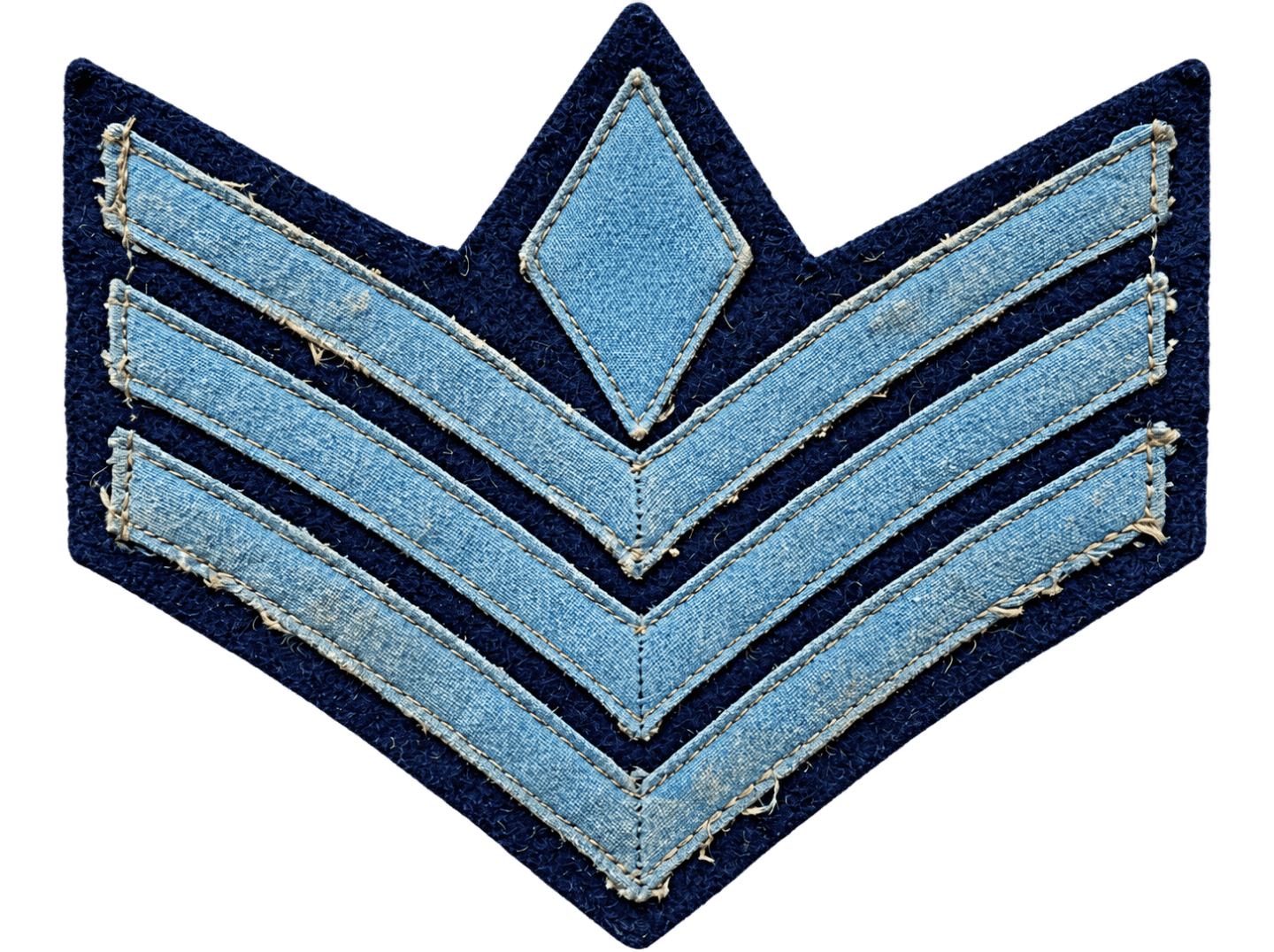
He Captured the Flag at Five Forks
Hiram Adolphus Delavie was born in 1824 in Stark County, Ohio. By the time of the American Civil War, he had become associated with Pennsylvania and entered United States Army service from Allegheny County. He served in Company I of the 11th Pennsylvania Infantry, a Union regiment that would remain in active service through the closing campaigns of the war.
Delavie served as a Sergeant during the action that made his name part of Medal of Honor history. His highest verified military rank was First Sergeant, but that later rank must be distinguished from the rank he actually held during his heroic action. On April 1, 1865, at Five Forks, Virginia, he was serving as a Sergeant of Company I, 11th Pennsylvania Infantry.
The Battle of Five Forks came at a decisive moment in the final days of the Civil War in Virginia. Confederate forces under Major General George Pickett were attempting to protect the important road junction at Five Forks and, beyond it, the South Side Railroad, one of the last major supply routes supporting Robert E. Lee’s army around Petersburg. Union forces attacked on April 1, overwhelming the Confederate position and opening the way toward the railroad. The victory helped break the defensive situation around Petersburg and contributed directly to the Confederate withdrawal that followed.
It was during this battle that Delavie performed the act for which he was recognized. The surviving official citation is exceptionally brief: it credits him with the “Capture of flag.” No reliable official account identifies the captured flag more precisely in the citation, and no additional battlefield detail is necessary to understand the importance of the deed. In nineteenth-century combat, regimental colors were important military symbols and rallying points, and capturing an enemy flag in battle was regarded as a significant act of courage. Delavie’s achievement therefore stands on the simple but powerful fact preserved in his official record: during the fighting at Five Forks, he captured a flag.
Only nine days after the battle, Lee surrendered the Army of Northern Virginia at Appomattox Court House. Five Forks had been one of the crucial actions that accelerated the collapse of the Petersburg defenses and the final retreat westward. Delavie’s Medal of Honor action consequently occurred during one of the most consequential moments of the war’s closing campaign.
The United States formally recognized Delavie’s conduct soon afterward. His Medal of Honor was issued on May 10, 1865, for his action at Five Forks on April 1. The award record identifies him as Sergeant Hiram H. De Lavie of Company I, 11th Pennsylvania Infantry and gives the citation simply as “Capture of flag.” The decoration was awarded during his lifetime and carried no additional clasp, star, or other device.
The Medal of Honor had been established during the Civil War and was still a comparatively new national decoration when Delavie received it. His award belongs to the earliest generation of Army Medal of Honor recipients, men whose actions during the conflict established many of the traditions later associated with the decoration. Delavie’s case is particularly direct: there is no elaborate citation or extended description of the event. His official recognition rests on a single documented combat achievement.
His broader wartime service is also recognized by the Civil War Campaign Medal. That decoration was established by the Army after the conflict to recognize qualifying military service during the Civil War. Delavie’s documented Union Army service with the 11th Pennsylvania Infantry, including his combat service at Five Forks, falls within that qualifying Civil War service. The Civil War Campaign Medal therefore represents the wider wartime service of which his Medal of Honor action formed one extraordinary part.
Delavie’s military record also shows the importance of separating his action rank from the highest rank he later attained. At Five Forks he was a Sergeant. His highest verified rank was First Sergeant. That distinction preserves the circumstances of the Medal of Honor action accurately while also recognizing his later advancement within the enlisted ranks.
After the war, Delavie lived in Pennsylvania. Much less is securely documented about his civilian life than about his military service, so his historical legacy remains centered on his wartime record. He eventually died in Pennsylvania and was buried at Allegheny Cemetery in Pittsburgh. Modern research corrected an older burial identification that had placed him at St. Peter’s Cemetery; the Allegheny Cemetery burial is now the accepted location associated with the Medal of Honor recipient.
Hiram Adolphus Delavie’s place in American military history rests on an act described in only three words: “Capture of flag.” Yet those three words connect him to the Battle of Five Forks, one of the decisive Union victories of the Civil War’s final days. As a Sergeant of the 11th Pennsylvania Infantry, he entered the battle on April 1, 1865, captured an enemy flag, and received the Medal of Honor little more than a month later.
His Medal of Honor commemorates that specific act at Five Forks, while the Civil War Campaign Medal recognizes the broader Union Army service through which he reached that battlefield. He later attained the rank of First Sergeant, but the moment that defined his military legacy came while he was still a Sergeant—during the final struggle around Petersburg, when the capture of a flag secured his place among the Medal of Honor recipients of the American Civil War.
Become the named supporter for this profile and edit the tribute biography and portrait (Owner account required). Proceeds help keep the archive online.
$25 USD / year — annual sponsorship renewal. Keeps the page online and, where enabled, the family anniversary remembrance emails active.