★
Loading archive…
Loading archive…

First Lieutenant, U.S. Army
Support & adopt this hero ↓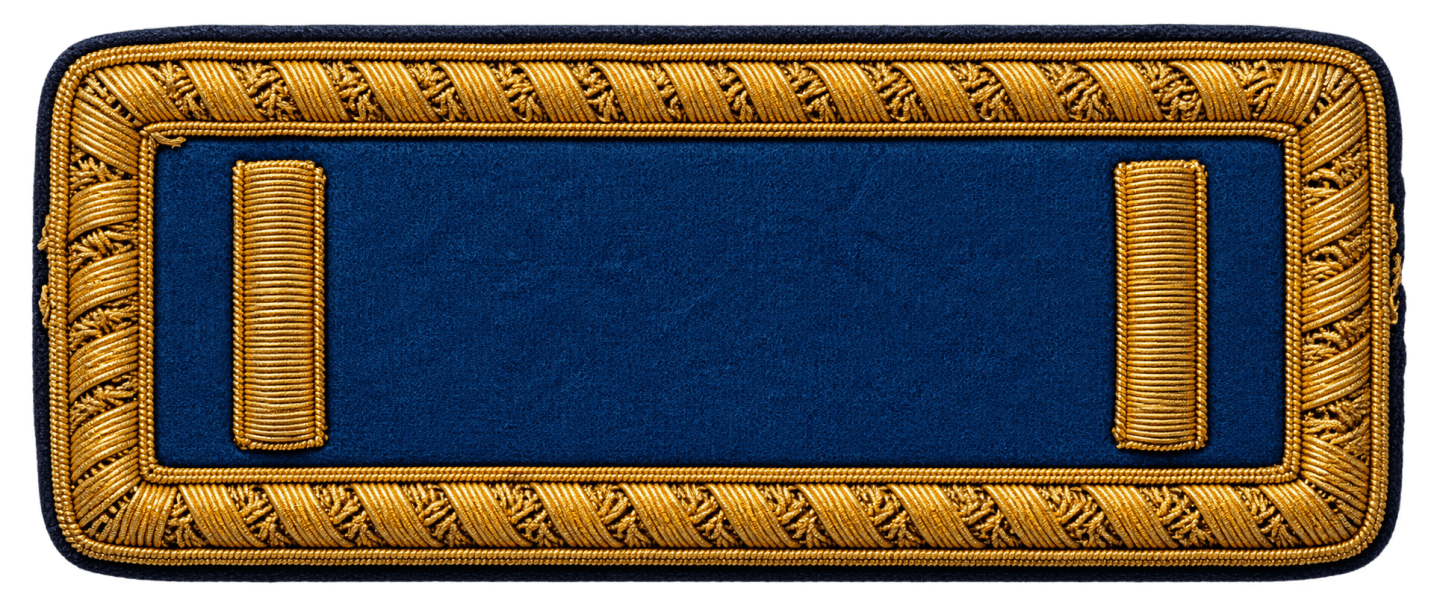
The Line Broke—He Stayed Behind to Save the Wounded
Hillary Beyer was born on September 28, 1837, in Montgomery County, Pennsylvania. His surviving authoritative military records identify him simply as Hillary Beyer, without a securely verified middle name. He would spend much of his adult life connected with Pennsylvania, but his place in American military history was established during the Civil War, when an extraordinary decision made on the battlefield at Antietam eventually earned him the Medal of Honor.
Beyer entered Union service in Philadelphia in September 1861 and was mustered into the 90th Pennsylvania Infantry. He initially served in the enlisted ranks and rose to a position of responsibility before receiving a commission as Second Lieutenant. His commission in Company H dated from September 1, 1862, placing him among the regiment's junior officers only a short time before one of the bloodiest battles of the entire Civil War.
The 90th Pennsylvania Infantry became part of the Union Army's operations in Virginia and Maryland. By September 1862, Confederate General Robert E. Lee had carried the Army of Northern Virginia into Maryland, creating a campaign that culminated near Sharpsburg along Antietam Creek. The Union Army moved to stop Lee, and on September 17, 1862, the two armies collided in a battle remembered for its extraordinary intensity and enormous casualties.
The 90th Pennsylvania entered the fighting on the northern part of the Antietam battlefield. This sector included the Cornfield and the East Woods, areas where repeated Union and Confederate attacks turned the landscape into one of the most violent killing grounds of the war. Artillery shells, rifle fire, and rapidly shifting battle lines created conditions in which entire formations could be shattered within minutes.
Beyer was serving as a Second Lieutenant of Company H during the battle. As the fighting intensified, his command was eventually forced to withdraw from its exposed position. The safer course was obvious: move back with the rest of the soldiers and reform behind the new Union line.
Beyer did not go with them.
Instead, he remained behind on the battlefield while the line around him fell back. Wounded Union soldiers were still lying in the area, exposed to Confederate fire and unable to escape on their own. Beyer stayed with them, caring for his injured comrades despite the continued danger around him.
His most significant act came when he physically carried one of the wounded soldiers away from the exposed battlefield and toward a safer position. He performed this rescue while enemy artillery and infantry fire continued across the ground from which the Union regiment had withdrawn. By remaining behind after his unit had fallen back, Beyer placed himself in a position where he could easily have been wounded, killed, or captured.
The importance of his action lay in its deliberate nature. Beyer was not merely caught behind the line during a confused retreat. He chose to remain because wounded soldiers had been left on the field. Instead of concentrating solely on his own safety, he stayed with men who could no longer protect themselves and personally removed one of them from immediate danger.
The Battle of Antietam continued throughout September 17. By the end of the day, neither army had completely destroyed the other, but Lee's invasion of Maryland had been stopped. The Confederate army subsequently withdrew across the Potomac River into Virginia. The battle became one of the most significant military events of the Civil War and provided the strategic setting in which President Abraham Lincoln soon announced the preliminary Emancipation Proclamation.
For Beyer, however, the battle was remembered on a much more personal scale. His defining contribution was not the capture of a flag, the seizure of an enemy position, or the command of a large assault. It was the decision to stay behind when others had been ordered away and to risk his own life for wounded comrades who otherwise might have been abandoned on the battlefield.
His military career did not end at Antietam. Beyer remained with the 90th Pennsylvania as the regiment continued through some of the most difficult campaigns fought by the Army of the Potomac. The regiment later participated in major operations connected with Fredericksburg, Chancellorsville, Gettysburg, the Mine Run Campaign, the Wilderness, Spotsylvania, North Anna, and the fighting associated with the Petersburg campaign.
Beyer's continued service brought further advancement. On November 24, 1863, he was commissioned First Lieutenant. Records indicate that he was not formally mustered into that higher grade, an important distinction in reconstructing his service. Nevertheless, First Lieutenant is recorded as his highest rank, while Second Lieutenant remains the correct rank for his Medal of Honor action at Antietam.
He continued in military service until November 26, 1864, when he was honorably discharged at the expiration of his three-year term. By then, Beyer had spent more than three years in Union service and had witnessed some of the most important campaigns of the Eastern Theater.
For decades after the war, the extraordinary act he performed at Antietam remained without the nation's highest formal decoration. That changed on October 30, 1896, more than thirty-four years after the battle, when Hillary Beyer was awarded the Medal of Honor for his conduct on September 17, 1862.
The Medal of Honor had originated during the Civil War. Congress established the Army Medal of Honor in 1862 as a national decoration for exceptional military conduct. During the decades following the conflict, wartime records and recommendations continued to be reviewed, and a number of Civil War veterans received the decoration long after the actions that had earned it.
Beyer's Medal of Honor recognized one specific episode of extraordinary heroism: after his command had been forced to fall back, he remained alone on the line of battle, cared for his wounded comrades, and carried one of them to safety. The award was made during his lifetime and was not posthumous.
For his verified medal record, the Medal of Honor is the only decoration that should be included. No additional star, clasp, bar, or other device has been verified for the award. Although Beyer unquestionably served extensively during the Civil War, no separate Civil War campaign medal should be added without recipient-specific evidence establishing his personal entitlement to that later decoration.
After leaving the Army, Beyer returned to civilian life in Pennsylvania. He became associated with Germantown in Philadelphia and worked in the ice industry, serving in a management role with the Knickerbocker Ice Company. Like many surviving Union veterans, however, his connection with the men and history of his regiment did not disappear when his military service ended.
Beyer became active in preserving the memory of the 90th Pennsylvania Infantry. He served prominently in the regiment's Survivors' Association and became chairman of the committee responsible for commemorating the regiment's service at Gettysburg. Decades after the battle, surviving veterans worked to mark the positions where the regiment had fought and to ensure that the sacrifices of their comrades would not be forgotten.
At Gettysburg monument ceremonies, Beyer represented the surviving veterans of the regiment and helped present memorials commemorating their wartime service. This work added another dimension to his legacy. He had once remained on a battlefield to care for soldiers who could not leave it; years later, he helped ensure that the service of the same wartime generation would remain visible to future generations.
Hillary Beyer lived until September 24, 1907, dying only four days before his seventieth birthday. He was buried in the Presbyterian Church Yard Cemetery in Montgomery County, Pennsylvania. By the time of his death, forty-five years had passed since the morning at Antietam that defined his military legacy.
His story remains powerful because his Medal of Honor action was built around a simple human decision made in an extraordinarily dangerous moment. The battle line had broken. His command had fallen back. Enemy fire still covered the ground, and wounded men remained behind.
Beyer could have withdrawn with the others.
Instead, he stayed.
He cared for the wounded, lifted one of his comrades, and carried him away from the battlefield. More than three decades later, the United States formally recognized that decision with the Medal of Honor, preserving Hillary Beyer's place among the soldiers whose courage was measured not only by how they fought the enemy, but by what they were willing to risk to save one another.
Become the named supporter for this profile and edit the tribute biography and portrait (Owner account required). Proceeds help keep the archive online.
$25 USD / year — annual sponsorship renewal. Keeps the page online and, where enabled, the family anniversary remembrance emails active.