★
Loading archive…
Loading archive…

A lone B-24 Liberator against a Japanese convoy. A crippled bomber struggling toward the coast of China. A pilot who had a chance to save himself, but refused to leave a crewman behind.
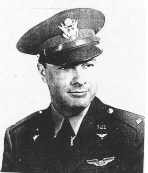
Major Horace Seaver Carswell Jr., often remembered by the nickname “Stump,” was a United States Army Air Forces officer, B-24 Liberator pilot, and one of the most highly decorated American airmen of the Second World War. Serving with the 374th Bombardment Squadron, 308th Bombardment Group (Heavy), Fourteenth Air Force, Carswell flew dangerous combat missions from China against Japanese shipping and military targets. His final mission over the South China Sea on 26 October 1944 resulted in the posthumous award of the Medal of Honor.
From Fort Worth Athlete to Army Air Corps Pilot
Carswell was born in Fort Worth, Texas, in 1916 and grew up as a gifted athlete. At North Side High School he competed in football, basketball, and baseball. In 1934 he entered Texas A&M, where he studied agriculture, before transferring to Texas Christian University. At TCU he played football and baseball and studied physical education, graduating in August 1939. His football contemporaries included future stars Sammy Baugh and Davey O'Brien.
On 26 March 1940, Carswell entered the U.S. Army Air Corps as a flying cadet. He trained at the Spartan School of Aeronautics in Tulsa, Oklahoma, and at Randolph and Kelly Fields in Texas. On 16 November 1940 he received his pilot wings and commission as a second lieutenant in the Air Corps Reserve.
Carswell then served as a flying instructor at Randolph Field and Goodfellow Field. Promoted to first lieutenant in February 1942, he later attended the Army Air Forces Combat Crew School at Hendricks Field, Florida, and continued flying and instructional duties at Davis-Monthan Field in Arizona and Biggs Field in Texas. He was promoted to captain in December 1942.
In January 1943, Carswell joined the 356th Bombardment Squadron, 302nd Bombardment Group, at Clovis, New Mexico. His assignments included squadron and group responsibilities before later service at Langley Field, Virginia. He was promoted to major on 23 April 1944 and departed for combat duty in the Asiatic-Pacific Theater. By May he had joined the 374th Bombardment Squadron of the 308th Bombardment Group in China.
Flying the B-24 Over China and the South China Sea
Carswell quickly became an experienced combat pilot and operations officer. After several months of combat flying, he was placed in command of a detachment of radar-equipped B-24 Liberators operating from Liuchow. These aircraft conducted demanding low-altitude and night missions against Japanese naval targets and shipping routes.
His Distinguished Flying Cross citation covered combat operations from 14 July to 10 October 1944. It credited Carswell with more than 200 hours of combat flight in heavy bombers from bases in China. His missions struck enemy installations, supply routes, troop concentrations, and shipping across China, Burma, Thailand, French Indochina, and the China seas. The citation emphasized his determination while flying through enemy fire, hostile aircraft, poor weather, mountainous terrain, and limited navigational conditions.
Only days later, Carswell performed another extraordinary mission.
On 16 October 1944, while conducting a sea sweep along the China coast, his B-24 located a Japanese naval force. Carswell attacked at extremely low altitude, making repeated runs against the enemy formation under intense fire. His Distinguished Service Cross, awarded posthumously under Headquarters, U.S. Forces-China Theater, General Orders No. 31, dated 1 March 1945, recognized the extraordinary heroism, judgment, and flying skill he displayed during the attack. The official citation credited the mission with the destruction of a destroyer and a cruiser after four attack runs at approximately 400 feet.
Ten days later came the mission for which his name would become permanently associated with American military aviation.
Medal of Honor Action, 26 October 1944
On the night of 26 October 1944, Major Carswell piloted a lone B-24 Liberator on a strike against a Japanese convoy in the South China Sea. He encountered a force of approximately twelve ships protected by at least two destroyers.
Carswell attacked at about 600 feet. His first run surprised the Japanese force and produced a near miss on a warship. Instead of withdrawing, he circled for another attack, knowing that the convoy was now alert and prepared for him.
The second low-level run struck a large tanker with two direct hits.
Japanese antiaircraft fire then tore into the Liberator. Two engines were knocked out, a third was damaged, the hydraulic system was crippled, a fuel tank was punctured, the aircraft was riddled with holes, and the copilot was wounded. Carswell nevertheless regained control of the bomber and forced it into a slow climb toward the Chinese coast.
After reaching land, Carswell attempted to keep the damaged aircraft airborne long enough for his crew to escape. When another engine failed, he ordered the crew to bail out. One crewman's parachute had been destroyed by flak and could not be used.
Carswell could still have abandoned the aircraft himself.
He chose not to.
Rather than leave the stranded crewman behind, Carswell remained at the controls and attempted to nurse the shattered Liberator across the mountainous terrain in search of a place to land. The aircraft ultimately struck a mountainside and burned, killing Carswell and the two men who remained aboard.
His Medal of Honor citation concluded that he had given his life in a supreme effort to save his crew, describing his sacrifice as “far beyond that required of him.”
Posthumous Recognition and the Carswell Legacy
Major Carswell's Medal of Honor was awarded posthumously under War Department General Orders No. 14, dated 4 February 1946. On 27 February 1946, Major General Albert Hegenberger formally presented the medal at Goodfellow Field, Texas, to Carswell's young son, Robert Ede Carswell, with Carswell's widow Virginia and his parents present.
His combat record also brought the Distinguished Service Cross, Distinguished Flying Cross, Air Medal, and Purple Heart. The Distinguished Service Cross recognized his extraordinary heroism during the 16 October 1944 attack on Japanese naval vessels. The Distinguished Flying Cross recognized his sustained combat achievement during more than 200 hours of operational flying between July and October 1944. The Air Medal and Purple Heart are also documented among his posthumous military honors.
His name did not disappear with the war.
In 1948, the military airfield at Fort Worth was renamed Carswell Air Force Base in his honor. The installation became one of the best-known Strategic Air Command bases in the United States and remained associated with his name for decades. Today the site forms part of Naval Air Station Joint Reserve Base Fort Worth, while the name Carswell remains deeply connected with the military history of his hometown.
Major Horace Seaver Carswell Jr. is buried at Oakwood Cemetery in Fort Worth, Texas. His story is remembered not simply because he was a Medal of Honor recipient or an accomplished B-24 pilot, but because of the decision he made when escape was still possible.
With a crippled aircraft beneath him and a crewman unable to leave, Carswell chose to stay.
Become the named supporter for this profile and edit the tribute biography and portrait (Owner account required). Proceeds help keep the archive online.
$25 USD / year — annual sponsorship renewal. Keeps the page online and, where enabled, the family anniversary remembrance emails active.