★
Loading archive…
Loading archive…
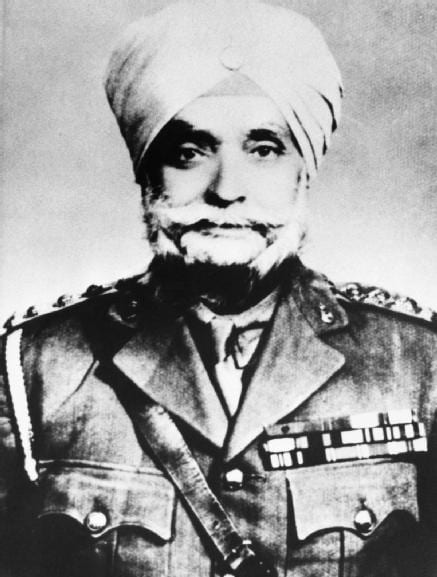
Captain, Indian Army
Support & adopt this hero ↓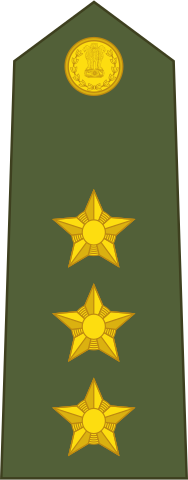
Wounded in the chest, he saved a gun and assisted casualties
Ishar Singh was born at Nenwan in the Hoshiarpur district of Punjab on 30 December 1895. He enlisted in the 28th Punjabis in December 1913. His First World War service took him to Ceylon, Mesopotamia, Egypt and Palestine before he returned to India in 1920.
On 10 April 1921 he was serving with a convoy near Haidari Kach on the North-West Frontier when it was attacked. The Lewis-gun detachment suffered casualties and Singh was wounded in the chest. Despite his injury he recovered the gun and continued helping the defence. He then assisted the wounded under sustained fire, exposing himself while working with the medical officer and helping move casualties to safety.
He persisted for several hours before being compelled to accept treatment himself. The Victoria Cross recognised his courage both in recovering the weapon and in protecting the wounded. The Prince of Wales presented the decoration at Rawalpindi in March 1922.
Singh remained in the Indian Army. He became a jemadar in 1926, a subadar in 1928 and a subadar major in 1936. Service as a King's Indian orderly brought him to Britain, and he received the Royal Victorian Medal. He also received the Order of British India, eventually holding its first class and the title Sardar Bahadur.
His later appointments included duty as an aide-de-camp to the Commander-in-Chief in India. During the Second World War he received an emergency King's commission and worked in training and recruiting appointments. He retired in May 1944 and subsequently held the honorary rank of captain. He returned to his home district and died at Nenwan on 2 December 1963. His funeral and cremation took place in Punjab.
Official Victoria Cross citation
For most conspicuous bravery and devotion to duty on the 10th April, 1921, near Haidari Kach (Waziristan). When the convoy protection troops were attacked, this Sepoy was No. 1 of a Lewis Gun Section. Early in the action he received a very severe gunshot wound in the chest, and fell beside his Lewis gun. Hand-to-hand fighting having commenced, the British officer, Indian officer, and all the Havildars of his company were either killed or wounded, and his Lewis gun was seized by the enemy.
Calling up two other men he got up, charged the enemy, recovered the Lewis gun, and, although bleeding profusely, again got the gun into action.
When his Jemadar arrived he took the gun from Sepoy Ishar Singh, and ordered him to go back and have his wound dressed.
Instead of doing this the Sepoy went to the medical officer, and was of great assistance in pointing out where the wounded were, and in carrying water to them. He made innumerable journeys to the river and back for this purpose. On one occasion, when the enemy fire was very heavy, he took the rifle of a wounded man and helped to keep down the fire. On another occasion he stood in front of the medical officer who was dressing a wounded man, thus shielding him with his body. It was over three hours before he finally submitted to be evacuated.
His gallantry and devotion to duty were beyond praise. His conduct inspired all who saw him.
Become the named supporter for this profile and edit the tribute biography and portrait (Owner account required). Proceeds help keep the archive online.
$25 USD / year — annual sponsorship renewal. Keeps the page online and, where enabled, the family anniversary remembrance emails active.