★
Loading archive…
Loading archive…
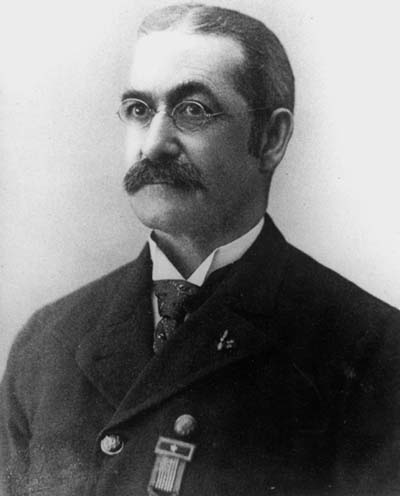
Assistant Surgeon, U.S. Army
Support & adopt this hero ↓He Spotted the Flank Attack—and Joined the Fight
Jacob F. Raub was born on May 13, 1840, in Raubsville, Northampton County, Pennsylvania. During the American Civil War, he entered Union service and became an Assistant Surgeon with the 210th Pennsylvania Infantry. His military responsibilities placed him among the medical personnel whose primary purpose was to care for soldiers rather than take a direct part in combat. Yet during the final months of the war, Raub found himself in circumstances that demanded far more than his normal medical duties.
By early 1865, Union and Confederate armies had been locked for months in the struggle around Petersburg, Virginia. The long campaign had gradually stretched Confederate defenses and placed increasing pressure on the roads and railroads that supplied General Robert E. Lee’s Army of Northern Virginia. Union forces repeatedly moved westward in an effort to extend their lines and threaten those vital supply routes.
In early February, Union forces launched another operation toward Hatcher’s Run and the Boydton Plank Road. Fighting began on February 5, 1865, as Confederate troops attempted to disrupt the advancing Federal formations and protect the remaining approaches to Petersburg. The terrain, shifting troop movements, and threats to exposed flanks created a dangerous and rapidly changing battlefield.
It was during this fighting that Assistant Surgeon Raub performed the action that would define his military legacy.
Raub discovered that Confederate forces were attempting a movement against the Union flank. Recognizing the danger, he moved to inform the commanding general. Delivering that warning required him to expose himself to serious danger at a moment when the enemy maneuver threatened the Federal position. His action provided critical information during an active engagement, but his involvement did not end after the warning was delivered.
Although his role as an Army surgeon placed him in a noncombatant medical position, Raub voluntarily joined the troops who were attempting to repel the Confederate attack. Rather than remaining behind the fighting line and limiting himself to his normal medical responsibilities, he participated directly with the soldiers defending the position.
That decision made his conduct particularly unusual. Civil War surgeons routinely faced terrible conditions while treating the wounded close to battle, but their official function was medical rather than combatant. Raub crossed that boundary voluntarily when circumstances demanded immediate action. He first recognized the tactical danger and warned the commanding general, then joined the troops resisting the attack.
The Battle of Hatcher’s Run continued from February 5 through February 7. The wider Union operation sought to interfere with Confederate supply traffic and extend Federal positions west of Petersburg. Confederate forces counterattacked repeatedly, but the Union ultimately established a stronger position from which later operations could be launched. The battle became another step in the tightening military pressure that would eventually force the evacuation of Petersburg and Richmond only weeks later.
Within this much larger campaign, Raub’s individual contribution was preserved because it combined awareness, personal risk, and voluntary participation in combat. He did not earn recognition merely for performing his normal duties under difficult conditions. His distinction came from identifying an enemy maneuver, carrying a warning through danger, and then voluntarily helping Union troops resist the attack despite his noncombatant medical status.
More than three decades passed before his actions at Hatcher’s Run received the nation’s highest military recognition. On April 20, 1896, Jacob F. Raub was presented with the Medal of Honor for his conduct on February 5, 1865.
The Medal of Honor had originated during the Civil War as a means of recognizing extraordinary military service and eventually became the highest decoration for valor awarded by the United States. Raub’s citation preserved the essential elements of his action: he discovered the enemy’s flank movement, warned the commanding general despite the danger involved, and voluntarily participated with the troops in repelling the attack.
His award was not posthumous. Raub survived the war and lived for more than forty years after the action at Hatcher’s Run. By the time his Medal of Honor was presented in 1896, the Civil War had become part of national memory, but thousands of veterans who had participated in its battles were still alive. Raub was able to receive recognition personally for an act that had taken place thirty-one years earlier.
The surviving historical record focuses much more clearly on Raub’s wartime service than on the details of his later civilian life. His identity remained closely connected to his service as an Army medical officer and to the extraordinary moment when a surgeon became directly involved in defending the Union position.
Jacob F. Raub died on May 21, 1906, at the age of sixty-six. He was buried at Arlington National Cemetery in Arlington, Virginia, in Section 3, Grave 1469. His resting place among thousands of American servicemen reflects a life permanently connected to the military history of the nation.
Raub’s legacy occupies a distinctive place among Civil War Medal of Honor recipients. His story was not built around the capture of a flag, the command of a charge, or the rescue of a wounded comrade. It began with observation. He recognized a dangerous enemy movement when the information could still matter, risked himself to deliver the warning, and then went beyond the normal responsibilities of an Assistant Surgeon by voluntarily joining the troops resisting the attack.
That sequence of actions transformed a medical officer’s battlefield service into an enduring example of personal courage. At Hatcher’s Run, Jacob F. Raub demonstrated that heroism could emerge from recognizing danger, acting immediately, and accepting responsibilities far beyond those ordinarily demanded by one’s position. His Medal of Honor ensured that the courage he displayed on February 5, 1865, would remain part of the history of the United States Army and its medical service.
Become the named supporter for this profile and edit the tribute biography and portrait (Owner account required). Proceeds help keep the archive online.
$25 USD / year — annual sponsorship renewal. Keeps the page online and, where enabled, the family anniversary remembrance emails active.