★
Loading archive…
Loading archive…

Led a rescue patrol under fire on Mindanao
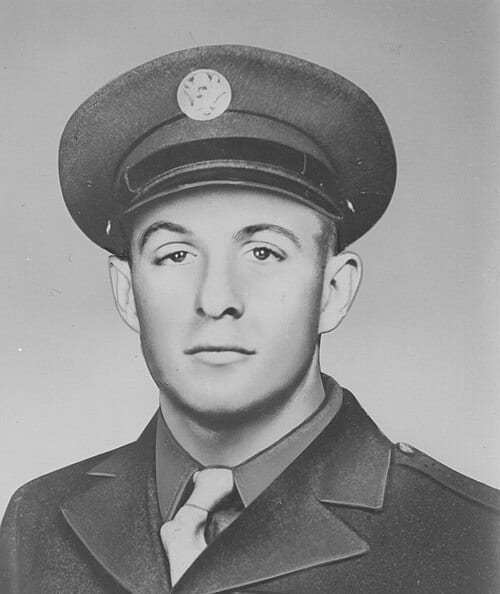
Private First Class James H. Diamond (22 April 1925 – 14 May 1945) was a United States Army soldier of Company D, 21st Infantry Regiment, 24th Infantry Division, and a posthumous recipient of the Medal of Honor for extraordinary gallantry during the fighting around Mintal, Mindanao, in the Philippine Islands in May 1945. He was born in New Orleans, Louisiana, while his military service was accredited to Gulfport, Mississippi. Congressional Medal of Honor Society records identify his rank as Private First Class and his unit as Company D, 21st Infantry, 24th Infantry Division.
Diamond entered the U.S. Army from Gulfport in September 1943. By May 1945 he was serving as a member of a machine-gun section in Company D. His regiment was then engaged in the Battle of Mindanao, part of the final campaign to liberate the southern Philippines from Japanese occupation. U.S. Army historical accounts describe the fighting around Libby Airdrome and Mintal, approximately five miles west of Davao City, as particularly severe. The 21st Infantry encountered dense jungle and abaca fields, where visibility could be reduced to only a few yards, and at Mintal the regiment was attacked from three sides by a numerically stronger Japanese force.
The 21st Infantry had returned to divisional control in late April and attacked toward Libby Airdrome and Mintal beginning on 30 April 1945. Elements of the regiment reached Mintal in early May, and fighting continued along the Talomo River and surrounding terrain as the regiment tried to break through strong Japanese defensive positions. The period from 8 to 14 May 1945 became the setting for the actions that earned Diamond the Medal of Honor.
During the fighting, a Japanese sniper rose from a foxhole and prepared to throw a grenade into Diamond’s position. Diamond immediately charged forward and killed the enemy soldier with a burst from his submachine gun. He then continued firing his own weapon while simultaneously directing 105-mm and .50-caliber fire against Japanese pillboxes that had immobilized his own and another machine-gun section. His action helped the pinned-down crews bring their weapons back into operation.
When two American infantry companies established a bridgehead, Diamond voluntarily exposed himself to heavy enemy fire to help evacuate wounded soldiers. He located an abandoned vehicle and used it to transport casualties toward the rear through intense mortar and artillery fire. The enemy fire was so heavy that the vehicle was eventually disabled. Diamond continued the evacuation effort despite already suffering from a painful wound himself.
On the following day, Diamond again volunteered for a hazardous task, this time helping to repair a bridge under heavy Japanese fire. These repeated acts of initiative and disregard for personal danger reflected a pattern of conduct rather than a single isolated episode. Army campaign history specifically identifies Diamond as one of the soldiers whose individual courage helped sustain the 21st Infantry during the difficult battle for Mintal.
His final action came on 14 May 1945. Diamond was leading a patrol sent to evacuate casualties from his battalion, which had become cut off. The patrol came under exceptionally heavy Japanese fire. Seeing an abandoned machine gun ahead, Diamond ran through the exposed area toward the weapon in an attempt to bring it into action.
He was mortally wounded as he reached the machine gun. Nevertheless, by drawing enemy fire onto himself, Diamond gave the remaining members of the patrol the opportunity to reach safety. He died that day at Mintal, Mindanao, at the age of twenty. Congressional Medal of Honor Society records confirm both his death date and location.
For his actions from 8–14 May 1945, Diamond was posthumously awarded the Medal of Honor. The formal award was issued under War Department General Orders No. 23, dated 6 March 1946. His citation emphasized his repeated willingness to expose himself to danger, his efforts to assist wounded comrades, and his final sacrifice while protecting the members of his patrol.
Diamond’s wartime service is also associated with the wider campaign record of the 21st Infantry in the Philippines. The regiment fought through the dense terrain around Davao and Mintal against elements of the Japanese 100th Division. Army histories note that the fighting was often reduced to small-unit actions in jungle and abaca fields, where soldiers had to locate bunkers and hidden positions at extremely close range.
His final verified ribbon rack, as currently configured in the database, consists of the Medal of Honor, Bronze Star Medal, Purple Heart, Army Good Conduct Medal, American Campaign Medal, Asiatic-Pacific Campaign Medal with two bronze service stars and an Arrowhead device, World War II Victory Medal, and Philippine Liberation Ribbon. The Philippine Republic Presidential Unit Citation is recorded separately as a unit award, while the Combat Infantryman Badge belongs in the badge section rather than the ribbon rack.
Diamond was buried at Evergreen Cemetery in Gulfport, Mississippi. The Congressional Medal of Honor Society gives the precise gravesite as Block 29, Lot 12, Space 6.
His memory has remained closely associated with the United States Army. James H. Diamond Elementary School at Fort Stewart, Georgia, was named in his honor. A new school facility formally opened with a ribbon-cutting ceremony on 24 August 2017, attended by students, Army representatives, and members of Diamond’s extended family, including his great-nephew, great-niece, and great-great-nephew.
His legacy also remains alive within the 21st Infantry Regiment, known as the “Gimlets.” In May 2025, soldiers of the 1st Battalion, 21st Infantry Regiment conducted the “Diamond” Gimlet Challenge in the Philippines and dedicated the event to Private First Class James H. Diamond. The Army specifically linked the challenge to his service at Mintal and his death while helping evacuate wounded comrades under fire.
James H. Diamond’s Medal of Honor was earned through a series of courageous actions rather than a single brief moment. Over the course of several days, he attacked an enemy position, directed supporting fire, helped restore disabled machine-gun sections, evacuated wounded soldiers while wounded himself, volunteered to repair a bridge under fire, and finally sacrificed his life while protecting a patrol attempting to rescue casualties. His conduct at Mintal remains one of the most distinguished individual examples of battlefield selflessness in the history of the 21st Infantry Regiment and 24th Infantry Division.
Become the named supporter for this profile and edit the tribute biography and portrait (Owner account required). Proceeds help keep the archive online.
$25 USD / year — annual sponsorship renewal. Keeps the page online and, where enabled, the family anniversary remembrance emails active.