★
Loading archive…
Loading archive…
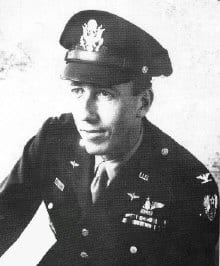
Brigadier General (Air Force), U.S. Air Force
Support & adopt this hero ↓
What would you do if you found yourself alone in the sky, surrounded by more than 30 enemy fighters, with no friendly aircraft to protect you and a bomber formation depending on your actions? For James Howell Howard, the answer was simple. He attacked. On 11 January 1944, over the skies of Germany, this remarkable American fighter pilot performed one of the most extraordinary acts of aerial courage in the history of the Second World War, earning the Medal of Honor and becoming known for his fearless determination in combat.
Born on 8 April 1913 in Canton, China, James Howell Howard developed an early ambition for aviation and military service. He initially served as a naval aviator in the United States Navy before joining the American Volunteer Group, famously known as the Flying Tigers. Flying the P-40 Warhawk against Japanese forces in China and Burma, Howard gained valuable combat experience during the early years of the Pacific War. His service with the Flying Tigers established his reputation as an aggressive and exceptionally capable fighter pilot. When the United States expanded its air operations following its entry into the Second World War, Howard continued his military career with the United States Army Air Forces.
By January 1944, Howard was serving with the 356th Fighter Squadron, 354th Fighter Group, in the European Theater of Operations. Flying the powerful P-51 Mustang, he was assigned to escort American heavy bombers deep into enemy territory. On 11 January 1944, during a mission over Oschersleben, Germany, his fighter group encountered a determined formation of German aircraft. Howard engaged the enemy and destroyed a German fighter, but in the confusion of the battle he became separated from his formation. When he returned to the bomber stream, he discovered that the American aircraft were under intense attack and that no friendly fighters were available to defend them.
What followed became one of the defining moments of American military aviation. Rather than withdraw or wait for reinforcements, Howard made the extraordinary decision to attack alone. He plunged into a formation of more than 30 German fighters, repeatedly attacking enemy aircraft in an effort to protect the vulnerable bombers. For approximately 30 minutes, he continued fighting against overwhelming odds. His determination remained unshaken even as three of his guns became inoperative and his fuel supply approached dangerously low levels. Despite the enormous risk, Howard refused to abandon the bomber crews to their attackers. His aggressive actions destroyed additional enemy aircraft, while others were probably destroyed or damaged. His courage and persistence helped protect the bomber formation during one of its most dangerous moments.
For this extraordinary display of gallantry, James H. Howard received the Medal of Honor, the highest military decoration awarded by the United States. General Carl A. Spaatz presented the medal to him in London on 27 June 1944. His citation recognised not only his aerial victories but, more importantly, his extraordinary determination to defend fellow American airmen when the odds were overwhelmingly against him.
Howard's contribution to the Allied war effort extended beyond that single remarkable engagement. He subsequently held important fighter leadership responsibilities, including command of the 354th Fighter Group. His experience with both the Flying Tigers and the Army Air Forces made him a distinguished figure in the development of American fighter operations during the Second World War. He continued his military association through the United States Air Force Reserve, eventually attaining the rank of Brigadier General.
James Howell Howard died on 18 March 1995 in Florida and was laid to rest at Arlington National Cemetery. His legacy, however, reaches far beyond the decorations displayed on his uniform. He represents a generation of fighter pilots who accepted extraordinary risks to protect their comrades and accomplish their missions.
The skies over Oschersleben remain central to his story. On that January morning, Howard could have withdrawn, regrouped or waited for help. Instead, he chose to fight. His actions demonstrated that courage is not measured by the number of aircraft at one's side, but by the determination to stand firm when others are depending on you. James H. Howard will forever be remembered as the Medal of Honor fighter pilot who faced overwhelming odds alone and refused to surrender the sky.
Become the named supporter for this profile and edit the tribute biography and portrait (Owner account required). Proceeds help keep the archive online.
$25 USD / year — annual sponsorship renewal. Keeps the page online and, where enabled, the family anniversary remembrance emails active.