★
Loading archive…
Loading archive…
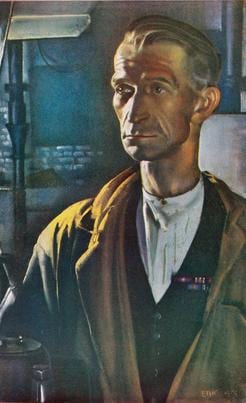
Home Guard Private, British Army
Support & adopt this hero ↓Captured a machine gun and led an attack upon an enemy farm.
James Ockendon VC, MM grew up in Landport, Portsmouth, the son of Alfred and Mary Ockendon. Educated at St Agatha's School, he worked in a local clothing shop before enlisting in the Royal Dublin Fusiliers in 1909. After training in Ireland he joined the 1st Battalion and served in India before the First World War.
His battalion fought at Gallipoli in 1915, where he was wounded. After the evacuation and a period in Egypt, he moved to the Western Front in 1916 and became a sergeant. In August 1917 he earned the Military Medal during the fighting near Wijdendrift in Belgium, rallying soldiers scattered by a heavy German barrage. During leave that month he married Caroline Anne Green at St Luke's Church, Southsea. They later had four children.
On 4 October 1917, during the Battle of Broodseinde, Ockendon was acting as company sergeant-major with the 1st Royal Dublin Fusiliers east of Langemarck. An enemy machine gun stopped the platoon on his right. He rushed the position, captured the gun and killed its crew, then pursued and killed the one man who escaped. Returning to his company, he led a section against a defended farm. He called on its garrison to surrender, but the defenders continued firing. He shot four men, after which the remaining sixteen surrendered.
His Victoria Cross was announced in the London Gazette supplement of 8 November 1917. King George V presented it at Buckingham Palace on 5 December. Ockendon also received the Belgian Croix de Guerre. Gas injuries ended his regular Army service in April 1918.
Back in Portsmouth, he worked as a dockyard crane driver. He subsequently held civilian employment at the Royal Army Ordnance Corps training establishment in Hilsea. During the Second World War he again served his community in the Portsmouth Home Guard as a private. Eric Kennington portrayed him for John Brophy's Britain's Home Guard, published in 1945. He maintained links with fellow veterans, including the British Legion and the 29th Division Association.
Ockendon died at his home in Southsea on 29 August 1966. He was cremated at Portchester on 1 September. His name is preserved in the crematorium's Book of Remembrance, and Portsmouth commemorates him through Ockendon Close and local memorials.
Official Victoria Cross citation The London Gazette, 8 November 1917, page 11569. The original citation spells his surname Ockenden.
His Majesty The KING has been graciously pleased to approve of the award of the Victoria Cross to the undermentioned Officers, Non-commissioned Officers and Man:
No. 10605 Sjt. James Ockenden, R. Dub. Fus. (Southsea).
For most conspicuous bravery in attack. When acting as Company Serjeant-Major and seeing the platoon on the right held up by an enemy machine gun he immediately rushed the machine gun, regardless of his personal safety, and captured it. He killed the crew with the exception of one man, who made his escape. Sjt. Ockenden however, followed him, and when well in front of the whole line killed him and returned to his company.
He then led a section to the attack on a farm. Under very heavy fire he rushed forward and called upon the garrison to surrender. As the enemy continued to fire on him, he opened fire killing four, whereupon the remaining sixteen surrendered.
Become the named supporter for this profile and edit the tribute biography and portrait (Owner account required). Proceeds help keep the archive online.
$25 USD / year — annual sponsorship renewal. Keeps the page online and, where enabled, the family anniversary remembrance emails active.