★
Loading archive…
Loading archive…
Captain, U.S. Army
Support & adopt this hero ↓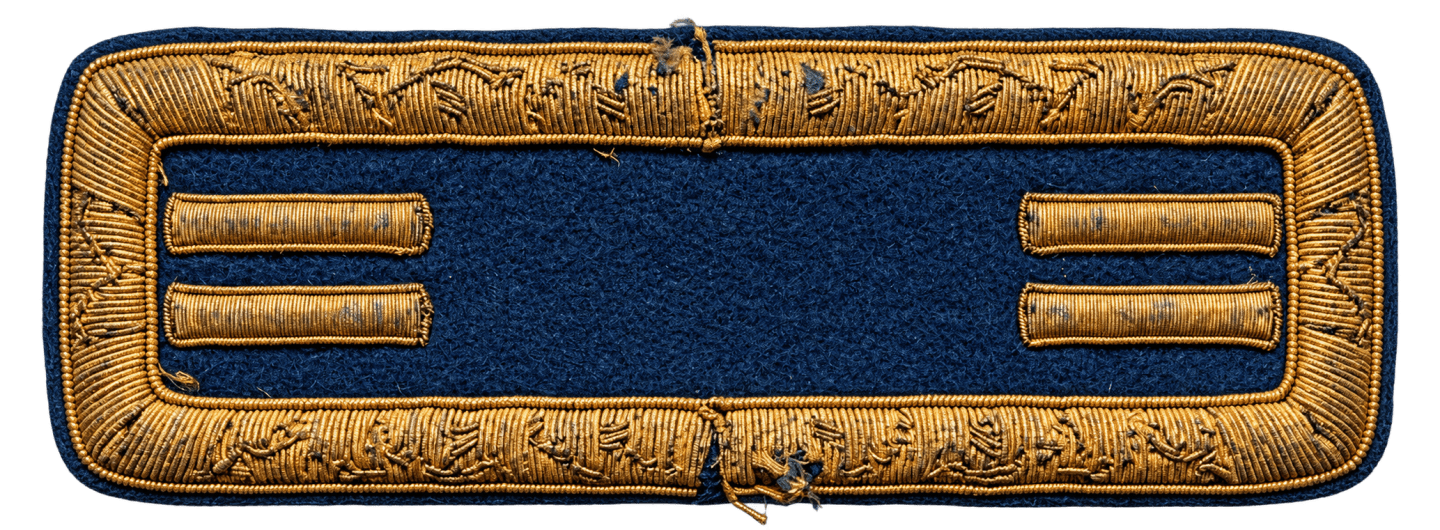
He Captured Two Enemy Flags in a Single Assault
Jeremiah Kuder was born on July 12, 1835, in Tiffin, Ohio. During the American Civil War he entered the Union Army and served with Company A of the 74th Indiana Infantry. His military career carried him through some of the most important campaigns in the Western Theater and ultimately into the Battle of Jonesboro, Georgia, where his actions earned the Medal of Honor.
Kuder entered service with the 74th Indiana Infantry in 1862. The regiment became part of the Union armies operating through Kentucky, Tennessee, and Georgia. As the war continued, Kuder advanced through the ranks and demonstrated the leadership qualities that eventually brought him a commission as an officer.
On June 9, 1864, Kuder became a Second Lieutenant. This was the rank he held during the action for which he would later receive the Medal of Honor. By that summer, Union forces under Major General William T. Sherman were advancing toward Atlanta in a campaign designed to defeat Confederate forces in Georgia and capture one of the South’s most important transportation and industrial centers.
The struggle for Atlanta developed into a series of battles and maneuvers as Confederate forces attempted to protect the city and the railroads supplying it. By late August 1864, Sherman shifted much of his army southward in an attempt to sever the remaining railroad connection into Atlanta. This movement brought Union and Confederate forces together near Jonesboro.
On September 1, 1864, Kuder and the 74th Indiana Infantry participated in the Battle of Jonesboro. Union troops attacked strongly defended Confederate positions as Sherman sought to break the last major rail line supporting Atlanta.
During the fighting, Kuder led Company A forward against the Confederate works. The assault carried Union soldiers directly toward entrenched defenders, where combat became intense and close. In the course of the attack, Kuder captured the colors of two Confederate regiments identified as the 8th and 19th Arkansas.
Regimental flags were among the most important objects on a Civil War battlefield. They served as rallying points amid smoke, noise, and confusion, and they represented the identity and honor of the units that carried them. Their color guards were normally positioned where the fighting was especially dangerous, and soldiers often defended their flags at tremendous personal risk.
Capturing even one enemy battle flag was therefore considered an extraordinary achievement. Kuder’s capture of two Confederate colors during the assault at Jonesboro made his action particularly notable.
The Battle of Jonesboro had consequences beyond the immediate battlefield. Union success threatened the final railroad supplying Atlanta and made the Confederate position in the city increasingly untenable. Atlanta was evacuated shortly afterward and occupied by Union forces, giving the North one of its most significant victories of 1864.
Kuder’s bravery at Jonesboro was formally recognized with the Medal of Honor. He received the decoration on April 7, 1865, for the capture of the Confederate flags during the September 1, 1864 action. He had performed the deed as a Second Lieutenant, and that rank is essential to understanding his Medal of Honor record.
The award came during the final days of the Civil War. Only two days after Kuder received the Medal of Honor, General Robert E. Lee surrendered the Army of Northern Virginia at Appomattox Court House. Although fighting continued elsewhere for a short period, the conflict was rapidly approaching its conclusion.
Kuder’s military advancement continued after the Jonesboro action. He was promoted to First Lieutenant on January 1, 1865. In April he was appointed or promoted to Captain, although surviving service records indicate that he was not formally mustered in that grade before leaving the Army. Captain is nevertheless associated with the highest rank to which he was advanced, while First Lieutenant was his highest confirmed mustered rank.
His Civil War service also falls within the period recognized by the Army Civil War Campaign Medal. Established by the War Department in 1907, the decoration commemorated qualifying United States Army service during the Civil War. Kuder’s service with the 74th Indiana Infantry, including his participation in the Atlanta Campaign and the Battle of Jonesboro, placed his military career clearly within the qualifying period. No additional clasp or device has been verified for his profile.
Unlike many Medal of Honor actions based on a brief defensive stand or a rescue under fire, Kuder’s recognized deed occurred during an offensive assault against fortified Confederate positions. He was serving as a commissioned officer, leading soldiers forward when he reached the enemy lines and seized two regimental flags.
The action demonstrated both personal courage and battlefield leadership. As an officer, Kuder was responsible not merely for his own survival but also for directing the soldiers of his company through one of the most dangerous moments of the attack. His Medal of Honor recognized the extraordinary achievement he accomplished while fulfilling that responsibility.
After the war, Kuder returned to civilian life and lived for more than half a century after the battle that brought him national recognition. He survived long enough to see the generation of Civil War veterans honored through commemorations and the establishment of the Army Civil War Campaign Medal.
Jeremiah Kuder died on May 25, 1916, in Marion, Indiana. He was buried in Marion National Cemetery.
His military legacy remains centered on September 1, 1864. During the Battle of Jonesboro, a young Second Lieutenant led his company into the Confederate defenses and emerged with the colors of two enemy regiments. The Medal of Honor preserved that remarkable act of courage as part of the history of the Union victory that helped force the evacuation and capture of Atlanta.
Become the named supporter for this profile and edit the tribute biography and portrait (Owner account required). Proceeds help keep the archive online.
$25 USD / year — annual sponsorship renewal. Keeps the page online and, where enabled, the family anniversary remembrance emails active.