★
Loading archive…
Loading archive…
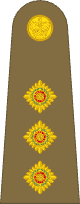
Flew his shattered aircraft home with a bullet-broken thigh.
Captain John Aidan Liddell (1888–1915) was a British Army officer and Royal Flying Corps pilot whose Victoria Cross action demonstrated the extraordinary risks of early aerial reconnaissance. Raised in Northumberland, he studied zoology at Balliol College, Oxford, where he graduated with first-class honours. He joined the Special Reserve of Officers of the Argyll and Sutherland Highlanders in 1912 and gained his Royal Aero Club pilot’s certificate in 1914. When the First World War began, he went to France with his battalion and served on the Western Front before transferring to the Royal Flying Corps in 1915. He joined No. 7 Squadron, flying the two-seat Royal Aircraft Factory R.E.5 on reconnaissance patrols.
On 31 July 1915, Liddell and his observer were conducting a long-range reconnaissance over Ostend, Bruges and Ghent when a German aircraft attacked them. A bullet shattered Liddell’s right thigh. He briefly lost consciousness as the damaged aeroplane plunged nearly 3,000 feet, but recovered enough control to keep it in the air. The control wheel and throttle were broken, as was an undercarriage strut, and he had to manage the aircraft in a collapsed and gravely wounded state. Despite being continuously fired upon, he flew back toward Allied lines, landing in Belgium about half an hour after he had been hit. By bringing the aircraft home, he saved his observer and the reconnaissance machine as well as his own life.
Liddell’s survival did not end with the landing. His leg was amputated, but infection and septicaemia followed, and he died on 31 August 1915. He was 27. The Victoria Cross was announced on 23 August 1915, while he was still alive. His father received it from King George V in November 1916. The action remains an early example of the demands placed on reconnaissance crews, whose observations depended on returning through hostile airspace in aircraft with limited protection and fragile controls.
The Victoria Cross citation records that after a severe wound and a fall of nearly 3,000 feet, Liddell regained partial control, continued the mission under fire and brought the damaged aeroplane back to Allied lines. It notes the broken control wheel, throttle and undercarriage strut, and credits him with saving both his observer and aircraft. The citation appeared in the Third Supplement to The London Gazette, issue 29272, 23 August 1915.
Sources: Royal Air Force Museum, “For Valour: July 31, 1915, over Belgium”; Victoria Cross and George Cross Association, “John Aidan Liddell VC”; Imperial War Museums, War Memorials Register, “Captain J A Liddell VC MC”; The London Gazette, issue 29272, 23 August 1915, Victoria Cross citation for Captain John Aidan Liddell.
[Biographical and award record](https://vcgca.org/our-people/profile/109/John-Aidan-LIDDELL)
Become the named supporter for this profile and edit the tribute biography and portrait (Owner account required). Proceeds help keep the archive online.
$25 USD / year — annual sponsorship renewal. Keeps the page online and, where enabled, the family anniversary remembrance emails active.
