★
Loading archive…
Loading archive…
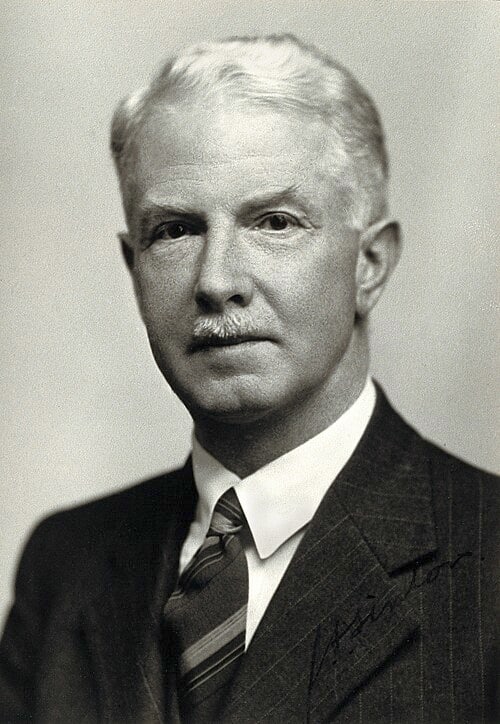
Brigadier, British Indian Army
Support & adopt this hero ↓
Brigadier John Alexander Sinton VC, OBE, FRS, DL (2 December 1884 – 25 March 1956) was a Canadian-born British Indian Army medical officer, physician and internationally distinguished malariologist. His life combined two exceptional careers: one in military medicine, in which he earned the Victoria Cross for treating wounded soldiers under intense fire in Mesopotamia, and another in medical science, in which he became one of the leading twentieth-century authorities on malaria and leishmaniasis. He remains uniquely notable as the only Victoria Cross recipient to have been elected a Fellow of the Royal Society.
Early life and medical education
Sinton was born on 2 December 1884 in Victoria, British Columbia, Canada, to Irish parents from Ulster. His family returned to Ireland in 1890, settling in Lisburn. He was educated at the Nicholson Memorial School, Lisburn, and later at the Royal Belfast Academical Institution before studying medicine at Queen’s College Belfast, the institution that became Queen’s University Belfast.
He proved to be an outstanding medical student. In 1908 he graduated MB, BCh, BAO, with first-class honours in medicine and additional distinctions in surgery and obstetrics and gynaecology. He subsequently gained qualifications in public health in Belfast and Cambridge in 1910, followed by a Diploma in Tropical Medicine at the Liverpool School of Tropical Medicine in 1911. His time at Liverpool brought him into the scientific environment associated with Sir Ronald Ross and the rapidly developing study of tropical diseases.
Sinton placed first in the entrance examination for the Indian Medical Service (IMS) and was gazetted as a lieutenant in its military branch with effect from 29 July 1911. The London Gazette later confirmed his commission from that date. Before taking up his Indian posting, he also worked as a Queen’s University research scholar at Liverpool.
Early service in India
After arriving in India, Sinton became Regimental Medical Officer to the 31st Duke of Connaught’s Own Lancers at Kohat on the North-West Frontier and was also placed in charge of the brigade laboratory. His early research already reflected the interests that would dominate his later scientific career, including malaria, parasitic disease and infectious medicine.
He was promoted to Captain on 29 July 1914, shortly before the First World War transformed his medical career into one of active campaigning.
First World War and Mesopotamia
During the First World War, Sinton served with the 37th Dogras as part of the Indian Expeditionary Force in Mesopotamia. In early 1916 the force was engaged in operations intended to relieve the British garrison besieged at Kut.
On 21 January 1916, during the fighting at the Orah Ruins on the Tigris, Sinton repeatedly exposed himself to enemy fire while attending wounded soldiers. During the action he was shot through both arms and through the side. Despite those wounds, he refused evacuation and continued caring for casualties under heavy fire until daylight ended. His Victoria Cross citation also noted that he had already displayed exceptional bravery in three previous actions.
For this conduct he was awarded the Victoria Cross. The award was published in The London Gazette on 20 June 1916 in Issue 29633. In January 1918, he was formally presented with the Victoria Cross at Delhi by the Viceroy of India.
Sinton’s First World War record brought additional distinctions. He was mentioned in despatches four times during the Mesopotamian campaign and received the Russian Order of St George, 4th Class. His later campaigning would bring his total number of mentions in despatches to six.
Turkestan, Afghanistan and the North-West Frontier
His active service continued after the main First World War fighting. From August 1918 until April 1919, Sinton served as Senior Medical Officer to the Turkestan Military Mission, associated with the Transcaspian operations. He subsequently served in Afghanistan in 1919, Waziristan in 1919–20, and operations against the Mahsuds.
His service in the post-war frontier campaigns brought two further mentions in despatches. For valuable service with the Waziristan Force, he was appointed an Officer of the Order of the British Empire — Military Division. This was one OBE only: the appointment was dated 1 August 1920 and later published in the Gazette in 1921. It should therefore not be represented by two separate OBE medals or ribbon entries.
In 1919, Queen’s University Belfast also awarded him an honorary MD, recognizing both his academic achievements and his distinguished wartime service.
Transition to medical research
In 1921, Sinton transferred from the military to the civil branch of the Indian Medical Service and joined the medical research establishment at Kasauli. He was initially associated with quinine and malaria investigations and increasingly concentrated on the scientific study of tropical disease.
His work ranged across malaria parasites, immunity, chemotherapy, mosquito and sandfly vectors, treatment regimens and survey methods. He also became an important authority on leishmaniasis, or kala-azar, and on species of Phlebotomus, the sandflies involved in its transmission. Over the course of his research career he published around 200 scientific papers on malaria, leishmaniasis and related subjects.
In 1925, Sinton became the first Director of the Malaria Survey of India at Kasauli, an institution that developed into one of the important centres of malaria research. Contemporary scientific publications identify him in that role, including his large controlled study of malaria treatment involving more than 3,700 cases.
His research was notable not only for describing malaria epidemiology but also for examining drug treatment on a large scale. He investigated alternatives to traditional quinine therapy and contributed extensively to understanding malaria prevention and control in India. His work on sandflies was similarly substantial: later biographical records credit him with descriptions of numerous Phlebotomus species, including several new to science.
Sinton married Eadith Seymour Steuart Martin in 1923 at Kasauli. They had one daughter, Eleanor, born in 1924.
Retirement from India and continued research
Sinton retired from the civil branch of the Indian Medical Service in 1936, by which time he had established an international reputation in tropical medicine. Retirement did not mean the end of his scientific career. He subsequently worked at the London School of Hygiene and Tropical Medicine and at the Ministry of Health’s malaria laboratory at Horton Hospital near Epsom, and he also advised the Ministry of Health on malaria.
From 1937 to 1946, he served as a member of the League of Nations Malaria Commission, and from 1943 to 1946 he was associated with the Medical Research Council’s malaria work. His expertise was therefore already being used internationally when the outbreak of another world war again brought him into military service.
Second World War service
At the outbreak of the Second World War, Sinton was recalled as an Indian Medical Service reservist. He initially served in India, including responsibility for a military hospital, before returning to specialist malaria work.
In 1940, he was appointed consultant malariologist to the East Africa Force. In 1941, he transferred in the same specialist capacity to Middle East Command, where malaria represented a major operational threat to troops serving in tropical and subtropical environments.
Corrected War Office chronology
Sinton was not simply appointed as War Office consultant in 1942, as some shorter biographical summaries state. The more detailed service chronology shows that he remained with the East Africa and Middle East commands before retiring in August 1943 with the honorary rank of Brigadier. His retirement lasted only about two weeks. He was then re-employed by the War Office as a consultant malariologist.
In this War Office role he advised on malaria prevention and treatment across a vast operational area. His wartime work took him to, or involved problems arising in, Assam, India, Burma, Ceylon, Australia, New Guinea, the Moluccas and the Solomon Islands. His expertise helped military authorities confront malaria as a disease capable of disabling large numbers of personnel independently of battlefield casualties.
He finally withdrew from wartime service at the end of the conflict, having reached the honorary rank of Brigadier.
Fellow of the Royal Society
Sinton’s scientific achievements received one of Britain’s highest academic recognitions when he was elected a Fellow of the Royal Society (FRS) in 1946. His election particularly recognized his work on malaria and leishmaniasis.
His combination of distinctions was extraordinary. He remains the only person known to have held both the Victoria Cross and Fellowship of the Royal Society, linking the highest traditions of battlefield gallantry and scientific achievement in a single career.
Sinton accumulated many other professional honours. Queen’s had awarded him a DSc in 1927; he received the Chalmers Memorial Medal of the Royal Society of Tropical Medicine and Hygiene in 1929, the Bisset Hawkins Medal of the Royal College of Physicians in 1944, the Mary Kingsley Medal in 1949, and shortly before his death the prestigious Manson Medal.
Later life in Northern Ireland
After the Second World War, Sinton settled at Slaghtfreedan Lodge near Cookstown, County Tyrone. Rather than returning to full-time laboratory research, he became increasingly involved in university, civic and public affairs.
His relationship with Queen’s University Belfast remained particularly strong. He joined the university Senate in 1948, became Pro-Chancellor in 1952, and served as President of the Queen’s University Association in 1953. Queen’s later commemorated him by naming a student residence in his honour.
He also served as a Justice of the Peace, became High Sheriff of County Tyrone in 1953, and was appointed a Deputy Lieutenant in 1954. These appointments reflected the prominent role he assumed in civic life after his military and scientific careers had largely concluded.
Death and burial
John Alexander Sinton died at Slaghtfreedan Lodge near Cookstown on 25 March 1956, aged 71. He was buried on 28 March 1956 with full military honours in Claggan Presbyterian Churchyard, Cookstown, County Tyrone.
His military decorations and memorabilia became associated with the Army medical museum collection, preserving the tangible record of a career that stretched from the Indian frontier and Mesopotamian battlefield to some of the most important malaria research programmes of the twentieth century.
Legacy
John Alexander Sinton’s distinction rests on the extraordinary combination of military courage, medical devotion and scientific achievement that characterized his life. At Orah Ruins in 1916, seriously wounded himself, he refused to abandon the soldiers who depended upon him and continued treating casualties under fire. The Victoria Cross recognized that courage.
Yet his contribution did not end with military heroism. Through decades of work on malaria, leishmaniasis, parasitology, disease vectors and antimalarial treatment, he became an internationally respected figure in tropical medicine. During the Second World War his knowledge was once again applied directly to protecting troops, first in East Africa and the Middle East and, after his brief retirement in 1943, through his re-employment as a War Office consultant malariologist.
By the end of his life, Sinton had progressed from an Indian Medical Service lieutenant to an Honorary Brigadier, from a young medical officer on the North-West Frontier to a Fellow of the Royal Society, and from a battlefield doctor under fire to one of the foremost malaria specialists of his generation. His legacy therefore stands at a rare intersection of military valour, humanitarian medical service and scientific discovery.
Become the named supporter for this profile and edit the tribute biography and portrait (Owner account required). Proceeds help keep the archive online.
$25 USD / year — annual sponsorship renewal. Keeps the page online and, where enabled, the family anniversary remembrance emails active.